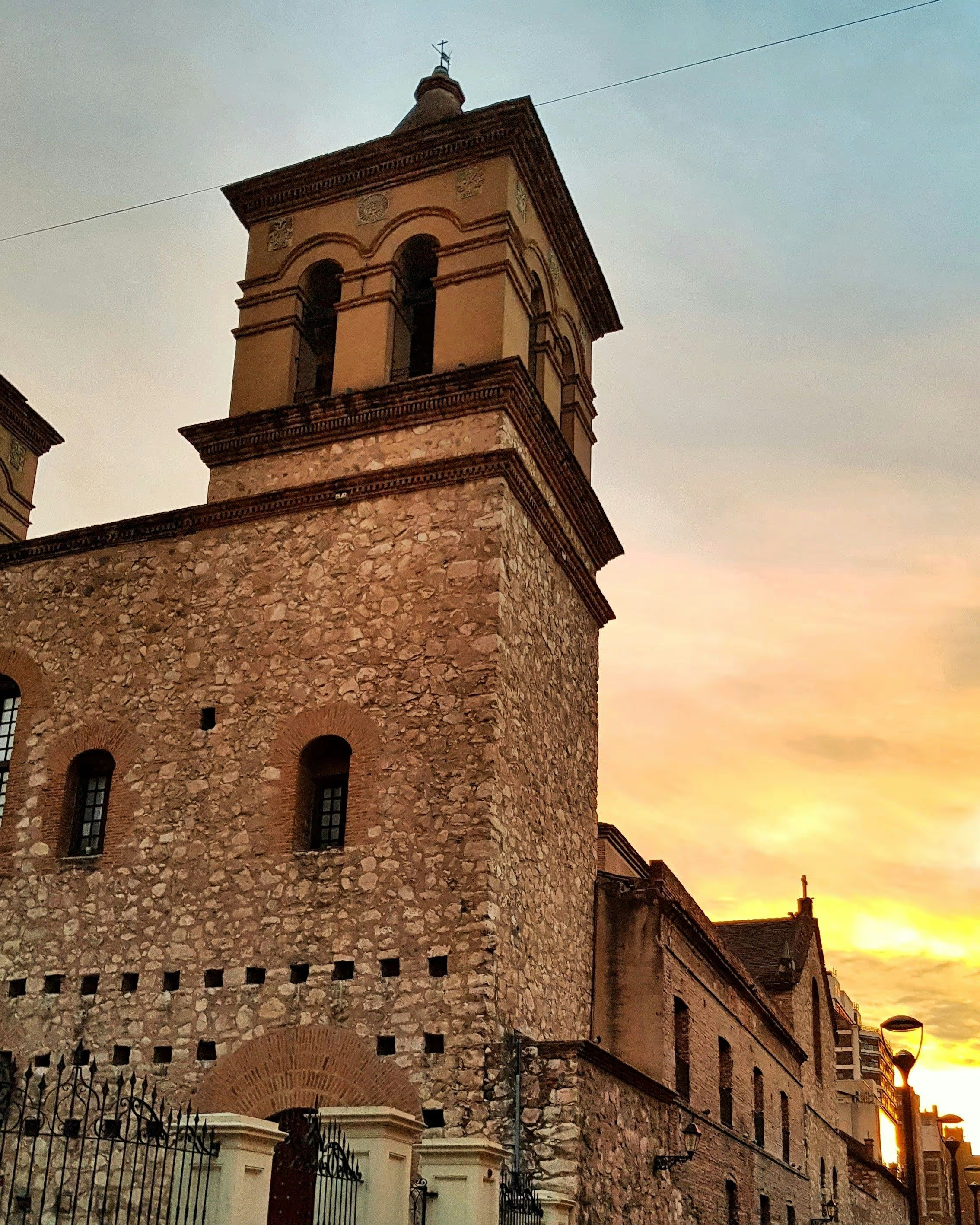
A church wall catching the last warmth of the day. Tree shadows along La Cañada. Conversation carrying dinner into the evening. Córdoba rewards a stay that moves between its historic centre and the city living around it.
Córdoba gives an Argentine journey a city with a different centre of gravity. Colonial churches and the Jesuit university complex sit within a working provincial capital, while Nueva Córdoba and Güemes bring art, student life and evenings around the table into the visit. The reward comes from entering buildings as well as looking up at them. A cathedral ceiling, a university cloister and the painted vaults of Los Capuchinos tell different stories, even when a short walk joins them. We suggest two or three nights before continuing into one of the sierras valleys.
01
A first day in the historic centre
Begin at Plaza San Martín, with the cathedral and the Jesuit Block as the main visits. Choose an interior or guided museum visit before filling the afternoon. After lunch, continue towards La Cañada or leave time for a second historic space. This gives the city a sequence you can follow without turning every doorway into a deadline. If arriving late the previous night, start with the square and a coffee.
02
A second day in Nueva Córdoba and Güemes
Pair Los Capuchinos and the Buen Pastor area with an art visit farther towards Plaza España. Later, turn towards Güemes for a different kind of city walk: craft spaces, old houses and places to eat. Current exhibitions and market schedules can shape the order. Choose one museum that interests you and give it attention, rather than counting how many buildings you can enter.
03
A base that works after dark
The historic centre keeps the first day's monuments close. Nueva Córdoba suits a stay shaped around museums and evening life; the edge of Güemes puts its food and cultural scene within reach. Compare the actual street, noise and walk home from dinner. A central address may let you leave the car out of the city visit altogether, then collect one for the valley portion.
Córdoba · Historic church architecture
The historic city
Let the stone tell the story.
Around Plaza San Martín, the cathedral's dome and towers lead the eye upwards. Its construction and decoration span different periods, with Indigenous, mestizo and creole labour part of the building's history. Inside, early twentieth-century work associated with Emilio Caraffa adds another layer to the older structure.
01
Take time with the interior
Look from the overall space to the painted surfaces. The cathedral's decoration belongs to a different moment from its colonial beginnings.
02
Continue to the Jesuit Block
Church, chapel and university spaces introduce another part of Córdoba's history. Choose an actual interior visit so the walk has depth beyond façades.
Córdoba · Trees and stone along La Cañada
La Cañada and Güemes
Follow the shade into another afternoon.
La Cañada cuts a distinctive line through the city, its stone channel framed by trees and bridges. Nearby Güemes brings a different texture: older houses, craft spaces and streets that can lead naturally towards dinner. A walk here works best with a few chosen stops and room for whatever catches your eye.
01
Make a cultural stop
Casa de Pepino and the Museo Iberoamericano de Artesanías offer starting points for an outing beyond the restaurant tables. Check what is showing during your stay.
02
Let the market set the timing
The Paseo de las Artes has its own operating calendar. If craft stalls matter to your visit, establish the right day before arranging the afternoon.
At the grill · Steak over open flame
At the table
Stay for the evening.
A lomito, a parrilla or a neighbourhood bodegón offers a different ending to the museum day. The lomito is a substantial steak sandwich; a bodegón suggests a more traditional, generous table. Güemes provides one area to explore, while the municipal food guide also points towards other neighbourhoods. Choose the kind of meal you want before choosing the address.
01
Leave room for dinner
A long lunch may call for something simple later. Ask about portions before ordering a full spread; sharing can be a better way to try the kitchen.
02
Stay with the evening
A nearby table leaves room for another conversation. Keep the next morning's valley departure comfortable if you expect a late night.
Inside Córdoba
Give each part of the city its time.
Use these neighbourhood and visit choices to build two full city days, then add a provincial outing if it interests you.
01
The Jesuit Block
Enter the university story.
The Manzana Jesuítica includes the Church of the Compañía de Jesús, the Capilla Doméstica, historic university spaces and Monserrat. It belongs to a larger World Heritage property that also includes five rural estancias. In the city, the relationship between education, religion and the institution's buildings is the central story. A visit to the university's historical museum is a useful way to give the complex more than a passing glance.
Choose the spaces you want to enter and check each one's current access. The Padres' Residence is not a general public interior, and the block does not operate as a single all-access attraction.
For a focused morning, combine one substantial guided or museum visit with the cathedral. Save another interior for a return rather than rushing through both.
02
Los Capuchinos
Look up at the painted sky.
The Church of the Sagrado Corazón, commonly called Los Capuchinos, stands in Nueva Córdoba. Augusto Ferrari's design draws on neo-Gothic and neo-Romanesque forms, with sculpture and symbolism throughout. The uneven towers are deliberate: the truncated tower and the soaring spire carry different meanings. Inside, golden stars across the vaults evoke Córdoba's night sky in different months.
Look at the entrance figures and the changing columns before stepping inside. This is a building where individual details belong to a larger visual idea.
The tower viewpoint has separate guided-visit arrangements. Check those directly if the view is part of your plan; do not assume it comes with entering the church.
03
Buen Pastor and the art district
Connect the chapel with an afternoon of art.
The Paseo del Buen Pastor occupies the site of a former women's prison, now a cultural and public space beside Los Capuchinos. The retained chapel, with its Greek-cross plan and murals, has become a setting for cultural activity. The change of use is part of the visit, and the site's prison history deserves recognition alongside its present life.
Continue towards the museums around Plaza España for an art-focused afternoon. The Emilio Caraffa and Evita Fine Arts Museum in Palacio Ferreyra are distinct choices; select the collection or temporary exhibition you most want to see.
Use the museum's current programme to organise the day. A chapel, one exhibition and a nearby café can make a more satisfying afternoon than a hurried sweep of every institution.
04
Güemes and the table
Give the neighbourhood more than a meal.
Güemes works well as a walk that gradually becomes an evening out. Pair the streets around the Paseo de las Artes with a cultural stop, then choose a table. La Cañada provides a useful thread through the wider area. The atmosphere will differ between a market day, a quiet weekday afternoon and a busy evening, so choose the timing according to what you want to experience.
For food, compare the municipal bodegón guide with the places near your accommodation. A lomito stop, a grill and a longer restaurant dinner are different plans, even when they fit the same neighbourhood.
Confirm a market or exhibition schedule when it is the reason for going. Leave the rest of the walk open enough to stop for a shop, a drink or an interesting building.
05
Beyond the city
Choose one Jesuit estancia.
The rural complexes at Alta Gracia, Jesús María, Caroya, Santa Catalina and La Candelaria belong to the same UNESCO property as the city block. Their place in the story is different: they were part of the economic organisation that supported the institutions. A rural visit can therefore add something substantial after seeing the urban complex, provided you give it its own outing.
Choose one site and investigate its museum, architecture and current access before arranging transport. Alta Gracia is one direction to consider; the other complexes lie on different routes.
Do not try to turn all five into an automatic day circuit. The shared designation is a historical connection, not a promise that the buildings sit close together.
06
Time, seasons and transport
Let the city and the sierras complement each other.
With one full city day, prioritise the historic centre and an evening nearby. With two, add Nueva Córdoba and Güemes. A third day can hold an estancia or more museum time. During hotter weather, put interiors and a longer lunch into the middle of the day; in cooler conditions, connect more of the central neighbourhoods on foot. Check museum opening days before fixing that sequence.
For airport or bus-terminal arrivals, allow time to reach the accommodation and settle in. Plan the first outing from there rather than carrying luggage through a monument circuit.
Continue to Calamuchita for town, forest and lake country, or cross towards Traslasierra for the western valley. Each works best with its own overnight base instead of repeated long drives from Córdoba.
Before you go
Check the details for your dates.
Official visitor information and background for the places described here.
Calamuchita changes the rhythm to timber-fronted towns, forest walks and river afternoons. Choose a base with the kind of evenings you want, and give the valley time beyond the drive.