The useful question is how much of the trip you want to spend in each place, not how many destinations can fit between two flights. Argentina's distances make a hotel change more significant than it may look on a map. A regional flight also includes airport transfers and waiting; a beautiful road can deserve most of a day. Begin with the nights available in the country and mark the arrival, departure and intercity journeys. Then count the full days left in each base. This usually reveals where another night would make the biggest difference. The suggestions below are editorial planning examples, not minimum stays everyone must follow or fixed itineraries that work with every flight schedule.
01
Keep days and nights separate
A seven-night stay commonly spans parts of eight calendar days. Three nights in a base usually give two full days between arrival and departure. Writing the actual dates beside each night prevents a plan from counting the same transfer afternoon as a full day in two places.
02
Count the whole change of base
Packing, checkout, reaching the terminal and settling into the next accommodation all use time. A short flight can still take much of the useful day. Put a simple local outing on arrival days and keep major activities on days that do not depend on a smooth connection.
03
Let the main activity influence the stay
One waterfall visit and several mountain walks need different amounts of time. Weather-sensitive hiking gains particular value from extra nights. A city can also reward a longer stay through distinct neighbourhoods, museums and meals rather than a larger number of day trips.
Buenos Aires · Light and structure inside a historic market
Around one week · Choose a clear focus
A city and one change of scene.
With roughly a week, choose Buenos Aires and one compact regional stay, or focus on a single region from the outset. Iguazú can provide a strong contrast to city life when the flights and park days fit. Mendoza works well for travellers who want wine visits and time in town, with a separate mountain day if the stay allows. A week in the Lake District or the Northwest can also be a complete holiday without a substantial Buenos Aires programme. Avoid using a short trip to sample every famous landscape. The cost of adding a second regional flight is not only money: it removes time from the places you have already chosen and increases the number of connections that must work.
01
A seven-night city-and-falls example
Three nights in Buenos Aires, three around Puerto Iguazú and a final night in Buenos Aires total seven nights. This gives two full days in each main base, plus the partial arrival and return days. Check actual flights before treating it as an eight-calendar-day itinerary.
02
A week within one region
Choose one principal base and perhaps a second that adds a distinct landscape. Around Mendoza, that might mean city time followed by a wine-country stay. In the Lake District, a town-to-town journey can include walking and lake days instead of daily hotel changes.
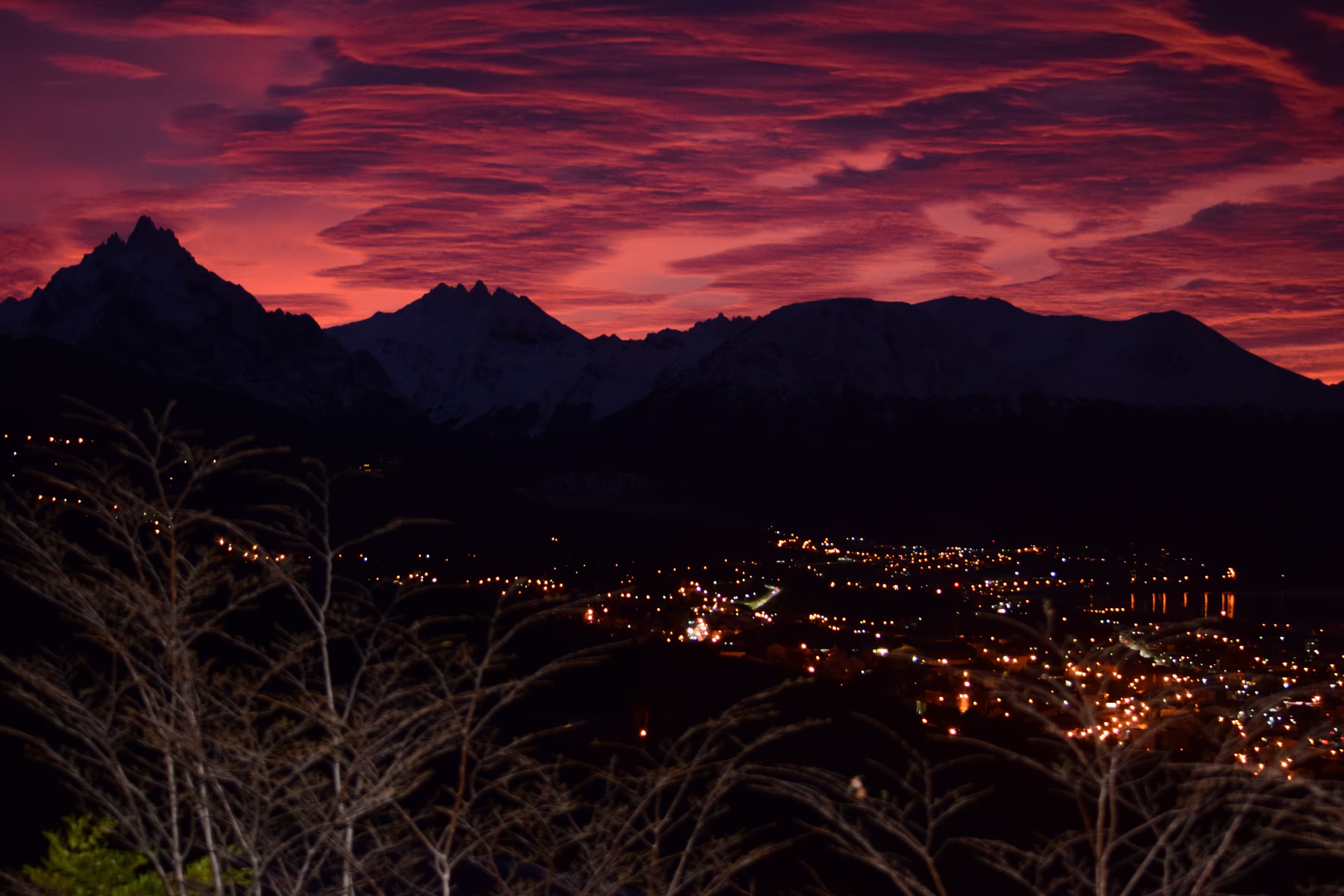
Ushuaia · Evening light across the snowy mountains
Around two weeks · Give a region depth
Let one landscape become familiar.
Two weeks create room for a substantial regional journey alongside Buenos Aires. For walking and glaciers, El Calafate and El Chaltén make a coherent southern sequence: they serve different parts of the landscape and are linked by a road journey. The extra nights should create walking choices and weather flexibility, not merely allow another distant city. A Northwest trip offers another shape, combining Salta with the Calchaquí Valleys or the Quebrada de Humahuaca. Mendoza with the capital can be equally rewarding for a slower food-and-wine visit. Ushuaia is a distinct southern chapter rather than an automatic extra beside El Chaltén. Add it only if it keeps enough days for the places that were the reason for travelling.
01
A thirteen-night Patagonia example
Three nights in Buenos Aires, three in El Calafate, five in El Chaltén and two final city nights total thirteen nights, spanning about fourteen days. This is a walking-focused example: someone less interested in hiking may prefer a different distribution rather than add long trails simply to fill it.
02
Use an extra night to improve a day
Another night can put a rest day between hikes, allow a second museum district or make a winery lunch less rushed. Compare that gain with a new destination's transfer cost. A familiar café or local path is often part of what makes a stay feel like travel rather than transit.
Three weeks can support two substantial regional chapters and a city stay, provided the connections and seasons work together. Buenos Aires, Mendoza and the Lake District form one possible set of interests; Buenos Aires with a deeper Northwest journey and an appropriate wildlife stay offers another. The country is still too large for every region to belong comfortably in the same holiday. Decide whether the extra time is for breadth, outdoor flexibility or slower stays. A road circuit may use several bases, while a lodge or walking town can reward a longer pause. Check the transport between the chosen regions before booking them in a fixed order: a direct route may be seasonal, limited or absent on your dates.
01
A twenty-night city, wine and lakes example
Three opening city nights, five around Mendoza, nine in the Lake District and three final city nights total twenty nights. The lake stay can be divided between two compatible bases. This is a flexible outline, not a promise of direct flights between every stop.
02
Spend some time without a headline activity
A longer trip benefits from laundry, a quiet morning and a day chosen after arrival. Those are useful parts of the itinerary rather than lost opportunities. Leave them near the places where you most want to linger, instead of using every unbooked day for another transfer.
Use these comparisons to refine a draft before buying the internal travel. The arithmetic matters, but the best distribution still depends on your interests, energy and season.
01
Buenos Aires
Three nights introduce; more nights deepen.
A three-night stay can provide two full neighbourhood days, but it will not hold every museum, district and day trip. Four or five nights can add a different part of the city and a less scheduled day. Splitting the stay around a regional journey can make arrival and departure easier.
Group city visits by neighbourhood instead of crossing town repeatedly.
Keep the final stay useful with a restaurant, exhibition or walk you want.
02
Iguazú
Leave a full day for the main park.
Two nights can provide one full park day; a third can create flexibility or space for another outing. Visiting across the border requires separate transport and document planning. Choose the number of nights according to the views and activities you want, not only the flight duration from Buenos Aires.
Check the currently open circuits before assigning park days.
Do not count a late arrival as time for the waterfalls.
03
Mendoza
A tasting day is a substantial day.
Three nights can introduce a wine district and the city, while a longer stay makes it easier to compare areas or add a mountain outing. Keep appointments geographically grouped. A move to the Uco Valley should offer a different stay, not just a longer commute to the same schedule.
Give lunch and cellar visits time beyond the drive between wineries.
Arrange suitable transport for the days involving wine.
04
The Northwest
Count the road stages individually.
Salta, Cachi and Cafayate are linked by roads with different surfaces and travel demands. Jujuy's northern corridor is another sequence. A short stay can choose one of these; a longer visit can connect them with meaningful time in the towns. Avoid compressing both into a string of very long excursions.
Use the valley-road guide to choose overnight breaks.
Allow more time for a gravel stage than a simple distance estimate suggests.
05
Patagonia
Choose one part before adding another.
The Lake District, southern glacier country, the Atlantic coast and Tierra del Fuego are separate travel regions. A week focused on one can be more useful than three brief stays across them. Where walking or wildlife is the priority, extra nights can provide alternative days for conditions.
Compare the actual regional connection before combining two areas.
Add a lighter day between demanding outings when that suits the group.
06
Your final draft
Remove the weakest hotel change.
Look at every one-night stop and ask what it makes possible. Some are necessary to break a road journey; others simply shorten the time in two stronger destinations. If a place has no full day and no clear purpose, remove it and give its night to the stay you care about most.
Count an overnight coach as travel, not guaranteed restorative sleep.
Keep a sensible margin between the last regional arrival and the international departure.
Useful visitor information
Before you book.
The suggested night allocations are Argentina Listo planning examples. Use these official sources to confirm the transport and park details that determine how the examples work on your dates.
A good route gives you more than an arrival photograph. Keep the stops that justify their place, and let the extra night make the journey easier to enjoy.