A first Argentina trip becomes easier to plan when you stop treating every famous place as a required stop. Buenos Aires, Iguazú, Mendoza, the Northwest and Patagonia offer very different experiences, and the distances between them are part of the decision. Begin with how you want to spend your days: walking city neighbourhoods, learning about wine, taking a road journey, watching wildlife or being outside in the mountains. Choose one strong regional focus and decide how Buenos Aires fits around it. A city stay with one region can feel richly varied. A longer trip can add another chapter, but each addition needs enough nights and a workable connection to earn its place.
01
Choose a contrast you actually enjoy
Pairing a city with nature is useful only if both appeal to you. Buenos Aires and Mendoza can be a satisfying food, architecture and wine trip without a glacier. A Patagonia-focused visit can spend most of its time around one walking region instead of crossing the country for another headline.
02
Start with your hardest date
A wildlife season, a specific event or a period of annual leave may set the calendar. Build around that fixed element first. Choose flexible city days and regional stays to support it, rather than discover at the end that the trip's main experience falls outside its operating window.
03
Draw the nights before the day trips
Place each overnight stay on the route and mark the days used for moving. This exposes short visits that looked generous in a list. Two nights can provide only one full day, while four nights in one base may offer several different experiences without another packing morning.
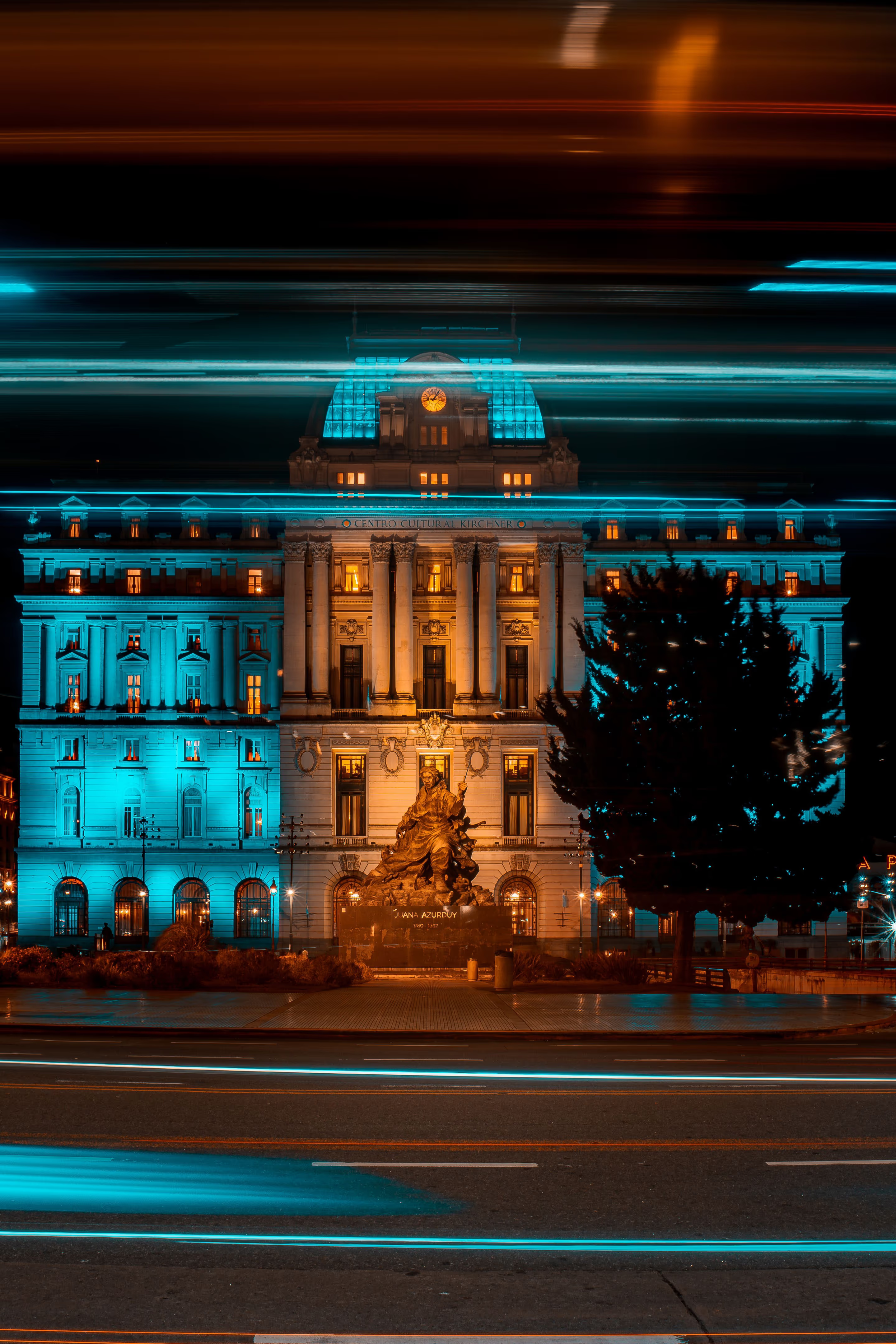
Buenos Aires · Warm light on the Bar Sur facade
Begin in the city
Let Buenos Aires be more than a stopover.
Buenos Aires rewards a few distinct neighbourhood days. Recoleta offers a different combination of architecture, museums and public space from San Telmo's historic streets, while Palermo is a broad area with parks, cafés and evening life. Monserrat and Microcentro help explain the civic centre; a Tigre outing changes the setting again. You do not need to visit all of them to understand why the city deserves time. Choose a base with access to the places you will use most, then group visits geographically. A morning museum, a walk and a long lunch can make a complete day. Leave room for an evening performance or a simple neighbourhood meal instead of filling every hour with another landmark.
01
Think about the return journey
A hotel that suits your evenings can be more useful than one chosen only for a daytime attraction. Compare transport access, the immediate street and the kind of restaurants you want nearby. Palermo is not a single compact neighbourhood, so inspect the actual location.
02
Give culture a little context
A tango show, an introductory class and a milonga are different experiences. Choose the format that interests you and understand whether you are watching, learning or joining a social event. A museum or guided walk can also make later independent exploring more meaningful.
Iguazú is a strong contrast to the capital when waterfalls and subtropical forest appeal to you. Mendoza suits a trip built around meals, wine and a separate mountain day. Salta and Jujuy offer valley towns, striking roads and cultural landscapes, with their own weather and altitude considerations. In Patagonia, the Lake District, the El Calafate–El Chaltén corridor, the Atlantic coast and Tierra del Fuego are separate choices, not neighbouring stops that can all be collected in a few days. Decide which landscape you most want to spend time in, then use its destination guide to choose a base. This gives the journey a clear purpose and avoids using several transfers to assemble a version of a trip you do not really want.
01
Choose an experience at the right scale
A full walking day near El Chaltén, a winery lunch in the Uco Valley and a boat outing from Puerto Pirámides ask for different preparation and seasonal timing. Start with the experience, then choose the region and stay that make it comfortable.
02
Keep the second region optional
Check the real transport connection before adding it. If the extra place leaves only a single sightseeing day at each end, consider staying longer in the first region. A local excursion can provide a fresh landscape with much less time spent moving luggage.
Buenos Aires · A quiet moment inside a historic church
Make room for everyday Argentina
Leave some of the day unplanned.
The places between the major outings often give a first visit its texture: a neighbourhood bakery, a market roof, a village square or a conversation over a meal. Food changes with the region, from northern empanadas and valley wines to the capital's café life and the different products of Patagonia. Leave enough room to notice those distinctions. Spanish is useful even in places accustomed to international visitors; a greeting, a question and a little patience go a long way. In a working market, place of worship or artisan's workshop, take your cues from the people using the space. Ask before photographing someone and treat an invitation as a chance to listen, not simply to collect another picture.
01
Keep meals in the plan
A long excursion can leave fewer eating options than expected, while a city evening can run later than your usual routine. Look at the opening hours of the places you want and keep an easy alternative for arrival days. Food deserves time beyond the gap between two bookings.
02
Make the visit fit your own pace
You can choose shorter walks, fewer hotel changes and transport that leaves you more energy. Tell an excursion provider about access needs before booking and ask what the outing actually involves. An appealing description is less useful than clear information about steps, walking, pickup and rest stops.
Resolve the pieces that affect the whole journey first. Exact entry, payment and transport arrangements depend on the traveller and the booking, so keep those checks tied to your own dates and documents.
01
Arrival
Read the airport code.
Ezeiza and Aeroparque serve Buenos Aires from different locations. Check both the arriving and departing airport when combining flights; a change between them is a ground journey through the metropolitan area. Arrange the first transfer with your baggage, arrival hour and accommodation in mind.
Keep the accommodation address available offline.
Avoid making the first evening depend on a tightly timed reservation.
02
Booking order
Anchor the trip before the details.
Confirm the international dates, the region with the narrowest seasonal window and the important intercity connection. Then choose the accommodation and activities around them. A remote lodge, a fixed wildlife outing or a particular winery may need earlier attention than a flexible city afternoon.
Check cancellation terms alongside price and location.
Book through the operator or an identifiable, established seller.
03
City base
Choose an address you will use.
Compare the actual street and the transport links, not just a neighbourhood name. A place near the restaurants and walks you want can simplify several days. In a regional town, check whether the quoted excursion pickup includes your accommodation or starts from a separate meeting point.
Ask about luggage storage if arriving before check-in.
Confirm access arrangements directly when stairs or distance matter.
04
Documents
Make the checks personal.
Before paying for inflexible travel, verify the entry rules that apply to your passport and itinerary using official consular information. Side trips across a border can introduce a separate set of requirements. Keep copies of essential bookings and the documents your transport providers request. For a child, check nationality, residence, age and who accompanies or receives them. Migraciones specifically requires entry authorisation for children under 13 travelling without, or not being met by, a parent/responsible adult or authorised third party. That narrow rule is not a blanket requirement for all foreign children visiting with a parent. Ask the consulate which relationship, consent, translation or legalisation documents your family needs, and check the carrier and any other country separately.
Check each country involved in the actual route.
Use current official guidance rather than another traveller's past experience.
05
Daily practicalities
Have more than one way to manage the day.
Check how your accommodation and booked activities accept payment, and keep enough flexibility for smaller purchases. Save tickets, maps and meeting points before leaving reliable internet access. For local transport, consult the current payment options for the system you will use; they are not identical everywhere. Argentina uses UTC−3 and currently does not move its clocks for summer; allow for a different local time after an international border crossing.
Keep essential medication and valuables with you while travelling.
Store important addresses in a form you can show without a data connection.
06
A workable pace
Protect a day with no major transfer.
After a long flight or an ambitious outing, a local day can add as much as another distant excursion. Use it for a market, museum, easy walk or a second look at a favourite street. Leave a sensible margin before the international departure, especially when returning from another region.
Put one flexible day near the most weather-sensitive activity.
Remove an overnight stop if every morning begins with packing.
Useful visitor information
Before you book.
Use these official sources for the current detail behind the journey. Conditions and available services can change after you make the first plan.
Choose the destinations, then leave space for the table, the walk and the conversation. A first trip can open a country up without trying to finish it.