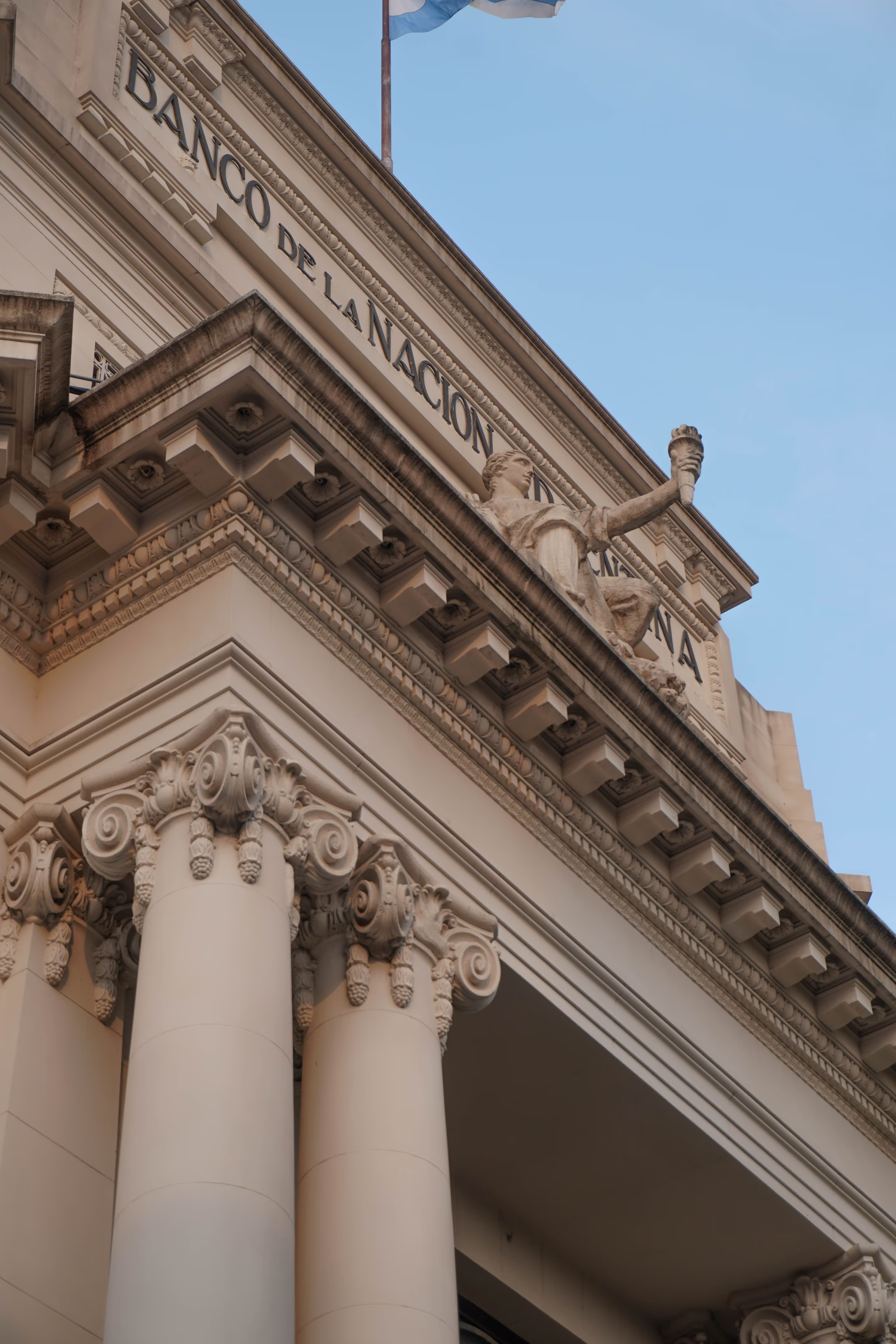
Buenos Aires · The facade of Banco de la Nación Argentina
Argentina travel guide · Money and budget
Spend on the journey.
Build a budget around the trip you want: the nights, the distances, the meals and the experiences that matter. A national daily average cannot make those choices for you.
A city stay, a self-drive circuit and a guided wildlife journey have different cost structures. Trying to fit them into one Argentina daily budget can hide the largest decisions. Start with the places you will sleep and the journeys between them. Add accommodation, flights or coaches, airport transfers, any rental car and the experiences you would be disappointed to miss. Then estimate ordinary food, local transport and smaller visits for the remaining days. Use current quotes in their stated currencies, because a remembered peso price can become misleading. This approach gives you something useful to adjust: a real route with visible tradeoffs, rather than a number that says little about how you will travel.
01
Separate the fixed from the flexible
International flights, a specific departure and a limited-availability stay may be hard to change. Put them in the budget first. Keep ordinary meals, flexible city days and optional outings in a separate section so you can see where adjustment is possible.
02
Distinguish shared from individual
A room, private transfer or rental car may be shared; a flight, park ticket or tasting may be charged per person. Record the unit beside each quote. Dividing everything by two can make a couple's plan look cheaper than it is.
03
Use one comparison currency
Keep the original quote and convert a working copy into the currency you use to plan. Record the date and the rate assumption. The eventual card conversion or cash exchange may differ, so update major unpaid amounts before booking.
Buenos Aires Province · Golden empanadas on a checked cloth
Everyday pleasures
Leave room for lunch.
Food is part of the journey, not simply the amount left after transport. A bakery breakfast, empanadas, a neighbourhood lunch and a long restaurant evening can all belong in the same trip. Budget for the way you actually like to eat. If a hotel includes breakfast, count that before adding another daily allowance. If you plan a winery lunch or a tasting menu, treat it as a particular experience rather than expecting an ordinary meal budget to cover it. A comfortable food plan leaves room for spontaneous café stops without making every day depend on a special reservation.
01
Mix ordinary and special meals
Choose the meals you want to make an occasion and give them a separate line. The surrounding days can be simpler without feeling like a compromise. Markets, bakeries and neighbourhood restaurants offer a different experience from destination dining.
02
Read what is included
Compare menus with drinks, service arrangements and any required advance payment in mind. A tasting, paired lunch and winery transfer may be sold together or separately. Ask what the stated price covers before comparing two offers. In bars and restaurants, a tip is customary and voluntary: official cultural guidance gives about 10% of the bill as a usual reference, not a compulsory charge. Ask how to leave it when paying, and choose the amount yourself.
03
Let the setting affect the plan
A remote lodge or a small mountain base may offer fewer convenient alternatives than a city neighbourhood. Check whether meals are available where you sleep, whether a kitchen is practical and how supplies fit around excursions.
The cheapest room is not always the least expensive stay. An outlying address can add transfers, parking or a long journey each evening. In Buenos Aires, a well-situated base can support walking days and easy access to the restaurants or cultural places you want. A rural property may be worth a higher room price precisely because you intend to spend time there. Compare the entire stay: room type, breakfast, heating or cooling, cancellation terms, payment currency and the transport required. A useful location and an extra night can sometimes deliver more than a higher room category.
01
Check the final accommodation quote
Ask whether taxes and mandatory charges are included and whether the amount is per room or per person. Confirm the currency for both the deposit and the remaining balance, especially when one is described in pesos and the other in dollars.
02
Ask about eligible hotel VAT treatment
Argentina has a VAT-refund regime for qualifying nonresident tourist accommodation paid by eligible methods. It is not a blanket reduction on every booking. Ask the provider to confirm eligibility, required documents and the actual final amount before relying on it.
03
Use cancellation flexibility deliberately
A flexible rate can be useful before a weather-sensitive connection or while an itinerary is unsettled. Compare its extra cost with what you would lose if plans changed. Once the route is firm, the value of that flexibility may differ.
El Chaltén · The road towards the snow-covered peaks
The expensive move
Count the travel days.
Adding another region brings more than a new hotel bill. It can add flights, baggage, airport transfers and a day that produces relatively little time in the destination. Before shortening every stay to save money, compare a trip with one fewer major move. Three extra nights in an existing base may support walks, local visits and unhurried meals while avoiding the cost of another airport day. Conversely, a well-chosen flight can be excellent value when it removes a long journey you do not want. Judge each move by the experience and usable time it buys. Patagonia can make that difference especially noticeable: widely separated bases, airport transfers and individually priced excursions can add more to a route than another day in Buenos Aires. Compare a complete El Calafate or El Chaltén stay—bed, meals, admission and transport—with the city days it replaces. There is no dependable single Patagonia price premium; fewer base changes and the right number of nights may matter more than a cheaper room.
01
Price the whole rental section
Include fuel, parking, tolls where relevant, authorised drivers, insurance options and any one-way charge. Keep the deposit separate from the trip's expected spend, but ensure the payment card has the capacity the provider requires.
02
Identify the experience costs
Park access, boat trips, specialist guides and equipment can be significant. Look up the current price for your date and visitor category. Do not assume that every mountain walk or protected area is free because an old itinerary treated it that way.
03
Protect the reason for going
If the glacier boat, wildlife outing or guided day is central to the trip, fund it before adding optional stops. A route that reaches every place but leaves no budget to experience them is not necessarily good value.
Use a simple list you can update while booking. The aim is to reveal the choices that matter, not to predict every café bill precisely.
01
The framework
Count nights and people.
For an illustrative 14-day trip with 13 accommodation nights, list all 13 nights first. Then add each flight, coach or rental section and the transfers at its ends. This is a planning example, not a suggested duration or price: use your own dates and party size.
Mark per-room, per-person and per-vehicle quotes.
Include arrival and departure days in meal and transport estimates.
02
Booking costs
Compare the payable total.
Take major costs to the final quote before comparing them. Baggage, a one-way rental fee or a required transfer can reverse an apparent saving. Keep deposits and unpaid balances visible so a booking does not disappear from the budget when only part is paid.
Record the quoted currency and payment date.
Keep cancellation terms beside the amount at risk.
03
Daily spending
Use a realistic day.
Build one ordinary day from the kind of breakfast, lunch, dinner and local journeys you expect. Apply it to the appropriate days, then replace it with separate estimates for guided outings or included-meal stays. A long travel day may have its own extra costs.
Avoid counting included meals twice.
Leave some room for small spontaneous purchases.
04
Changes
Keep a usable reserve.
Set aside an amount you could actually access for an extra night, a changed transfer or another realistic disruption to your route. The right amount depends on your commitments and flexibility. Keep this separate from the money already assigned to meals and activities.
Consider which costs are refundable and which are not.
Make sure backup funds can be used if a card fails.
05
Season
Compare the dates you will use.
Holiday periods, popular seasons and limited local supply can change both prices and availability. Obtain quotes for your exact stay rather than treating a low-season search result as a normal rate. Changing a date or a base may be more effective than cutting every day's comfort.
Compare nearby dates before fixing expensive connections.
Keep weather and activity suitability in the decision.
06
While travelling
Update what remains.
Track major settled charges and the money still committed, then adjust the remaining flexible allowance. Check card statements against receipts and distinguish a temporary hold from a final charge. Spend a few minutes on this periodically rather than recalculating the trip after every coffee.
Keep receipts for deposits, rentals and significant purchases.
Useful visitor information
Before you book.
Use current provider quotes to build the route budget. These official references explain the payment and accommodation rules that can affect the final cost.