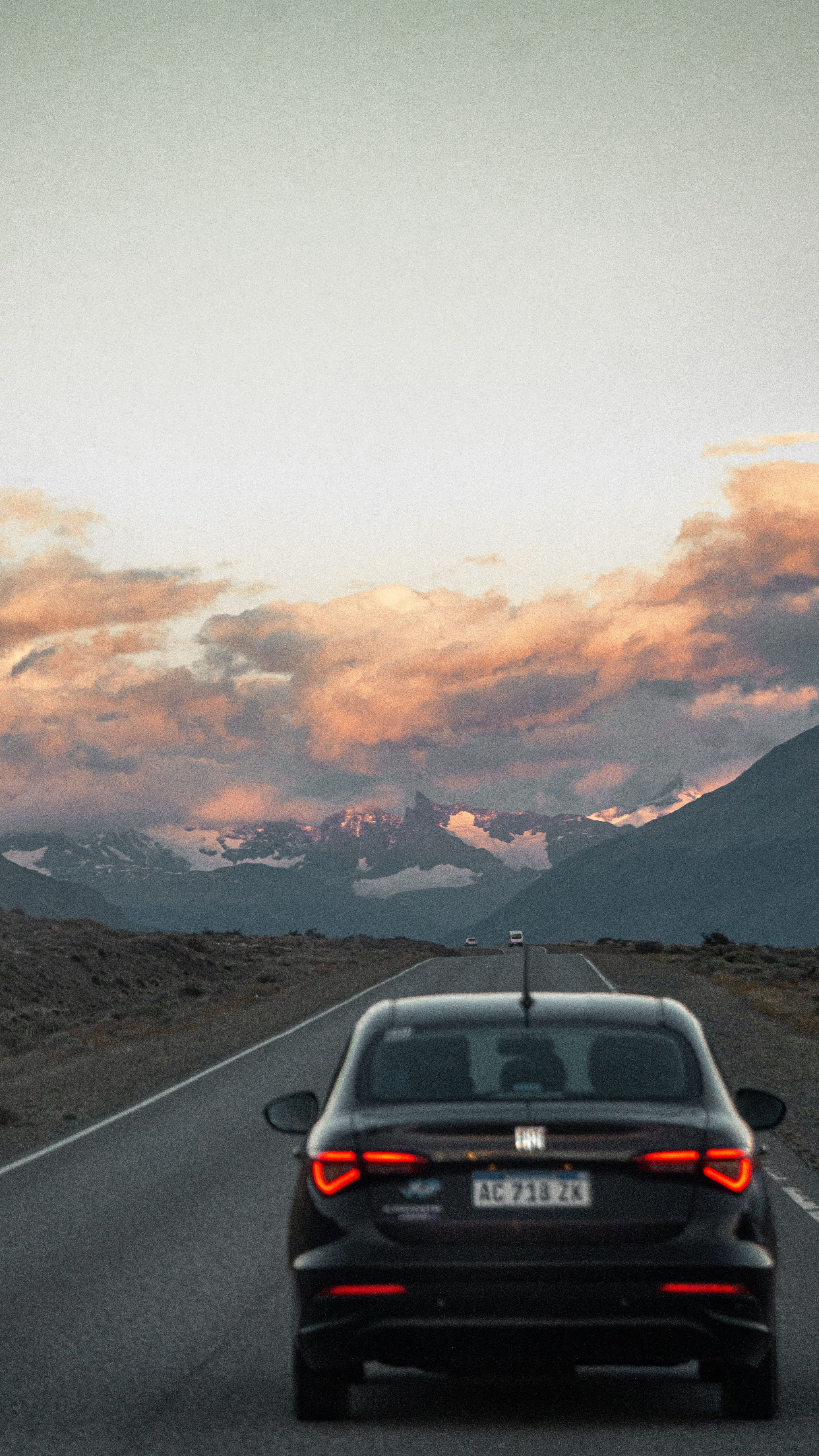
A rental car can transform a Lake District circuit, a valley journey or a stay outside a city. It lets you stop at viewpoints, carry your bags between smaller bases and reach accommodation that is awkward by public transport. It is less compelling while you spend several days walking Buenos Aires or joining organised excursions with transport included. Start by marking the days when a car genuinely adds freedom. Renting for that section alone can remove parking costs and the burden of driving through a city you came to explore on foot. A regional loop is often simpler than collecting at one end of the country and returning at the other.
01
Draw the overnight route first
Choose the places you will sleep, then connect them with roads that suit the vehicle and season. An attractive line on a map may include gravel, mountain bends or a long section with few services.
02
Count every rental day
Collection and return times affect the quoted period. Compare a city collection with an airport collection, including the transfers each requires. Read any charge for returning at a different location before designing a one-way route.
03
Separate the driver from the tasting
A car is useful around wine country, but it does not solve the return journey after drinking. Use a non-drinking driver or a suitable transfer for tasting days. Argentina's alcohol-zero rule applies on national roads.
Mendoza · A straight road towards the Andes
What the quote includes
Read the small print.
The daily rate is only one part of a rental. Compare the included distance, fuel policy, deposit, insurance excess, authorised drivers and return conditions. A lower price may require a larger deposit or exclude the road you want to take. Ask how the company handles tyres, glass, the underside of the vehicle and recovery on remote roads; do not assume these are included because a booking says 'insurance'. Confirm the payment card requirements in the main driver's name before arrival. A debit card that works for ordinary purchases may not meet the rental company's deposit policy.
01
Make the road permission specific
Describe the actual itinerary, including unpaved sections and any international crossing. Ask whether the route is permitted under the contract and whether a different vehicle is required. A four-wheel-drive badge is not permission to leave public roads.
02
Compare the return arrangements
One-way fees, office hours and after-hours procedures can change the value of a route. Confirm where the keys are handed back and when responsibility for the vehicle ends. Keep room to refuel before a flight.
03
Document the handover
Photograph existing marks, wheels, glass and fuel level with the company present. Check the spare or repair provision and the emergency contact details. Make sure you understand what to do after a breakdown before leaving the collection point.
San Martín de los Andes · The road through the mountains
Where the car helps
Choose a useful loop.
The Seven Lakes route is a natural reason to rent: the drive between Villa La Angostura and San Martín de los Andes becomes a series of lake stops rather than a transfer to complete. In the Northwest, a valley circuit can link very different landscapes and small settlements, but its surfaces and altitude demand more thought than a short paved outing. Around Mendoza, a car can support a mountain day or a rural stay while tasting days use a separate driver. These are different uses of the same vehicle. Choose the one that fits your trip instead of assuming every region needs the same rental plan.
01
Match stops to the available day
Short distances around lakes can fill a day when you add viewpoints, a walk and lunch. Preserve that freedom by choosing a realistic overnight stop. A return drive after dark can erase much of the pleasure of a scenic day.
02
Read beyond the route number
Ruta 40 is a long national route with very different sections. A route number is not a guarantee of a paved surface, nearby fuel or easy driving. Investigate the exact segment and its current condition.
03
Use a guide where it improves the day
A local guide or driver can add context on a complicated valley route and remove the need to navigate while sightseeing. Compare that option with the complete car cost, especially for a short stay.
Mountain and Patagonian driving asks you to adapt to conditions. Gravel changes braking and stopping distances; wind can affect the vehicle and make opening a door surprisingly difficult; rain or snow can change a road that was straightforward in a previous season. Use the official road-condition service and local advice before setting out. In winter, ask the rental company about the equipment and restrictions that apply to the precise route. Carrying chains does not make a closed road open or replace knowing how to use them. If conditions worsen, a shorter day or an extra night is a practical part of the plan.
01
Keep remote sections supplied
Identify fuel and food opportunities while the route is still flexible, and refill before a long gap. Carry drinking water, warm layers and an offline map. Mobile coverage is not something to assume between towns.
02
Stop where stopping is safe
Use a viewpoint or a proper pull-off for photographs. Do not stop in a traffic lane or walk along the carriageway for a road image. On narrow or exposed sections, concentrate on driving and let the passenger enjoy the view.
03
Leave the final kilometres some light
An unfamiliar access road is harder at night. Set a turnaround point for an outing and tell your accommodation if arrival changes. Avoid making a long drive depend on the fastest estimate from a navigation app.
Resolve the documents and contract first, then plan the route around the vehicle and the day. This is where a little preparation buys real freedom.
01
Licence
Bring the accepted originals.
Argentina recognises foreign driving documents under applicable international agreements, but the answer depends on the licence and issuing country. Confirm with the rental company and your licence authority whether an international permit or translation is needed alongside your original licence and passport.
A phone photograph is not a replacement for the original.
Check minimum age and licence-holding requirements with the rental company.
02
Drivers
Name everyone who will drive.
Put each intended driver on the agreement and confirm any additional fee or age restriction. Share long driving days only among authorised drivers. Keep the licence, identity document and vehicle paperwork accessible for controls.
Ask which documents the car must carry.
Do not rely on old online lists of vehicle forms.
03
Safety
Keep the driver alcohol-free.
The national alcohol-zero law prohibits driving with alcohol in the blood on national roads. Plan winery visits and evening meals accordingly. Use seat belts, follow posted limits and the current rules for children, and keep phones out of the driver's hands.
Arrange a driver before a tasting starts.
Treat poor visibility and surfaces as reasons to slow down.
04
Borders
Get permission in advance.
Taking a rental into Chile or another neighbouring country requires the company's agreement and the appropriate cross-border documents and cover. Ask how long preparation takes and which crossings are permitted. A normal domestic rental confirmation does not establish that permission.
Include every crossing on a Tierra del Fuego road journey.
Read the land-border guide before choosing a one-way international route.
Private foreign vehicles: identify the customs regime for the vehicle's registration and the driver's residence. ARCA's other-countries guidance requires ownership evidence or a sufficient public-instrument authorization, a licence valid in Argentina and liability cover applicable in Argentina. Keep the temporary-admission record and its expiry; the vehicle's customs permission is separate from your immigration permission.
MERCOSUR vehicles: ARCA specifies tourist and driver documentation, ownership or applicable authorization, and insurance valid in MERCOSUR. Its rules include residence conditions; a foreign number plate alone does not establish eligibility. For a qualifying rental, the company issues the Autorización para Circulación en el MERCOSUR (ACM).
Chile: use the separate Argentina–Chile vehicle guidance and confirm the paperwork with Customs and the rental company for your direction of travel. Do not infer Chilean eligibility from the MERCOSUR heading.
Insurance evidence: ask the insurer for the certificate covering the actual countries, dates, vehicle and driver. SSN's international liability-certificate provisions allow electronic evidence; the document's colour is not the test of valid cover.
05
Breakdowns
Know who answers.
Save the provider's assistance number and ask how recovery works on the roads you intend to use. A remote gravel section may have different support from a main highway. Agree the procedure for repairs and expenses rather than arranging them without authorisation.
Keep the vehicle location available offline.
Carry the contract and incident instructions where you can reach them.
06
Return
Finish with a receipt.
Leave time for the agreed fuel level, inspection and onward transfer. Photograph the returned vehicle and keep the handover confirmation and final charge record. Ask how and when a deposit hold is released, recognising that the card issuer also affects timing.
Check the return office's actual opening hours.
Compare the settled charge with the signed agreement.
Useful visitor information
Before you book.
Use these official sources for the current detail behind the journey. Conditions and available services can change after you make the first plan.