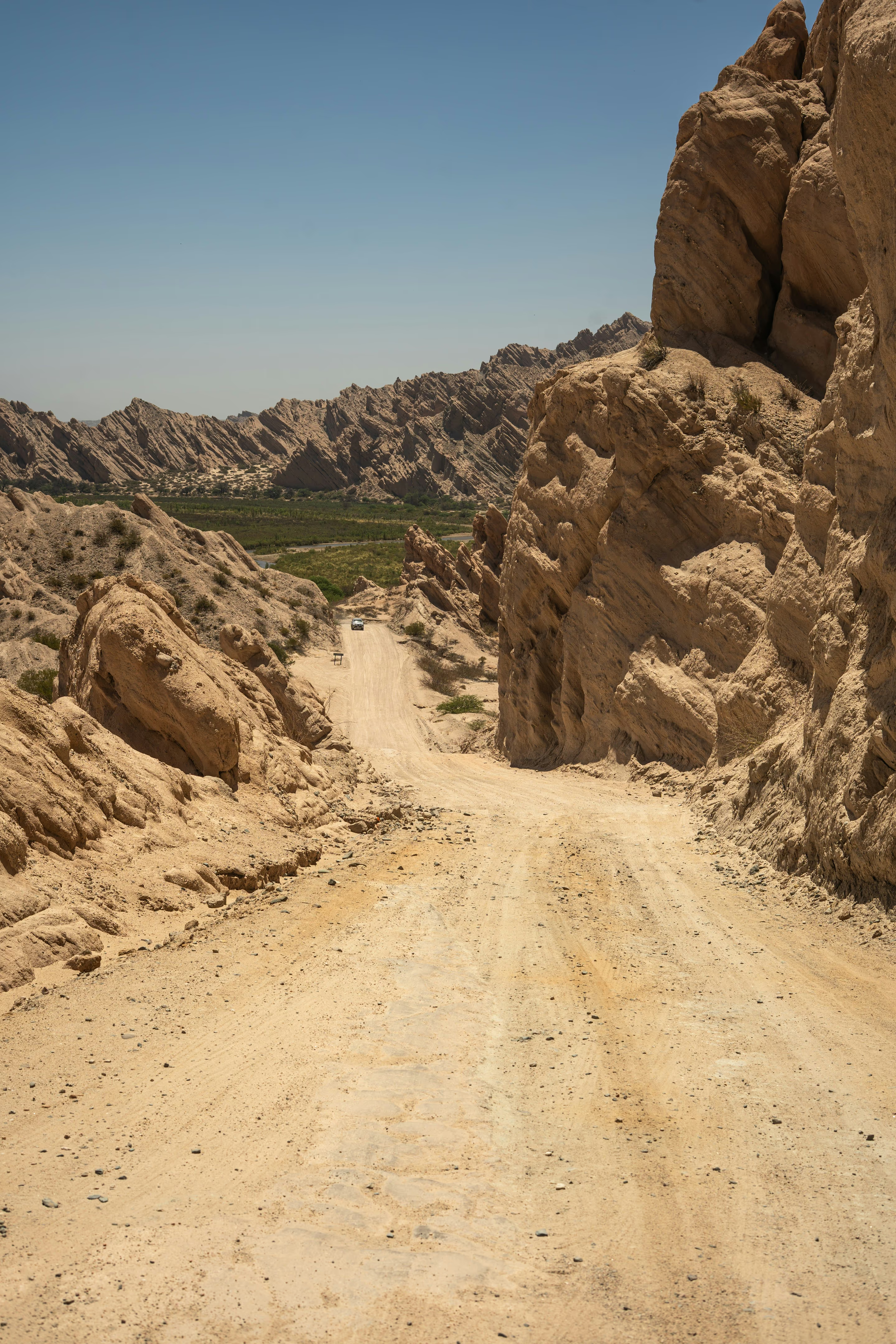
Salta · RN40 through the rocky valleys near Cafayate
Salta · The Calchaquí Valleys
Roads through the valleys.
Climb from green foothills into cactus country, follow the valley villages, then return through red rock. Give the Salta–Cachi–Cafayate circuit time to unfold.
The classic valley circuit leaves Salta towards Cachi, follows RN40 south through the Calchaquí Valleys to Cafayate, and returns along RN68 through the Quebrada de las Conchas. The attraction is the change: green slopes give way to high, open country; whitewashed streets lead into a landscape of folded rock; vineyards introduce a different pace before the gorge brings you back towards the city. It works best as a journey with overnight stays, not a checklist of formations viewed through a windscreen. Road surfaces, winding climbs and village stops make the distance on a map an incomplete measure of the day. Choose the full loop only if its slower middle stage suits the time and driving experience available.
01
Start with Salta
Spend an arrival night in the city before collecting a car or joining the road journey. The centre, museums and a peña evening give the trip cultural context as well as a practical base. Begin the mountain drive rested, with the day available for the climb.
02
Make the middle stage deliberate
Cachi to Cafayate follows a different road from the direct Salta–Cafayate connection. Gravel, bends and narrow sections can make it the slowest part of the loop. An overnight around Molinos or Angastaco changes it from a long transfer into a valley stay.
03
Choose a shorter version when it fits
A Cafayate stay reached by RN68 is a complete trip in its own right. Cachi can also be visited separately from Salta. These alternatives preserve the places you care about when the full circuit would leave too little time outside the vehicle.
Salta · Cactus country beneath a changing sky
Salta to Cachi · The climb
From green slopes to open sky.
The approach to Cachi leaves the Valle de Lerma for the Quebrada de Escoipe and climbs the Cuesta del Obispo. Its bends belong to a mountain journey, with changing visibility and sections where progress is slow. Higher up, the landscape opens around Piedra del Molino, then the route crosses the country of Los Cardones and the Recta del Tin Tin before reaching Payogasta and Cachi. Treat the roughly 160 kilometres from Salta as a substantial sightseeing day. The sharp geographical changes deserve stops, and a high viewpoint can feel much colder than the city you left that morning. Arriving in Cachi with daylight remaining gives you time to settle in and walk its compact streets rather than simply find dinner and leave again.
01
Pause where a path is provided
Los Cardones has short interpretive options, including Caminos del Pasado and Secretos del Cardonal, as well as much more demanding mountain routes. A roadside visit does not require adding an ambitious hike. Use the designated stopping places and choose an open trail suited to the day.
02
Give Cachi an unhurried morning
A second night creates time for the central square, local craftwork and the archaeological museum, with the mountains still part of the town's everyday setting. Cachi's appeal is more than the white facades: its history connects the valley's earlier inhabitants with later colonial settlement.
South of Cachi, RN40 threads the valley through places such as Seclantás and Molinos before continuing towards Angastaco, the Quebrada de las Flechas and San Carlos. It is a journey of changing textures: cultivated ground, adobe buildings, woven textiles and rock shaped into steep fins. Much of the Cachi–San Carlos section is traditionally gravel, and current works or weather can alter its condition. Leave a full day for the connection, or break it with a night in the valley. A detour towards Colomé is a separate outing with its own approach road and appointment arrangements; it should not be slipped into an already crowded driving day. The aim is to have time to enter a village, meet the people making things and enjoy lunch before moving on.
01
Look for the work behind the objects
The area around Seclantás and El Colte is associated with weaving and the local artisans' route. Ask before entering a workshop or photographing someone at work. A visit arranged with a local host can offer more context than treating a working home as a roadside display.
02
Separate tasting from the driving stage
A winery visit with lunch can become the main event of a day. Arrange appropriate transport for tasting and confirm access before taking a side road. Staying around Molinos or Cafayate gives wine and village visits their own space instead of turning them into deadlines.
Quebrada de Cafayate · Red sandstone and valley vegetation
Cafayate to Salta · RN68
Return through a landscape of red rock.
Cafayate offers a welcome change from the road: a walkable centre, wine producers, the Museo de la Vid y el Vino and time to understand the region's aromatic Torrontés alongside its red wines. Give it a full day before the return to Salta. RN68 runs through the Quebrada de las Conchas, where the Anfiteatro, Garganta del Diablo and other named formations make natural pauses. The direct Cafayate–Salta distance is roughly 190 kilometres, but the gorge is the reason to avoid treating it as a simple transfer. Begin in daylight and stop selectively. Several longer pauses, with time to look at the rock and the surrounding valley, are more satisfying than a hurried photograph at every marker.
01
Keep a town day between the drives
Two nights in Cafayate provide a day for a tasting, museum visit and meal without packing the car again. Staying longer allows a more focused wine visit or a quieter excursion. The town works as a destination, not just the point where two road numbers meet.
02
Leave the gorge before the final flight day
Returning to Salta for the last night protects both the scenic drive and the onward journey. A flight deadline can force you past the very stopping places you came to see. Keep that final evening available for a meal and a comfortable departure the next morning.
Use this outline to decide whether to drive the full circuit, shorten it or travel with a local driver. Suggested durations are editorial starting points, not promises about road conditions.
01
Duration
Five to seven days works well.
A useful five-night outline is Salta, Cachi, a valley village, two nights in Cafayate, then return to Salta on the sixth day. Add a final Salta night when an onward flight makes that sensible. With fewer days, remove a stage before removing every town visit.
A shorter Salta–Cafayate return can suit three or four nights.
An extra Cachi night gives the mountain approach more breathing room.
02
Road surface
Know which stage is gravel.
The full loop combines paved roads with slower unpaved sections. Check the Cuesta del Obispo and the Cachi–San Carlos stretch specifically. Ask about clearance, tyres and assistance for the roads you intend to use, rather than accepting a general assurance that a vehicle is suitable for Salta.
Confirm the rental agreement covers the planned route.
Do not follow a navigation shortcut onto an unverified side road.
03
Season
Dry-looking country still gets rain.
Summer rain can affect mountain and valley roads even when the surrounding landscape appears arid. Cooler, generally drier months often suit a drive, but higher sections can be cold and conditions remain local. Use the forecast together with current road information and advice from your next host.
Keep a warm layer accessible for the higher approach to Cachi.
Leave flexibility to use the direct RN68 route if the loop is unsuitable.
04
Stops
Keep the best hours for the landscape.
Drive the mountain and gorge sections by day. Arrange lunch and fuel around the settlements on the route, and carry water and food for the gaps between them. Mobile coverage can be limited; save the route and accommodation details before setting out.
Refill in an established town rather than relying on the next small stop.
Park only where the vehicle and passengers can leave the carriageway safely.
05
Travel style
A driver can change the experience.
A private journey or small-group circuit lets the landscape hold your attention and can make village visits easier to arrange. Compare the actual overnight stops, time outside the vehicle and group size. Two excursions returning to Salta each night offer a different experience from a continuous valley circuit.
Ask whether the itinerary includes the RN40 valley link.
Check how tasting visits and side-road excursions are organised.
06
Wider route
Keep Jujuy as a separate chapter.
Purmamarca, Tilcara and the Quebrada de Humahuaca lie on a different northern axis. They can follow a Salta valley trip when you have enough days, but they do not sit along this loop. Finish one regional sequence before adding the next, with time in Salta if that helps the connection.
Use the Northwest destination hub to compare the two corridors.
A week focused on the valleys is a substantial trip without a Jujuy extension.
Useful visitor information
Before you book.
Use these official sources for the current detail behind the journey. Conditions and available services can change after you make the first plan.
Cafayate · The road approaches a towering rock wall
Let the road connect the places
Leave room for the valley.
Choose the overnight stops that make you want to get out of the car. The landscape will give you plenty to look at between them; the towns give the journey its depth.