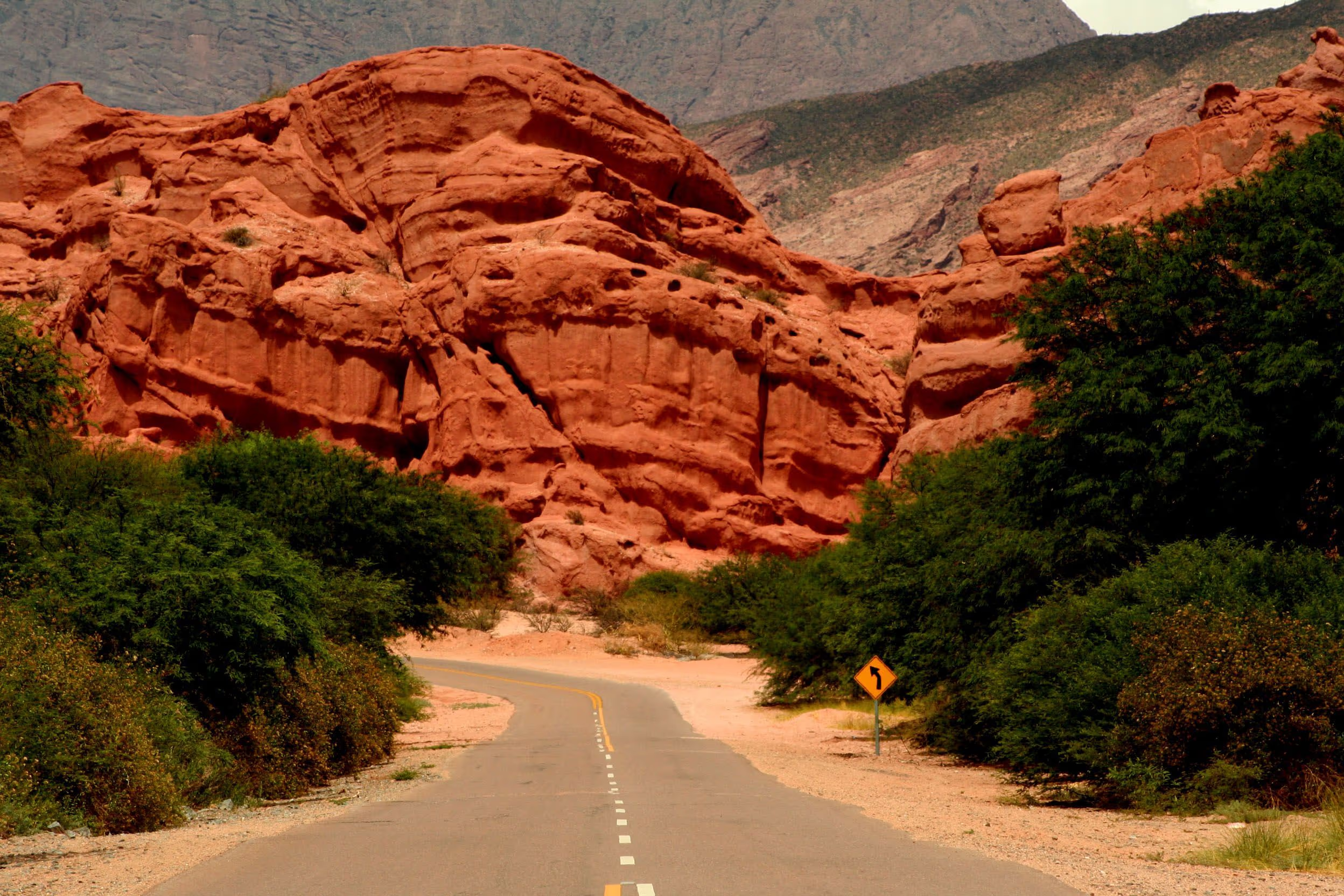
Quebrada de las Conchas · The road through red rock
Salta · Scenic road guide
Quebrada de las Conchas
Red walls, deep folds and a road that keeps revealing another shape. The Quebrada de las Conchas is a journey to edit carefully: fewer stops, enough daylight and time to stand still.
The Quebrada de las Conchas forms a protected landscape along the approach to Cafayate from Salta. Its best-known formations are stops within a wider road journey, not a single attraction with one entrance. Decide whether you are travelling through with luggage or returning to the same base. That choice shapes how much time you can spend walking, waiting for the light and understanding the rock around you.
01
As part of the transfer
A transfer between Salta and Cafayate can include selected stops. Ask how much time is allocated and whether walks are part of the service. A transport booking and a full sightseeing day are not always the same thing.
02
From a Cafayate base
A dedicated outing leaves your luggage behind and allows you to choose a smaller set of visits. Compare the complete return route before assuming that every named formation will fit comfortably.
03
With your own vehicle
Plan safe stopping places, daylight and the road conditions for your dates. Keep the driving day separate from winery tastings. The person at the wheel needs to watch the road rather than search for the next photograph.
Cafayate approach · Curves and rock walls
Follow RN68
Read the country between stops.
The road threads through a landscape whose interest is not confined to the best-known formations. From Cafayate, select RN 68 stops rather than treating the gorge as one continuous hiking route. La Yesera introduces mineral-bearing rock in varied colours and a human history: gypsum was processed here before the area became protected. That combination makes it a different stop from the enclosed formations farther along the road. Allow time to look from places where stopping is safe and permitted.
01
Choose a direction deliberately
Work out where the day begins and ends before adding stops. A one-way transfer has different constraints from an outing that returns to Cafayate.
02
Keep the roadside clear
Use designated stopping areas and avoid walking into traffic for a view. Let another opportunity pass if reaching it would require an unsafe manoeuvre.
Salta · A figure among red sandstone walls
Scale and erosion
Stand still inside the scale.
Anfiteatro and Garganta del Diablo offer two contrasting forms. Anfiteatro is an enclosed, curved space whose shape gives it striking acoustics; Garganta del Diablo is a narrow canyon with striated, angled rock. They are separate RN 68 stops, not stages of a through-walk. Look from permitted visitor areas without treating the canyon's sloping rock as an invitation to climb. Check the current visitor access and terrain before deciding how far to walk.
01
Choose a few places properly
Allow time to read the signs and look closely. A short list can leave more room for each stop than a rushed circuit of every familiar name.
02
Respect the rock
Use authorised paths and follow barriers. Eroded formations and protected surfaces are not climbing invitations, even where a photograph makes access look straightforward.
Cafayate surroundings · Rock beneath changing cloud
Beyond the quick stop
Let light change the landscape.
Cloud and shadow can transform the rock without your moving very far. A pause or a suitable short walk gives the landscape time to reveal that change. Return to your Cafayate base with time for the town, and ask locally which visitor paths are open and appropriate, particularly after rain or when the forecast is unsettled.
01
Make walking a separate choice
Check distance, footing, exposure and whether a guide is needed. A roadside viewpoint and a longer walk through uneven country ask different things of the day.
02
Keep the return comfortable
Allow time for the road after the last stop. Beautiful light at the end of the day does not remove the need for a sensible departure.
Plan your visit
Build a road day you can enjoy.
Time allowances are our editorial suggestions. Check access and transport for your dates.
01
Time and distance
Start with the full journey.
The useful measure is the time from your accommodation to the final return or onward arrival, including every stop. A transfer from Salta covers different ground from a shorter outing based in Cafayate. Ask for the complete route before comparing prices or durations, and avoid adding another long activity immediately afterwards.
02
Choosing stops
Pick for interest and access.
El Anfiteatro, Garganta del Diablo and other named formations offer different settings. Choose those that interest you and suit your mobility. Access can involve uneven ground; check current local information rather than relying on a photograph taken from a particular viewpoint. A guide can add geological context and help pace the route.
03
Weather
Check conditions before the road day.
Heat, wind and rain affect comfort, visibility and the suitability of walks. Ask about current road and access conditions before departure. Keep an alternative in Cafayate if the outing no longer makes sense. Changing the day is often easier than trying to fit a fixed list of stops into deteriorating conditions.
04
Driving
Give attention to the road.
RN68 carries other traffic as well as visitors. Use safe pull-offs, allow slower vehicles room and keep the driver focused on the bends. Plan breaks and fuel with the full journey in mind. If choosing a tour, ask how the group size, guide and transport arrangements influence the time available at each stop.
05
Walking and equipment
Prepare for the outing you chose.
Bring water, sun protection, suitable footwear and layers for the weather. Ask about facilities and opportunities for breaks before leaving town. Stay on authorised routes, carry waste back and leave fossils, rocks and vegetation where they are. Choose shorter walks when that better suits your group rather than trying to match someone else's itinerary.
06
The overnight base
Keep the evening easy.
Cafayate makes a useful end to a landscape day, with the option of dinner and a slower morning. If travelling onward to Salta, allow time for the remaining drive after the canyon stops. Keep wine tasting for another day with appropriate transport, so the scenic journey does not become a rushed connection between appointments.
Before you go
Check the details for your dates.
Official visitor information and background for the places described here.
Spend the evening in town, then give the next day to wine, craftwork or another part of the valley. Cafayate rewards time beyond the journey that brings you here.