A useful travel plan keeps your documents, insurance and practical contacts easy to reach. Buenos Aires, an Iguazú park day and a remote Patagonian hike require different arrangements: an accommodation address, a confirmed transfer or a clear route back to town. Organise the parts you can prepare, then ask specific local questions when you arrive. The reception desk can explain a pickup point; the park office can explain the route’s registration and current access. Keep those answers with the bookings they support.
01
Prepare the transitions
Arrivals, departures and unfamiliar transport hubs deserve a little more attention. Save the address, identify the pickup location and put documents away before moving through a crowd.
02
Keep a recovery option
Have another way to pay and another way to reach someone if a phone or card goes missing. Independence is easier when one small problem cannot disable the entire trip.
03
Match the advice to the place
Ask about the particular street, route or activity you will use today. Broad labels for an entire city or region rarely help you choose the next sensible step.
A traveller with a backpack on a colourful Buenos Aires street.
01 / Documents and contacts
Keep the important details usable.
Prepare a compact record of passport details, the permission granted, booking references and insurer and consulate contacts. Keep the originals available where required: a copy helps recover information but does not replace a valid travel document at a border.
01
Connect each booking to a contact
Keep each provider's name and contact beside its booking reference. Store the insurer's assistance number and your own consulate's official contact details with the travel records so they can be found without searching through unrelated messages.
02
Keep a separate, usable backup
Save an offline copy and a secure backup separately from the original documents. In a group, make sure another member can access the essential references and assistance contacts if the person holding the main record is unavailable.
03
Prepare for replacement documents
Ask your consulate about the documents and official reports required in your circumstances. Contact the carrier if your travel document changes before departure.
Historic buildings and cobblestones in Buenos Aires.
02 / The journey between
Plan the handover.
Before checkout, trace the original journey from the accommodation to the next address. Confirm the exact airport or terminal on each ticket, the meeting address for a booked transfer and who is responsible for each separately booked stage. Include collecting and carrying luggage, the gap between services and the last onward connection. A flight followed by a bus needs a checked journey between their actual departure points; sharing a city name does not make those points interchangeable.
01
Allow room for a change
Check whether the tickets form one protected booking or separate arrangements, and ask each provider about its responsibility for the connection before relying on it. Leave a realistic gap for baggage collection and any transfer between terminals.
02
Plan the arrival before checkout
Confirm the next full address, the booked meeting point and the planned arrival arrangements before leaving. Check how luggage will move between services and whether storage is available if the accommodation cannot receive it yet.
03
Protect the last connection
Check the last onward service against the original arrival time, including the journey to its boarding point. If the planned gap is too short, revise the original itinerary before checkout rather than treating the last departure as guaranteed.
A hiker beneath cloud-covered mountains near El Chaltén.
03 / Beyond the town
Know the way back.
A trail is a different commitment from a city walk. Before leaving, understand the route, the current conditions, the time needed to return and where help could realistically come from. Los Glaciares National Park recommends warm and waterproof clothing, suitable footwear and enough food and drinking water; those items are useful only if they are with you when the weather changes. Ask the park about closures and required registration for the particular route. Choose the day’s objective to suit the least comfortable person in the group, and agree that turning around is a normal decision. The mountain will not become easier because a photograph is on the wish list. For an El Chaltén day, choose the route before choosing the departure time. Work back from a comfortable return, including the pace of the whole group and time at the destination. Keep a shorter option that still offers something you are pleased to see.
01
Leave a clear plan
Tell a reliable contact which trail you intend to use and when you expect to return. Agree what they should do if they do not hear from you.
02
Use conditions, not momentum
Reassess at sensible stopping points. Wind, poor visibility, ice or a slower pace can change the return margin even when everyone still feels enthusiastic.
03
Respect the setting
Stay on permitted routes and follow wildlife and fire instructions. An attractive unofficial shortcut can introduce terrain, conservation and rescue problems that are not visible from its entrance.
The most helpful backup is specific. Give each of these situations a simple response before it happens, then keep the information somewhere you can reach.
01
Contacts
Know how to ask for help
In Buenos Aires, call 911 for an emergency and 107 for SAME medical assistance. Keep the accommodation address ready to read aloud. Away from the city, ask your host or operator which local emergency and rescue contacts apply to the route.
Save your accommodation and insurer’s assistance numbers.
Describe the location and the immediate problem clearly.
Keep essential addresses, booking references and recovery information somewhere other than the device you carry every day. Secure the phone with a lock and understand your account-recovery process before leaving.
Save an offline map for the next leg.
Keep a separate copy of critical contact details.
Avoid putting every payment and login recovery method on one device.
03
Documents
Keep the replacement path
Store a secure passport copy and your own consulate’s contact details separately from the original. If a document disappears, obtain the relevant local report and ask the consulate what is needed for replacement or onward travel.
Record the loss through an official channel.
Contact the airline if travel documents change.
Retain report and expense records for any insurance claim.
04
Changed transfer
Rebuild the connection in order.
If a connection changes or is missed, work through the bookings in sequence. Establish what is confirmed before rearranging the next stage; this process does not promise a change, refund or compensation.
Contact the booked provider with your reference and location to establish the confirmed revised service.
Contact any separately booked onward provider to check whether that booking can change.
Notify the accommodation and confirm the new pickup or meeting location and arrival arrangements.
05
Driving
Build a day you can finish
Review the road status, likely weather and fuel plan before a remote leg. Arrange stops that let the driver rest and make the final approach in conditions they are comfortable handling. Carry what you need if a journey takes longer than expected.
Use Vialidad and local authorities for road conditions.
Do not leave refuelling to a single uncertain stop.
Keep an alternative overnight stop in mind.
06
Remote days
Agree the change of plan
Ask a guide how they handle deteriorating conditions, an unwell traveller and a missed return time. Check that your insurance fits the activity and location. A clear conversation before departure is more useful than an assurance that everything will be fine.
Know the turnaround decision and who makes it.
Carry food, water and appropriate layers.
Ask about communication where mobile reception is unreliable.
Useful visitor information
Before you book.
Use current official information for the city, road or park you will visit. General advice cannot establish the conditions on an individual street or trail.
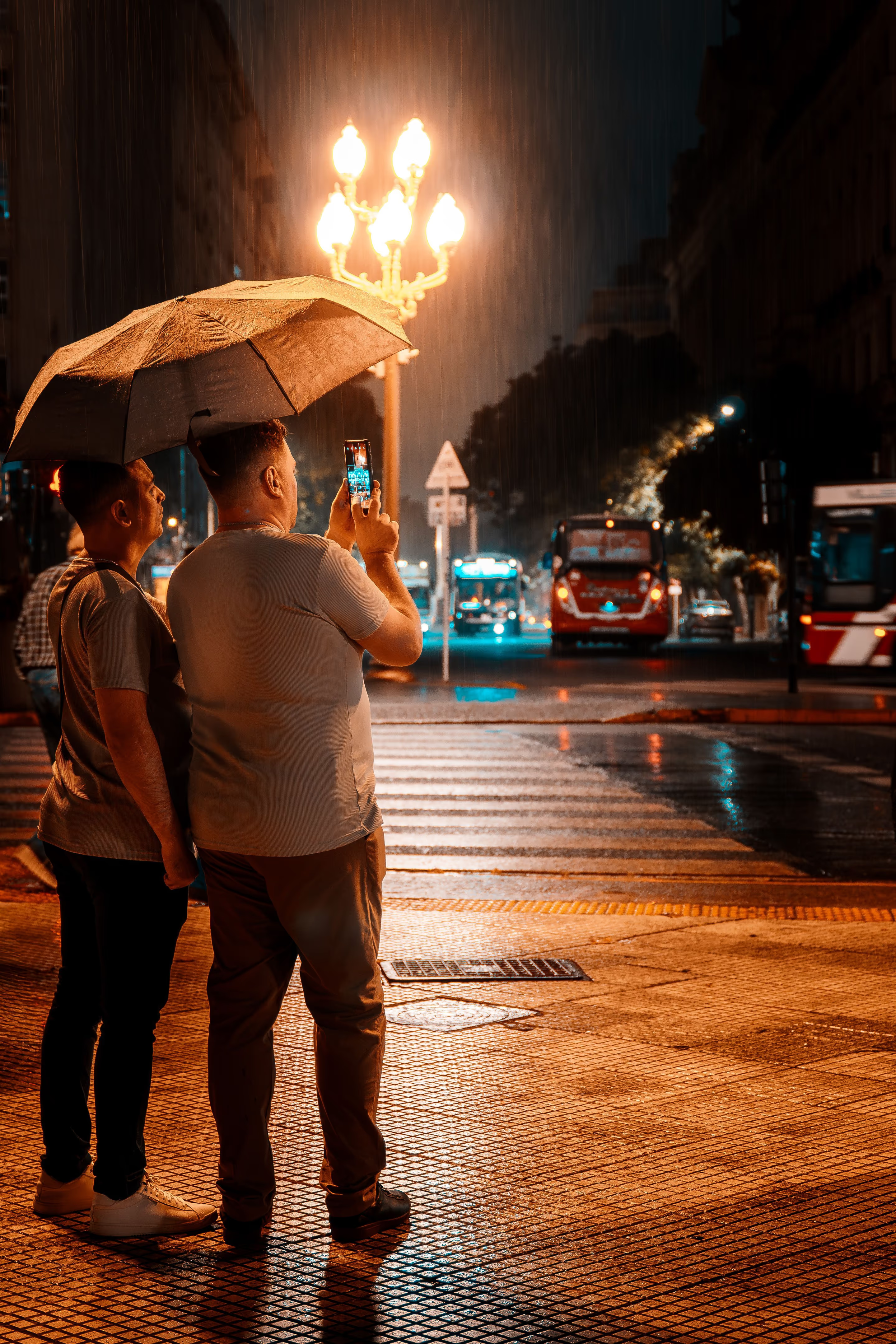
Rain catches the light along a historic Buenos Aires street.
Leave room for the evening
Let the city unfold.
A little preparation buys something worthwhile: more attention for the place itself. With the return journey arranged and the essentials secure, you can notice the light in an old doorway, stay for another song and let dinner take its time.