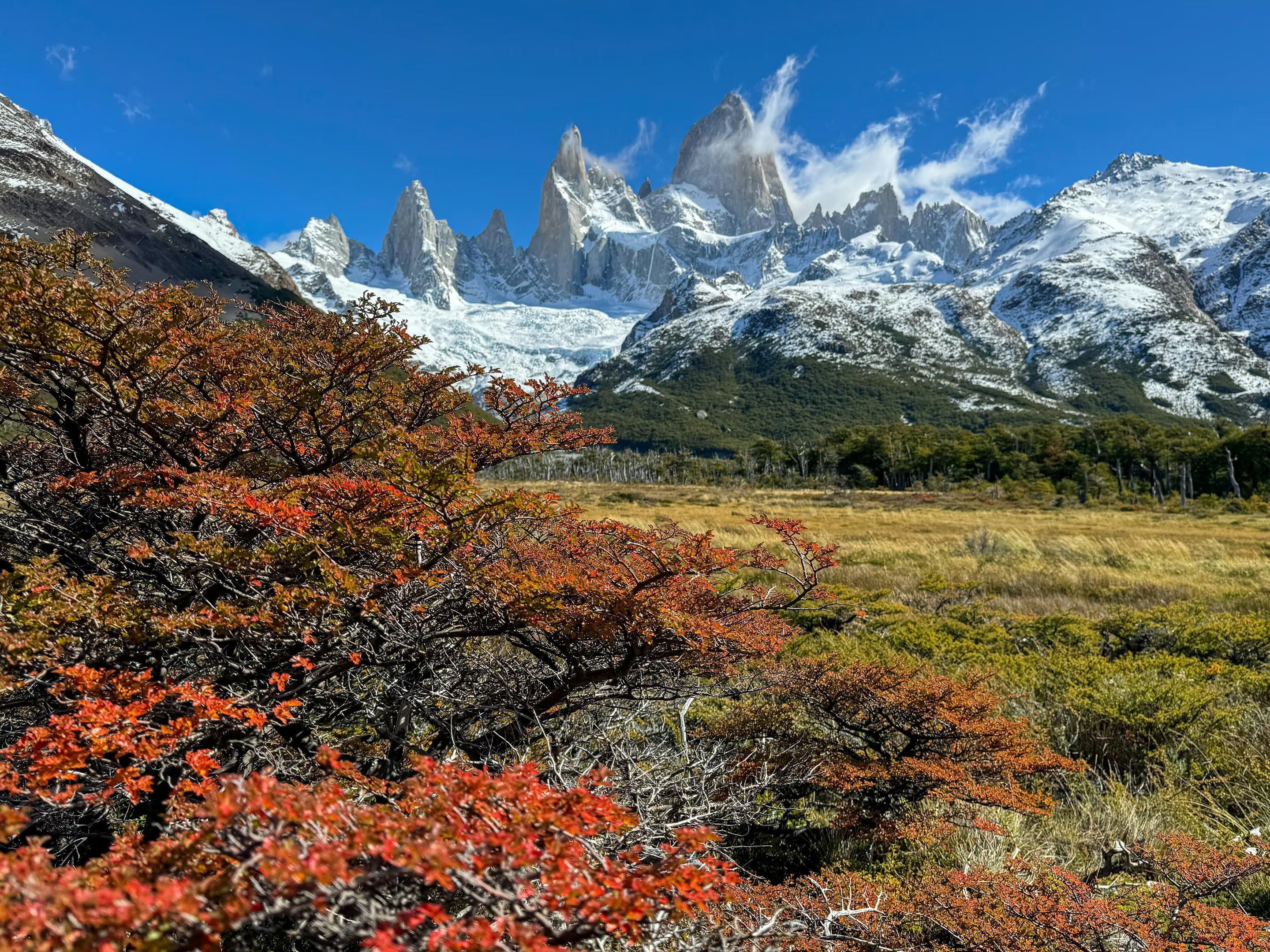
Patagonia's great walking days do not all end at the same kind of viewpoint. Around El Chaltén, the draw is a valley opening towards granite and ice. In the Lake District, a forest walk can lead to water, a waterfall or a mountain refuge. Around Ushuaia, woodland and shore meet within a distinctly southern landscape. Choose your base before collecting trails: these regions are far apart, and each deserves its own stay. Then choose the effort you want to make. A substantial lake walk, a few hours beneath the trees and a short viewpoint outing can all be memorable, particularly when the plan fits the weather and the people walking.
01
Choose a landscape before a headline
Decide whether you want open mountain views, forest detail or a coastal setting. That preference helps narrow the route more usefully than a list of the most photographed places. Someone who loves old trees and running water may enjoy a sheltered valley more than a steep ascent towards cloud.
02
Read the whole route
Compare distance, climbing, footing and exposure, including the return. A route with little altitude gain can still be tiring if it is long or muddy. An out-and-back route offers useful turn points, while a one-way trail requires a clear plan for reaching its start and leaving its finish.
03
Build a walking rhythm
Give a longer outing a lighter day on either side when that suits the group. Keep a short route in mind before the weather changes, so an adjustment still feels like a chosen experience. A flexible three-night stay usually offers better choices than a single fixed hiking morning.
El Chaltén · A walker beside a glacial lake
El Chaltén · Viewpoints and glacial valleys
Find your distance from the village.
El Chaltén makes it possible to build several different walking days from one base. The Cóndores and Águilas viewpoints introduce the wider setting; Laguna Capri gives the Fitz Roy approach a clear, shorter objective. Laguna Torre follows a longer river-and-forest valley to the glacial basin, while Laguna de los Tres adds a demanding final climb to its mountain-lake approach. These are choices with different commitments. Select one main objective and let the route unfold at a comfortable pace. The granite skyline may come and go in cloud, but the changing vegetation, water and moraine give the walk a story even when the summit view is incomplete.
01
Use a shorter destination deliberately
Laguna Capri is about four kilometres from the trail start, so the return and the walk from your accommodation belong in the day's total. Reaching the lake need not be a prelude to going higher. For less time on foot, compare the nearer village viewpoints with current information from the park.
02
Separate the two major lake days
The usual Laguna Torre outing is roughly 18 kilometres return. Laguna de los Tres has a different pattern of effort, especially near its upper basin. Walking both on separate days leaves room to appreciate their differences. Linking trail systems is a larger itinerary that needs its own planning.
Bariloche · Cloud and forest on a quieter mountain day
Bariloche · Woodland and mountain choices
Let the trees change the pace.
Bariloche offers a broad contrast between lower forest outings and longer mountain routes. In the Gutiérrez area, the Cascada Los Duendes path reaches a waterfall through woodland; the Challhuaco area offers further forest and viewpoint choices. These settings work well when you want to notice the landscape without making a high mountain basin the day's objective. Frey belongs to a different category: its refuge and granite surroundings require a substantial mountain outing, with current trail and weather advice. Make the choice before leaving town. A short walk followed by a lakeside afternoon can be a complete day, with as much character as a more demanding route.
01
Match the route to the group's interests
A waterfall, a shaded trail and time beside the lake can suit a mixed group better than a long climb. Confirm the exact starting point and surface conditions, particularly if travelling with children or anyone whose walking range is limited. A short distance alone does not describe accessibility.
02
Keep the mountain option separate
If a refuge route is the aim, plan the full approach and return, transport and current registration. Do not treat a lower forest walk as a promise of conditions higher up. Nahuel Huapi requires prior trekking registration; use the park's current system and route advice before departure.
Tierra del Fuego National Park gives a day on foot a different texture: wind-shaped trees, peatland, inland water and the Beagle Channel shoreline. Around Bahía Lapataia, shorter marked routes and boardwalks let you combine several distinct views. The Costera trail is a longer coastal walk between Ensenada Zaratiegui and the Alakush area. Its published length is about eight kilometres each way, so a one-way plan needs transport arranged at both ends. Higher routes such as Cerro Guanaco are separate mountain undertakings. Choose the coastal or woodland experience for its own detail, with time to watch the light change between the trunks and over the water.
01
Plan the end as carefully as the start
A one-way trail can make a satisfying day when the pickup is confirmed. Know the meeting place and how much flexibility you have. If that arrangement is uncertain, choose a return walk or a shorter circuit whose finish is straightforward rather than relying on finding transport after the walk.
02
Respect the difference between seasons
The park lists several longer routes, including Costera, for the November-to-April period. Shorter routes have different access arrangements. Check the current opening and surface condition of the particular trail you want. Winter snow, mud and limited daylight can change the character of an otherwise familiar outing.
The best preparation gives you more attention for the landscape once you are on the trail.
01
Time and distance
Count the whole outing.
Include travel to the trailhead, the walk itself, stops and the journey back. A published walking time usually assumes a particular starting point and pace; it is not a door-to-door promise. Set a return plan that fits daylight and the slowest comfortable pace in the group. If a viewpoint is the main reason for walking, leave time to stay there rather than arriving just as you need to turn around.
Allow for the walk from your accommodation where relevant.
Choose a turnaround point before the day becomes rushed.
02
Weather and season
Use the forecast for the route.
Wind, precipitation and snow can affect adjacent trails differently. Ask about conditions at the height and exposure of your chosen walk, not only the weather in town. In Los Glaciares, trail registration is required from May to September; remote trekking and climbing have additional requirements. Winter conditions call for route-specific park advice and appropriate experience, rather than simply adding a warmer jacket to a summer plan.
Keep a lower or shorter alternative available.
Follow closures and current park instructions.
03
Day pack
Carry what makes a pause comfortable.
Suitable footwear, water, food and extra layers matter even on a clear morning. Add rain protection, a light and an offline map; do not build the route around uninterrupted phone reception. Pack so you can reach a layer before settling down beside a cold lake. Take your waste back with you and use established paths, including where a tempting shortcut appears to save a few minutes.
Carry enough food and water for the full plan.
Leave the route as you found it.
04
Transport and bases
Avoid turning every day into a transfer.
El Chaltén's town-based trail network, Bariloche's spread of access points and Ushuaia's national park approaches create different transport needs. A hire car is useful for some routes but unnecessary for others. Confirm a shuttle or arranged pickup before committing to a one-way walk. Choose accommodation for the walking area you will use most, as well as the evenings you want after returning.
Group nearby walks within the same stay.
Separate long regional transfers from major walking days.
05
Guides and confidence
Buy local knowledge when it helps.
A guide can add interpretation, route judgment and a clearer plan for unfamiliar conditions. Explain your actual experience, walking pace and interests rather than booking by difficulty label alone. Ask what happens if conditions change and what equipment is supplied. A private or small-group outing can be especially useful when companions have different priorities and you want the day to feel shared.
Ask about the exact trail and total commitment.
Choose authorized local providers where guiding is required.
06
A balanced stay
Keep one day open.
For a first walking visit, choose a main outing, a contrasting shorter route and an uncommitted day if time allows. That rhythm can absorb a weather change without losing the whole plan. Around El Chaltén, a village afternoon or nearby waterfall can follow a lake walk; around Bariloche and Ushuaia, food, town life and water-based outings offer a different way to experience the region.
Give each walking base enough nights to be useful.
A good trip does not require the longest trail every day.
Useful visitor information
Plan with the latest local details.
Official information for the places and experiences in this guide.
Choose the path that fits your interests and your day. A quiet stop beside the water, a change of light on the mountain or a stretch of forest can stay with you long after the distance is forgotten.