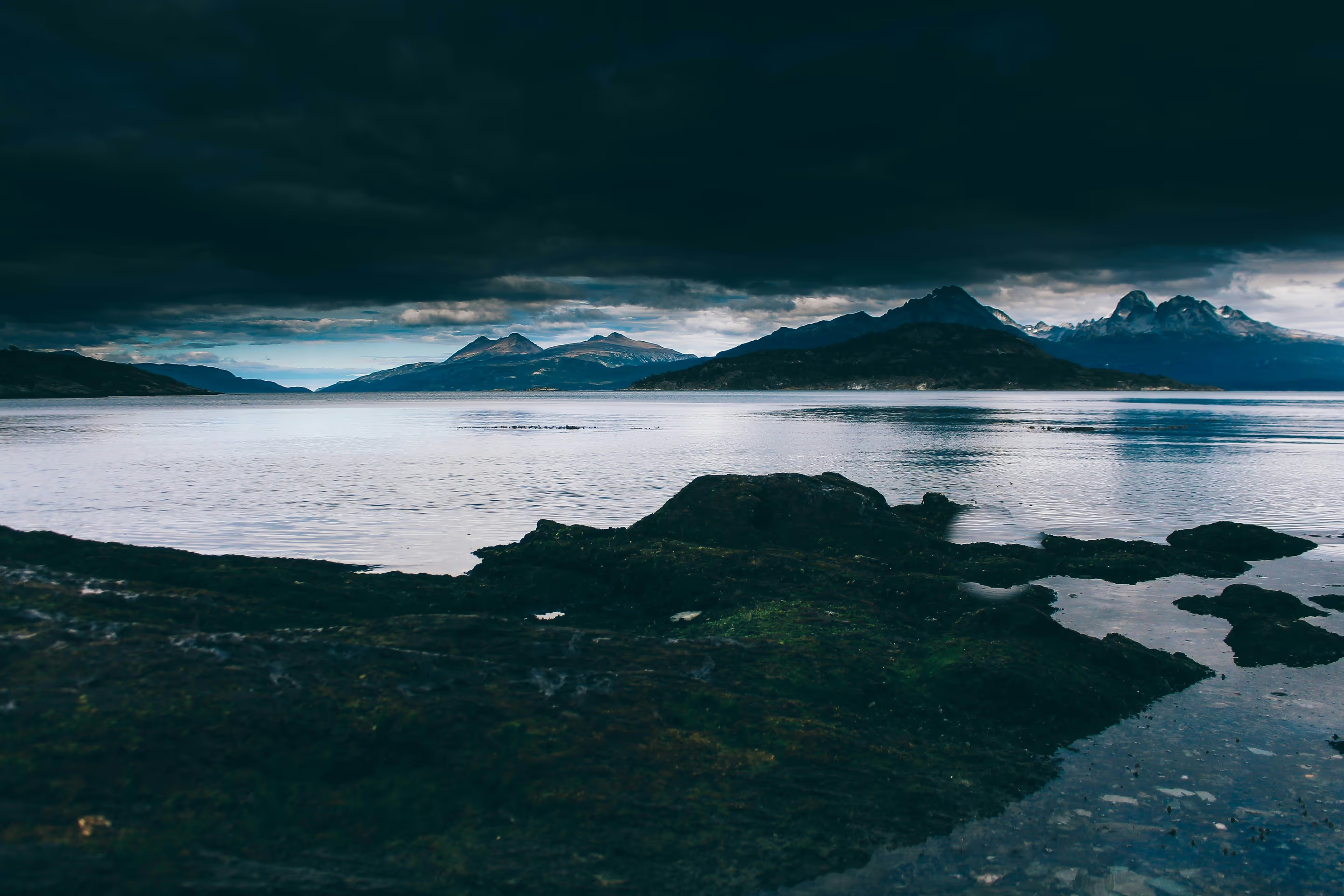
Tierra del Fuego National Park · Water beneath the mountains
Tierra del Fuego · Forest, coast and mountain trails
Tierra del Fuego National Park
Walk beside the Beagle Channel, look across Lago Acigami and follow the forest beyond the end-of-the-road sign. The rewarding choice is how much of the day to spend on foot.
Tierra del Fuego National Park lies west of Ushuaia, where the southern Andes meet forests, peatlands and the Beagle Channel. A road visit introduces Lago Acigami and Bahía Lapataia, but walking changes the scale: a sheltered cove, trees twisted by weather and a patch of shoreline become places to linger. Start by choosing one substantial activity, then fit shorter stops around it. A coastal walk needs different transport from a circuit near Lapataia, while Cerro Guanaco belongs to a separate, demanding mountain day. The railway can be an enjoyable part of a visit for those interested in its story. It should have a deliberate place in your plan alongside the time you want outdoors.
01
A full day without a summit
Combine a few short open paths with time at Acigami and the bay. An unhurried lunch and pauses along the shore make a fuller experience than trying to collect every trail name. One park day can be varied without being strenuous.
02
A walking day with a clear route
Choose the Costera trail if following the coast is your priority, then arrange its start and finish. Save an ascent of Guanaco for suitable conditions and the preparation it requires. Neither needs to share a day with a long boat excursion.
03
Keep the map of Ushuaia straight
Laguna Esmeralda is outside the national park, east of the city in the Tierra Mayor area. It is a separate outing, not a lake to add between Lapataia and the park exit. Use different days for the two landscapes.
Tierra del Fuego National Park · Mountain water and wooded shore
Ensenada Zaratiegui and the Costera trail
Stay beside the changing water.
The shore gives the park a distinctive character among Argentina's mountain destinations. At Ensenada Zaratiegui, forest reaches towards a sheltered inlet and the small postal dock adds a human detail to the setting. The Costera trail follows a longer sequence of wooded coastline between the Ensenada area and the vicinity of Alakush. The APN detailed park trails list it as eight kilometres one way, with roughly four hours of walking in normal conditions. Those figures describe a meaningful outing, not a brief viewpoint stroll. Uneven roots and changes underfoot still require attention even when the route remains relatively low. Decide how you will reach the start and leave the finish before setting out.
01
Let the coast set the pace
A few deliberate stops are part of the point. Watch the light move across the water and give small coves time to feel different from one another. Leave enough margin to enjoy them without rushing towards your return transport.
02
The view has a longer human history
Yagán coastal life long predates the national park. Archaeological shell deposits are evidence of that relationship with the shore. Follow the marked paths and leave shells and other material in place; the setting is a cultural landscape as well as a natural one.
Tierra del Fuego National Park · The texture of the Fuegian forest
Lapataia, the forest and the smaller trails
Look beyond the road's last sign.
Bahía Lapataia marks the end of Ruta Nacional 3, but the photograph beside the sign is only an introduction. Viewing areas and short paths let you spend more of the visit among forest, wet ground and coastal vegetation. Mirador Lapataia gives a view across the bay, while La Baliza extends the walk through another section of the landscape. Around Castorera, interpretation explains how introduced beavers have altered the ecosystem. These routes offer a practical way to build a varied day for a group with different walking ambitions. Choose a few connected stops using the current park map, rather than repeatedly driving back and forth to complete an arbitrary list.
01
Notice what is happening close by
Tree forms, fallen wood, birds and the changing ground beneath the forest can reward a slower walk. Staying on the established surface matters particularly around peatland, where a shortcut can leave a lasting mark.
02
Choose access for the actual group
APN identifies a 150-metre alternative Castorera adapted-access section, with provision for parking and movement by visitors with reduced mobility. That does not make every connecting trail accessible. Confirm the current condition and approach to this particular section when planning the visit.
Tierra del Fuego National Park · Rock, water and mountain weather
Lago Acigami and the higher routes
Choose your own horizon.
Lago Acigami, also known as Lago Roca, brings a different scale to the visit. Its water stretches between wooded slopes, with routes that range from lakeside time to a serious mountain ascent. Hito XXIV follows the lake through forest towards the international boundary; it is an out-and-back walk, so the outward distance is only part of the day. Cerro Guanaco climbs into more exposed terrain and needs a full mountain plan. The Guanaco registration guidance names the Alakush visitor centre and an online route for registration. Follow the current ranger instruction for the ascent and conditions. A lakeside visit remains worthwhile when the higher ground is unsuitable. Choosing the lower route can give you a more absorbing day than pressing uphill into a view you cannot see.
01
Separate scenery from summit ambitions
A demanding ascent should be the day's main commitment. Factor in the return, conditions underfoot and the group's pace. Do not let the short distance from a visitor area suggest that higher terrain is an easy extension.
02
Make room for a second park day
Walkers staying several nights in Ushuaia can keep one day for the coast and another for a suitable mountain route. That arrangement also makes it easier to move the more weather-dependent outing within the stay.
The important decisions are the scale of the outing and how its beginning and end connect to Ushuaia.
01
Duration
Give the park a day of its own.
A full day supports several shorter stops or one longer trail with breathing room. A half-day introduction suits a more selective visit. Combining a substantial walk, the railway and a city boat departure usually leaves too little freedom to enjoy each.
Choose the main activity first.
Leave a demanding summit to a separate day.
02
Transport
Different walks need different pickups.
A hire car works well for stops that return to the same place. The one-way coastal walk needs a specific return arrangement; a general town-to-park transfer may not serve every trail endpoint. Guided outings can simplify both interpretation and connections.
Confirm the pickup location as well as the time.
Keep the exit journey within your walking plan.
03
Season
Match the route to the conditions.
The main walking season brings longer daylight and more trail options. Snow, ice, rain and wind change what is sensible outside that period and can affect visits during it. The park's live trail advice takes precedence over a summer itinerary.
Use current openings and registration information.
Keep a lower or shorter alternative in mind.
04
Railway
Choose the train for its own story.
The official End of the World Train (Tren del Fin del Mundo) recalls the logging railway associated with Ushuaia’s former prison. Its ticket, departure and return arrangements are separate from APN park admission. Check whether any package explicitly includes both; buying train travel alone does not settle the park fee. Use the official park admission page for your visitor category, then work out what walking time remains around the train and any attached transfer.
Park entry and train travel are separate arrangements.
Retain time for the forest and shore.
05
On the ground
Carry what the outing actually needs.
Bring layers, protection from wind and rain, food and water appropriate to the route. A longer trail should not depend on finding a café at precisely the right moment. Use designated visitor facilities and carry out what you bring in.
Footwear should suit roots, mud and uneven surfaces.
Protect peatland and archaeological places by staying on routes.
06
Wider stay
Put the park into a flexible Ushuaia visit.
Keep a Beagle Channel sailing and a park walking day separate when possible. A museum visit in the city adds context to the landscape and provides a useful less exposed option. Tolhuin extends the journey towards a different lake-and-forest region.
Use several nights to create weather flexibility.
Treat Laguna Esmeralda as another outing.
Useful visitor information
Plan with the latest local details.
Official and specialist information for the places in this guide.
A sheltered shore, a break in the cloud and a forest path can become the moments that stay with you. Give them enough of the day, then return to Ushuaia with another way of seeing the channel.