
From Buenos Aires to Uruguay
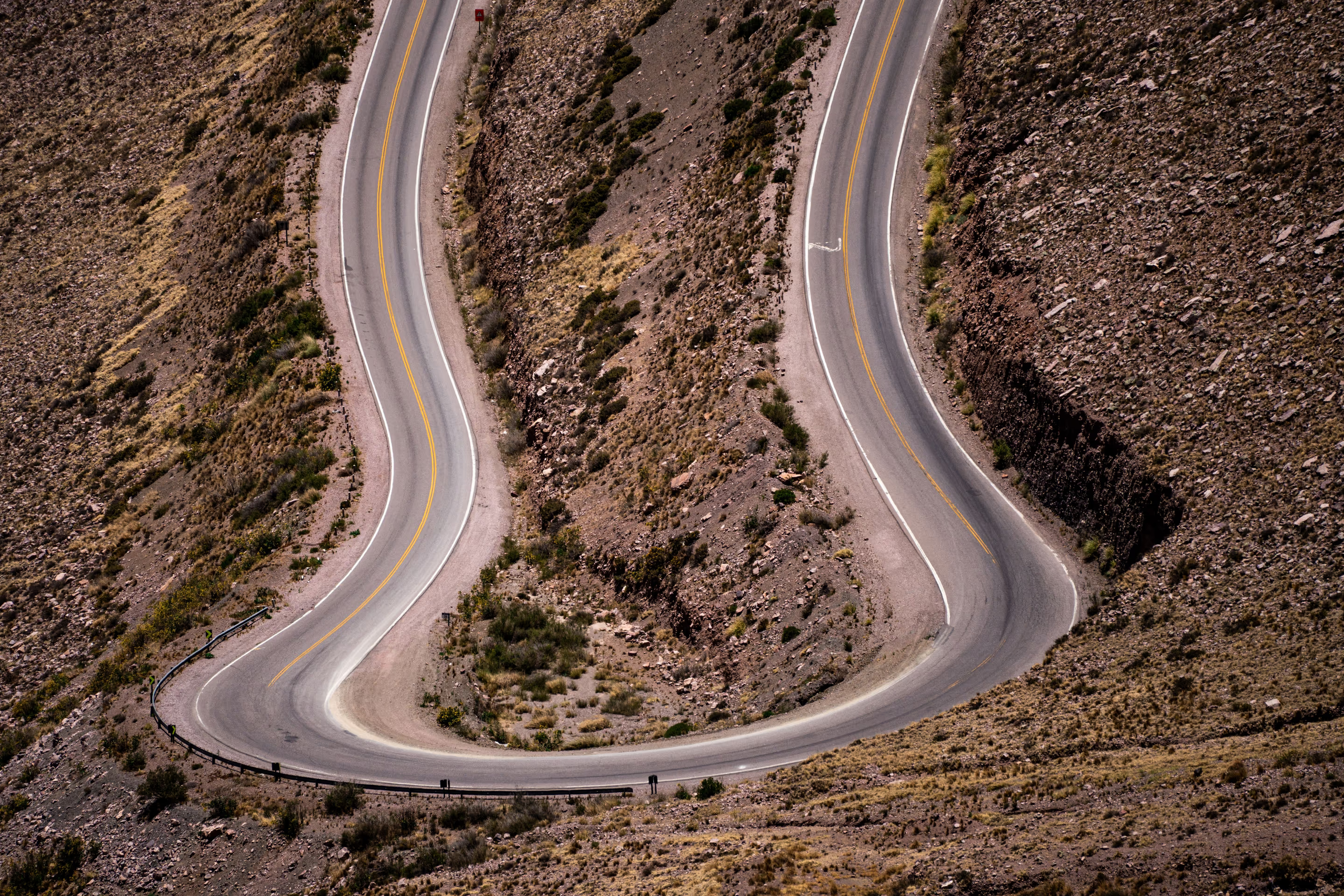
Argentina · Scenic drives
Lake shores, red-rock valleys and roads that rise into the Andes. Choose one coherent corridor and make the journey part of the stay.
Compare the driving regionsBegin with a manageable distance
Argentina's scale makes route planning as important as the choice of destination. A road that looks short on a national map can involve mountain bends, a slow surface or hours between services. The best scenic drive is usually one you can enjoy in daylight, with time for a walk, a meal and the viewpoints you actually want to see. Choose a corridor with natural overnight stops instead of drawing a line through every region. The Lake District, Northwest, Mendoza and Córdoba each offer a different kind of journey. A few days in one of them can be more rewarding than a week spent connecting distant landscapes through long transfer stages.
Estimate the drive, then add the time you want to spend beside the road. A viewpoint, short walk and unhurried lunch can turn a modest distance into a full day. Choose an overnight stop that lets you enjoy the final stretch rather than race through it before dark.
Confirm surface, access and current conditions for each stage, especially when leaving the main paved corridor. Ask the rental company about the specific roads you intend to use and its assistance arrangements. A familiar road number does not guarantee that every section has the same surface or services.
Mountain snow, heavy rain and strong winds can change a journey. Check official road information shortly before setting out and leave room to shorten or rearrange a stage. Book the next major transfer with a margin instead of making the trip depend on every driving day working exactly as planned.

01 · The Lake District · Northern Patagonia
The Seven Lakes corridor between Villa La Angostura and San Martín de los Andes is a natural choice for travellers who want a scenic route with established towns at both ends. It follows RN40 through lake and forest country, with places to stop rather than one continuous panoramic view. Bariloche can be part of the wider trip, but it sits outside that specific town-to-town stretch. An early start makes a day drive possible; an overnight at the other end gives the route more room and avoids retracing it in a hurry. Summer and early autumn often suit a trip centred on lake stops and walking, while winter requires a different approach to road conditions and daylight. Villa Traful is a separate side journey with its own access considerations, not an automatic extra stop on every Seven Lakes day.
Combine a lake shore, a viewpoint and a short walk rather than stop briefly at every sign. Leave the car only in appropriate stopping areas and keep the road clear. A smaller number of relaxed pauses gives each lake a chance to feel distinct.
Villa La Angostura and San Martín de los Andes each deserve time beyond arrival and departure. Two nights at a base can give you a day on foot or by the water between driving stages. The road becomes one part of a fuller Lake District stay.

02 · Salta, Cachi and Cafayate · The Northwest
The Northwest's road journeys offer a striking change of landscape over relatively compact map distances. The Salta–Cafayate route follows RN68 through the Quebrada de las Conchas, where red rock formations and designated stops make the drive an experience in its own right. Cachi is approached by a different mountain route, associated with the Cuesta del Obispo and the high country near Los Cardones. Linking Cachi and Cafayate involves RN40 through the Calchaquí Valleys, including slower sections where surface and conditions matter. These are three distinct stages, not interchangeable ways to fill a spare afternoon. A multi-night journey with time in Cachi and Cafayate lets you enjoy village streets, museums and meals alongside the scenery. The higher parts of the route also call for a gentler pace after arrival.
The Quebrada de las Conchas rewards time at a handful of well-chosen stopping places. Set out with enough margin to reach Cafayate without hurrying the final stretch. A tasting appointment is better placed on the following day than used as a deadline for the drive.
A modest-looking distance between Cachi and Cafayate can take much longer than a paved highway estimate suggests. Confirm the route and conditions locally, and choose a vehicle appropriate to the journey. Leave room for a stop in a valley settlement rather than measure success only by arrival time.

03 · Mendoza · The Andean corridor
West of Mendoza, the RN7 corridor leads into the Andes through a landscape very different from the vineyards around the city. Potrerillos, Uspallata and the Puente del Inca area offer different reasons to pause, while Aconcagua Provincial Park requires its own visit plan and current access information. A day excursion can introduce the corridor, but trying to combine distant mountain stops with a winery lunch creates competing priorities. Use a separate day for the high country and keep the wine visits grouped within their own districts. Border traffic and weather can affect the main road, and access farther into the mountains should never be assumed from a photograph taken in another season. An overnight in an appropriate base can give the scenery more time if the mountains are a central part of the trip.
Choose the stops that fit the season and the time available instead of treating the border as a required turning point. A shorter outing with time around Potrerillos or Uspallata may suit the group better. Confirm any park entry or walking arrangement separately from the drive.
If visiting wineries during the same stay, organise a driver or a suitable excursion for those days. The mountain road deserves full attention, and wine-country distances deserve their own schedule. Combining the regions across several days makes both experiences more enjoyable.

04 · Córdoba's sierras · A different mountain journey
Córdoba offers a gentler geographical scale than a journey across Patagonia, but the sierras still ask for time. Roads connect the city with Calamuchita and Traslasierra through different mountain settings, so choose the valley you want to stay in before adding a scenic crossing. The Camino de las Altas Cumbres is a substantial journey in its own right, while the Taninga area offers another landscape and route choice farther north. They should not be treated as one quick circuit around the city. A few nights in a valley allow a mixture of town visits, a local walk, river scenery and shorter drives. This is a good approach for travellers who want the road to connect a stay rather than occupy every day of it.
Calamuchita and Traslasierra offer different town sequences and access routes. A route that works well for one can create an unnecessary detour for the other. Begin with the places you want to spend time in, then choose the mountain road that connects them sensibly.
Once based in a valley, you can build a satisfying day from a small town, lunch and a nearby landscape. Check local access for minor roads and riverside areas rather than assume every scenic line on a map is a public through-route. Return with time to enjoy the evening where you are staying.

A journey with time in it
Choose a route that leaves room for the landscape outside the windscreen. A short walk, an unexpected lunch or a change in the weather can become part of the journey when the next bed is a sensible distance away.
Choose the places along your roadFrom the journal
From Buenos Aires to Uruguay

Make the journey fit together

Jujuy, community and celebration