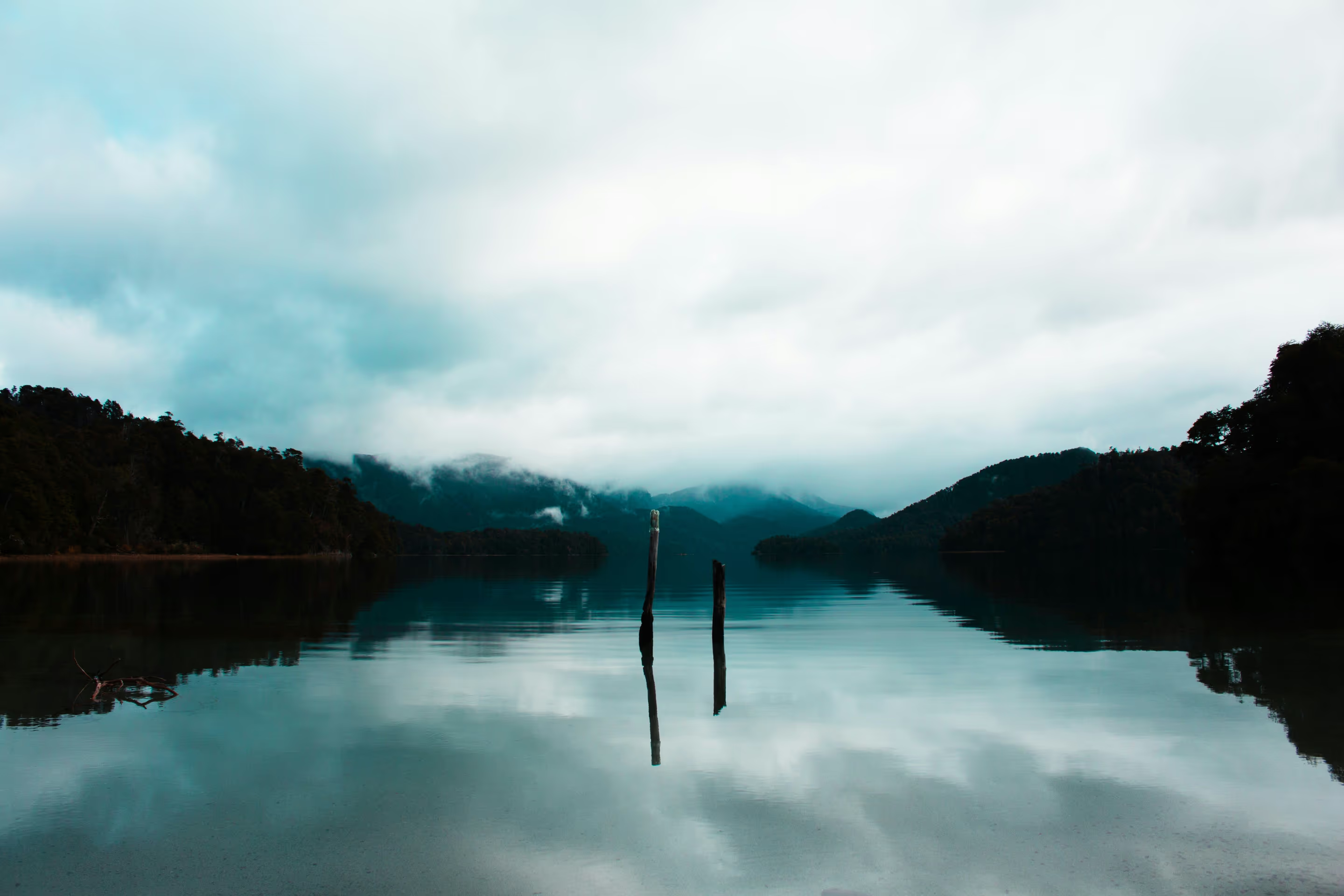
Lago Espejo Grande · Water, cloud and a forested shore
Neuquén · The road between the lakes
Route of the Seven Lakes
Blue water through the trees, a quiet beach, another bend in the road. Give the journey between Villa La Angostura and San Martín de los Andes time to become part of the stay.
The classic Seven Lakes journey follows RN40 between Villa La Angostura and San Martín de los Andes, linking forest, mountain water and the protected landscapes of Nahuel Huapi and Lanín. The town-to-town distance is roughly 110 kilometres, but a direct driving time tells you little about a satisfying visit. The named lakes are Espejo, Correntoso, Escondido, Villarino, Falkner, Machónico and Lácar. You do not need to give each an identical stop. Choose a few places to linger, leave room for an unexpected change of light and consider continuing to a new base rather than returning along the whole route the same evening.
01
Keep the endpoints clear
Villa La Angostura and San Martín de los Andes define the classic route. Bariloche is a useful gateway farther south, adding another leg beside Nahuel Huapi. A day beginning and ending in Bariloche is therefore a much larger outing than the often-quoted Seven Lakes distance suggests.
02
Choose a direction that fits the trip
Either direction can work. Let accommodation, transport and the next part of the journey decide, rather than searching for a universal best direction. A one-way transfer between the two towns naturally leaves more attention for the road; a return day needs a more selective set of stops.
03
Give one place more than a photograph
A shoreline pause, a picnic where permitted or a short established walk can make the journey feel less like a sequence of viewpoints. Choose a main stop before setting out, then keep the rest flexible. The quieter details often become more memorable than completing every name on a list.
Lago Espejo · Green woodland beside the blue water
Villa La Angostura and the southern approach
Let the forest open to the water.
Beginning near Villa La Angostura, the road moves into a changing pattern of woodland and lake views. Espejo and Correntoso introduce the southern part of the route, while Escondido has a more enclosed setting among the trees. These are places to approach through the signed visitor access and established stops, not by pulling over wherever the water first appears. A good morning can be built around fewer stops with time to walk to a permitted shore or simply watch the light. Villa La Angostura itself deserves time outside the drive: its bays and the Quetrihué area offer a different, slower way to experience the forest and water.
01
Use the town as part of the journey
If staying in Villa La Angostura, enjoy its local setting on a separate afternoon rather than adding every nearby attraction to the departure morning. A clear start makes it easier to leave time for the road. The Arrayanes excursion is its own outing, with different walking or boat arrangements.
02
Stop where the route supports it
Use designated parking and viewpoints, and take time to reach the actual visitor area. A dramatic curve is not necessarily a safe stopping place. If a pull-in is full, continue to another suitable stop rather than letting a photograph determine how you leave the vehicle.
San Martín de los Andes · Lago Lácar and the surrounding forest
Falkner, Villarino and the approach to Lácar
Choose a shore and stay a while.
Falkner and Villarino sit close to one another in the middle portion of the journey, giving the route a useful place to slow down. Farther north, Machónico and the approach towards San Martín de los Andes change the scene again, before Lago Lácar gives the trip a natural ending. The interest lies in the differences: open water, a wooded foreground, a mountain shape appearing behind the lake. Let the day's light and conditions help you choose where to spend more time. A comfortable arrival in San Martín can leave an evening for the waterfront and a meal, rather than making the final kilometres a race back to another town.
01
Build the day around a real pause
Choose a permitted place to stop for longer, with the food and water you need. Do not assume every named lake has a restaurant, toilet or easy beach access at the point where the road passes it. Confirm facilities for the places you intend to use, particularly outside the busiest season.
02
Let San Martín become a base
An overnight stay allows the lake road to end where it naturally arrives. The following day can focus on Lago Lácar, nearby walking or a wider Lanín outing. Continuing immediately to another distant stop may save a night on paper while taking away the reason to linger in the region.
Lago Lácar · Snow across the mountains beyond the water
The same road, a different season
Follow the light. Respect the conditions.
Summer brings long days and opportunities to spend time beside the water, along with busier roads and popular stopping places. Autumn can add colour to the forest and a quieter mood, while shorter daylight asks for a more measured plan. Winter changes the journey again: snow on the mountains can be beautiful, but snow or ice on the road affects whether and how the outing is suitable. The classic route is paved, yet that does not make every access road, viewpoint or side trip equivalent. Use the current road and park information for the specific day, and choose the journey that fits those conditions rather than the photograph you hoped to recreate.
01
Keep a simple winter alternative
If winter driving is unfamiliar or conditions are unsuitable, choose a local lake-town day or an appropriate organized outing. Confirm road status before departure and ask the rental provider about the vehicle and current requirements. A paved route can still need a very different level of preparation in winter.
02
Treat side roads as separate choices
Lago Hermoso, Meliquina and Villa Traful are examples of places that can broaden a Lake District trip, but they add distance and their own access conditions. They are not all part of the classic seven. Give a worthwhile detour its own time rather than adding it automatically to an already full crossing.
Decide whether this is a transfer, a return day or the beginning of a slower stay before choosing how much to add.
01
One way or return
Count the road you will actually drive.
A one-way journey between Villa La Angostura and San Martín de los Andes follows the classic roughly 110-kilometre scale. Returning doubles that road distance before any detours; starting in Bariloche adds more again. Use the full door-to-door route when judging the day. A scenic drive with frequent stops should not be scheduled from the quickest navigation estimate, especially when travelling with companions who want time off the road.
Choose fewer stops on a return day.
Keep the next fixed appointment well beyond the planned arrival.
02
How long
Give the crossing most of a day.
A relaxed day can include several viewpoints, one longer shore pause and time to arrive comfortably in the next town. Two or more nights spread between the endpoints allow a different pace, with local outings on either side. Choose that slower version if walking, food and lake-town life matter as much as the drive. The route rewards attention more than speed, so extra time is useful when it has a clear purpose.
Avoid combining the crossing with a major flight transfer.
Keep a flexible stop list rather than a minute-by-minute schedule.
03
Driving and transport
Choose the amount of control you want.
A hire car offers flexibility over stops and timing. An organized excursion can provide transport and interpretation with a set programme. A regular intercity bus, where available for your date, is a way to travel between towns rather than a promise of photo stops at each lake. Confirm what a product actually includes before booking. For a one-way car plan, check the agreed drop-off location and any practical conditions directly with the provider.
Arrange transport before reserving a remote overnight stop.
Do not expect a through-service to function as a sightseeing tour.
04
Food, fuel and services
Start with the essentials in place.
Leave the town with the fuel, drinking water and food needed for the planned day. Services along the route are uneven and can be seasonal, so confirm a restaurant or stop that is important to the itinerary. Carry waste back to an appropriate disposal point and follow park rules for picnics, fires and shore access. A simple packed lunch can give you freedom to pause where the visitor facilities and conditions make it suitable.
Use established facilities and permitted stopping areas.
Check seasonal openings instead of relying on an old map label.
05
Road conditions
Check the route and its side trips.
Look at current RN40 information, the forecast and any relevant park notices before setting out. Rain, snow, ice or maintenance can affect the journey, while side roads may have different surfaces and restrictions. If conditions change, reduce the plan or stay within the local area. Taking a longer route around a closure without understanding its surface and distance can turn a manageable change into a much larger day.
Keep an offline map and a clear route plan.
Ask locally about any unpaved detour you intend to take.
06
Extending the journey
Add another lake because you want to stay.
The region offers more than the classic seven, from other lake basins near San Martín to the wider landscape around Villa Traful. Choose an extension for its particular setting, accommodation or activity, and allow for the extra travel. A second route can be more rewarding on another day than as a late addition to the first. Keeping the classic crossing simple leaves you with a reason to explore the Lake District again.
Compare the destination guides before adding a detour.
Keep nearby lakes distinct from the seven on the classic route.
Useful visitor information
Plan with the latest local details.
Official information for the places and experiences in this guide.
Lago Aruncohue · A quieter lake in the wider Neuquén landscape
There is always another stretch of shore
Leave with a reason to return.
Choose a few stops, a comfortable arrival and a little time beside the water. The road becomes more than a connection between towns when the landscape has room to set the pace.