
From Buenos Aires to Uruguay
Argentina · Food and markets
A parrilla's slow heat, an empanada eaten while it is still hot, an afternoon stretched over mate. Discover Argentina through the things people cook and share.
Find your way to the tableTaste the place you are in
Food gives an Argentine journey a useful daily rhythm. A bakery can start a neighbourhood walk; a market introduces ingredients you will recognise later on a menu; lunch can become the reason to stay another afternoon. Buenos Aires brings parrillas, bodegones, pizza counters and an extensive café culture together. The Northwest adds corn-based dishes and distinctive empanada traditions, while river regions and Patagonia offer different ingredients and meals. Choose a few things you want to understand, then leave room for what looks good nearby. A memorable food trip does not require every meal to be a famous reservation. It needs enough curiosity to ask what a place does well and enough time to enjoy the answer.
Reserve the experience that matters most, especially a small dining room or winery lunch. Around it, make room for bakeries, neighbourhood cafés and simple meals. A long tasting menu every night can make the trip less varied, as well as leave little appetite for the places you discover while walking.
Some markets combine food counters with antiques or crafts; others mainly serve local shopping. San Telmo's covered market is different from the surrounding street fair. Check the particular venue and day, then give yourself time to look at ingredients and stalls before deciding where to eat.
An empanada filling, sauce or cooking method can change from place to place. Ask what is inside rather than assume a familiar name describes the whole dish. If ingredients or dietary requirements matter to you, discuss them directly with the kitchen before ordering.

01 · Parrillas, asado and the first bite
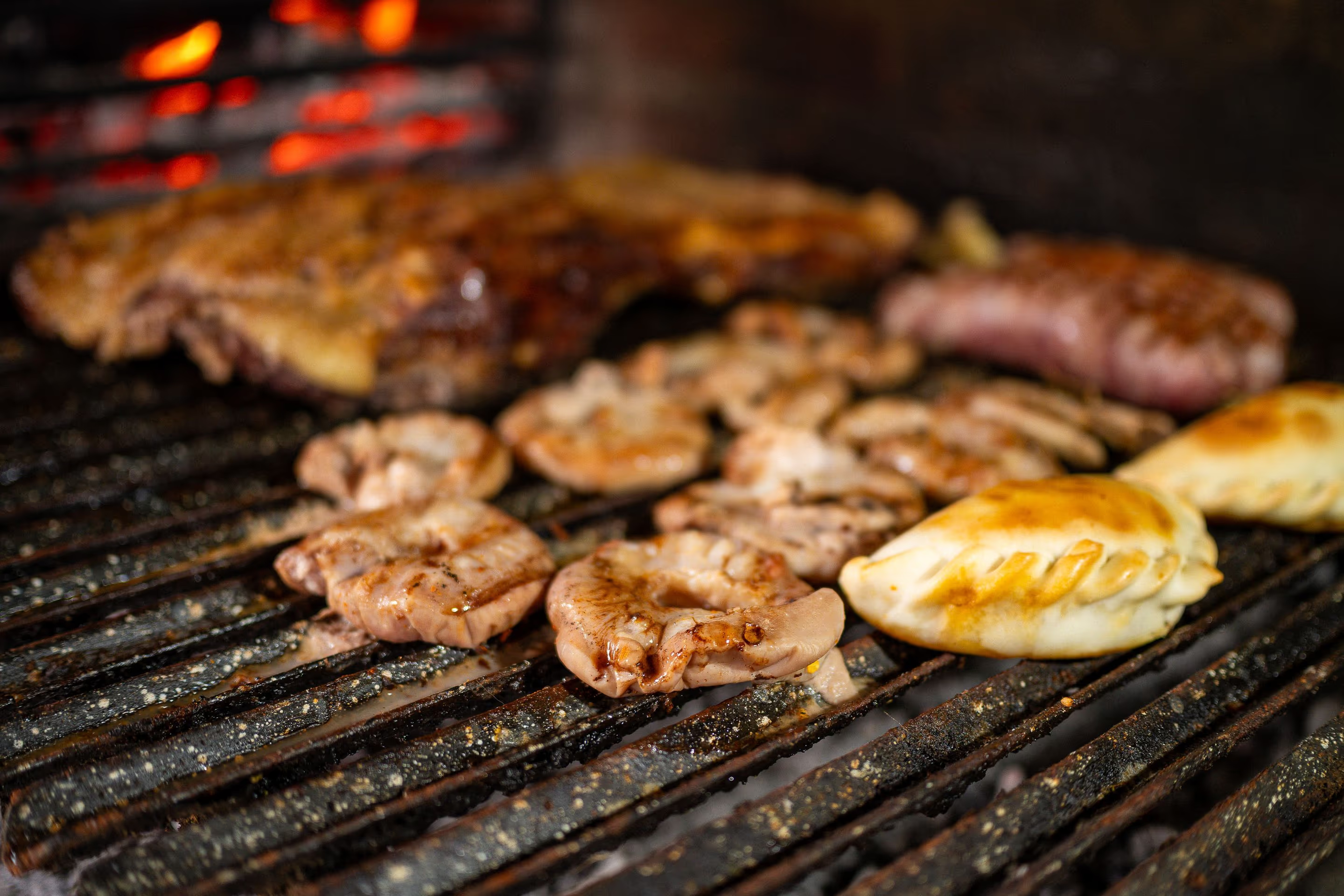
A parrilla is a grill and, by extension, a restaurant built around grilled food. An asado can describe the meal and the gathering as much as the cooking method. The difference matters when choosing an experience: a restaurant dinner, a countryside lunch and an invitation to a private table are not interchangeable versions of the same event. In Buenos Aires, start by asking what the kitchen recommends for the number of people eating. Cuts and portions vary, and a shared order can be a better introduction than one large steak each. Choripán offers a more informal taste of the grill: chorizo in bread, often with a sauce such as chimichurri. Across Buenos Aires Province, the country setting adds another dimension to the tradition of cooking slowly over embers.
Ask about portion sizes, the cut and how the kitchen describes doneness. Bread, a starter, vegetables or salad can change how much meat a group needs. Leave room to try a second texture or flavour rather than make size the measure of the meal.
An estancia or rural restaurant may sit well beyond the city. Consider the setting, other activities and transfer before booking. A leisurely asado fits best when the afternoon is open and the return journey does not depend on eating quickly.

02 · Empanadas, markets and the Northwest
Empanadas are found throughout Argentina, but their fillings, seasoning, shape and cooking vary. In Salta, a few hot empanadas can be a meal in their own right or the beginning of a longer evening. Around the Northwest, compare humita, tamales and locro: humita uses tender corn and may be served wrapped in husks or from a pot; a tamal encloses a seasoned meat filling in corn dough inside a husk; locro is a slow-cooked stew built around maize, squash, beans and meat. Recipes vary, so the dish name alone does not settle ingredients or dietary needs. A peña can add music to the table, though a staged programme and an informal musical gathering have different atmospheres. In Buenos Aires, the San Telmo market brings food counters into a historic covered building; it is useful for a stop during a neighbourhood day, without needing to stand in for every regional food tradition. Follow the place's actual specialities instead of expecting one market to offer a complete national menu.
Try a small order from a place that cooks the style you want to understand. Ask whether the empanadas are baked or fried and what distinguishes the filling. A second stop on another day gives a better comparison than buying more than you can enjoy at once.
Peñas often make the music part of a longer night. Find out whether you are booking dinner with a performance or a more informal setting, and plan the following morning accordingly. A late cultural evening rarely pairs well with a tightly scheduled dawn departure.

03 · From river country to Patagonia
Argentina's regional tables become more interesting when you connect them to the surrounding landscape. In the Litoral, river fish and preparations using local ingredients offer a different direction from a Buenos Aires steak dinner. In Patagonia, lamb, trout in appropriate lake-region settings and produce such as berries appear in different local kitchens; they do not all belong to every town. Ushuaia adds the maritime identity of the Beagle Channel, including centolla when it is available. Ask what is local, what is in season and what the restaurant actually prepares well. Mate provides another thread through many regions: the vessel, bombilla and act of preparing it belong to everyday life as well as a visitor's photograph. Let an invitation or demonstration lead the experience rather than treating it as a ritual with one universal script.
A dish's name can tell you less than a short conversation about the ingredients and preparation. Ask where the fish, meat or produce comes from if that matters to the experience. A regional label is a starting point for the question, not proof of how every kitchen sources its food.
A lake excursion, a wildlife outing and a distant lunch can compete for the same daylight. Choose a meal near the area you are already exploring, or make the restaurant itself the day's main outing. The connection between place and plate is easier to enjoy without a rushed transfer.

04 · Merienda, cafés and something sweet
Merienda gives the day a pause between lunch and a later dinner. In Buenos Aires, coffee with medialunas or another factura can be a reason to sit inside a historic café and notice the room. Alfajores offer a different small pleasure, with fillings and coverings that vary by maker and region; dulce de leche is a familiar part of the story, but the biscuit and texture matter too. The Lake District has its own associations with chocolate and sweet stops, while Gaiman's tea houses connect an abundant afternoon table with the valley's Welsh history. These experiences work best when they are given their own time. A tea spread is not a quick snack on the way to a distant attraction, and a café is often worth more than the few minutes needed for a photograph.
A good stop can sit between a museum and a neighbourhood route, giving you a chance to rest and watch the room. Historic cafés differ in atmosphere, service and what they serve. Pick one that fits the part of the city you are exploring.
Bakeries, chocolate shops and alfajor makers make useful stops when you want a taste to enjoy later. Check freshness and packaging, and choose quantities that fit the rest of your journey. A few carefully chosen things are easier to appreciate than a bag filled in a hurry.

The pleasure is in the making
Leave enough room for the market counter, the sound of the grill and the conversation after dessert. Food can be the thread that connects a city morning to a country afternoon, giving familiar destinations a different reason to stay.
Explore the life around the tableFrom the journal
From Buenos Aires to Uruguay

Make the journey fit together

Jujuy, community and celebration