A meal worth sitting down for
Bodegones of Buenos Aires: finding your place at the table
Read the menu, judge the portions and choose a satisfying bodegón meal, from tortillas and pasta to milanesa and flan.
A bodegón is more than an oversized plate. Choose the dishes and pace that suit your table, ask the useful questions and leave room for the part of the meal you will remember.
Choose the meal before the photograph
A large milanesa can make a bodegón famous online, but it is only one way into the meal. You might prefer a tortilla to share, a plate of pasta, a stew from the day's menu or a dessert that gives everyone a reason to stay a little longer. The useful question is not how much food will fit in the photograph. It is what you want to eat, with whom and at what pace.
Buenos Aires tourism describes bodegones through the city's Italian and Spanish culinary inheritance: familiar dishes, pasta, minutas, fish, seafood and grilled meat. Visit Argentina emphasizes the role of the table as a meeting place and the generous, home-style character of the food. Those descriptions offer a useful starting point without turning every restaurant into an identical room.
Some places have old photographs, football memorabilia and a well-worn dining room. Others interpret the repertoire in a more contemporary setting. Decoration alone cannot tell you how the kitchen cooks or whether the meal will suit your budget. Read the current menu, look at the portions being served and ask about the dishes that interest you.
For the cultural background, see Buenos Aires tourism’s account of porteño life and Visit Argentina’s bodegón examples.
A bodegón meal works best when the order fits the table. A solo diner, two people sharing and a family with different appetites need different combinations. Learn to read the menu in that light, and the abundance becomes a pleasure rather than a challenge.
Bodegón, parrilla and eating al paso
These categories can overlap, but they suggest different kinds of meal. A parrilla puts the grill at the centre of the visit. Eating al paso fits a quick stop into the day. A bodegón invites you to sit down with a broader menu and settle on a meal that may have little to do with steak.
If the grill is your main interest, the guide to ordering at an Argentine parrilla explains that particular decision. If you want a sandwich or a few empanadas between sights, use the Buenos Aires street-food guide. Here, the focus is the table: choosing dishes, sharing sensibly and leaving room for the parts of the meal you most enjoy.
A meal can be straightforward without being hurried. You do not need to order several courses or spend an entire afternoon. What matters is that you choose deliberately and understand how the kitchen's portions and service work.
Read the menu in families of dishes
A long menu becomes easier when you group it into a few choices. Look for starters, milanesas and other minutas, pasta, fish or seafood, grilled dishes, stews or daily specials, then desserts. Not every restaurant will offer every category, and a house may be particularly strong in only a few of them.
Begin by deciding what sort of main dish appeals. Something crisp and breaded creates a different meal from pasta with sauce or a slow-cooked dish. Once that decision is made, choose an accompaniment or starter that complements it. Ordering several rich dishes simply because each sounds familiar can make the meal feel repetitive.
The word minutas points to familiar dishes prepared to order, not a guaranteed stopwatch service. Ask about the preparation time if you have another appointment. A busy dining room, a particular dish or a large group order can affect how the meal unfolds.
A menu headed “para dos” needs the same attention as an individual dish. Confirm whether the price is for the whole shared order or per person, and whether the advertised sides come with it. Two people can reasonably choose a smaller combination if a set platter contains food neither particularly wants.
Use the day's dishes to narrow the choice
Ask whether there is a “plato del día” or a recommendation from the kitchen. A daily dish may offer a useful route through a very broad menu. Confirm what is included and whether the price refers to the dish alone or a set meal with other elements.
A recommendation is an invitation to discuss preferences, not an instruction to accept the largest plate. Say whether you want something lighter, a dish to share or a particular ingredient. The answer is more useful when the server understands what you are looking for.
If a menu description is brief, ask about the accompaniment. A main dish may arrive alone, with a choice of side or with a fixed combination. Establishing that before ordering prevents an unnecessary second portion of potatoes or the opposite problem: a table expecting vegetables that were never included.
Milanesa: understand the version, then the portion
A milanesa is breaded meat or another breaded main ingredient, cooked according to the kitchen's method. Buenos Aires tourism describes beef and chicken among the familiar versions, alongside vegetable alternatives. The base matters, but the topping and accompaniment can change the finished dish just as much.
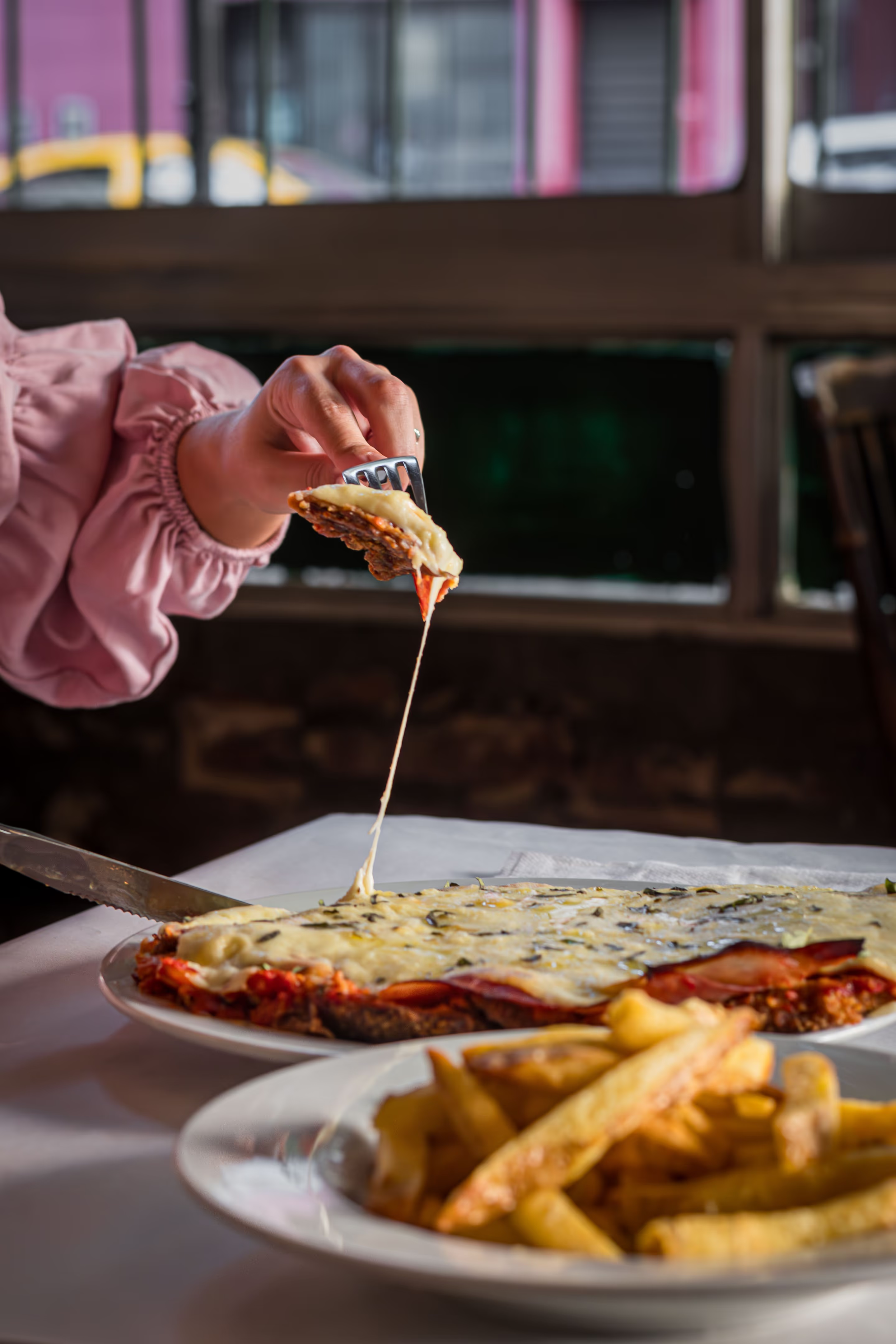
A napolitana commonly adds tomato sauce, ham and melted cheese. A “de la casa” version follows that restaurant's own combination. Ask what it contains rather than assuming the phrase identifies one standard recipe. A photograph can show the size of the plate without revealing everything on it.
Some milanesas are large enough for sharing; others are individual portions. “¿Es para compartir?” is a useful question, followed by a discussion of how many people and what else you plan to order. A dish described as generous is not a mathematical promise that it will feed your particular group.
Choose a contrast on the plate
If the milanesa is heavily topped, consider whether you want a simple accompaniment rather than another rich dish. A salad, potatoes or another offered side can each work, depending on appetite. The point is to choose a combination you will enjoy through the whole meal.
If two people share one main, ask whether the kitchen can bring an extra plate. This makes the meal easier than both reaching into the same platter while trying to manage a side dish. If one person dislikes a topping, settle whether it can be omitted or served separately before the order reaches the kitchen.
A solo diner should not feel obliged to order the most photographed version. Ask about the available sizes or choose another dish that better matches your appetite. A good experience is the meal you finish happily, not evidence that you conquered the largest item on the menu.
Keep the sandwich for a different occasion
Milanesa also appears in sandwiches, but that is a different way to structure the meal. At a bodegón table, focus on the version and sides you actually want rather than trying to combine a takeaway lunch with a full restaurant order.
If the table is curious about several dishes, one shared milanesa can become part of a varied meal. Make the rest of the order distinct: perhaps a vegetable dish or pasta rather than another similarly topped breaded plate. Variety comes from contrast, not just from the number of menu names.

Starters can set the pace or become the meal
Tortillas, buñuelos and rabas appear in the bodegón repertoire described by Argentina's tourism office. A tortilla may make sense as a shared beginning; fritters or calamari can provide another texture. Availability and preparation depend on the kitchen, so read the menu and ask about the specific version.
A tortilla de papas is a potato-and-egg dish, not a flatbread. Ask how the kitchen serves it if you have a preference about how firmly the egg is cooked. Do not assume that a Spanish word you know from another country describes the same food here.
Buñuelos are fritters, with the main ingredient usually identified on the menu or explained by the server. Rabas refers to a calamari preparation, commonly breaded or battered and fried. If an ingredient or cooking method matters to you, ask directly rather than choosing by the dish name alone.
Decide whether the first dish is an introduction
A generous starter can substantially change what you want afterward. If the table is small, begin with one and see how it fits alongside the planned mains. Ordering several starters before learning the portion sizes can make the main course feel like an obligation.
Tell the server whether you would like dishes in sequence or together. Some tables want a leisurely shared beginning; others prefer everything as part of one meal. A clear request is more useful than assuming the kitchen can infer your intention from the order.
For a light appetite, a starter with another small dish may be enough, if the restaurant offers that arrangement. Ask without embarrassment. There is no rule that every diner must follow the same course structure.
Pasta is a reason to choose the table
Pasta belongs naturally in the city’s bodegón repertoire, but a shape on a short menu and a fully described dish tell you different amounts. Visit Argentina’s account of Pasaje Cantina names ravioles and tallarines. Those words identify pasta forms; they do not by themselves settle a ravioli filling or the sauce accompanying either order.
The city tourism authority’s Il Matterello description instead gives examples including lasagna bolognese and tortelli with garlic butter. The latter explicitly names an accompaniment, although it still does not tell you the tortelli filling. Compare what is actually specified before imagining the plate, and ask about any missing detail rather than importing a recipe from another restaurant.
Ask whether pasta and sauce are priced together. Menus differ: some list complete dishes, while others let you select the components separately. Check the final combination and cost before ordering, especially when several people are choosing different sauces.
Use sharing to compare, not to overwhelm
Two contrasting pasta dishes can make a pleasant shared meal if the table wants to compare them. Ask for extra plates and decide whether to taste each separately. Mixing several sauces on one plate may obscure the very differences you wanted to notice.
If one person prefers a pasta main and another a milanesa, the meal does not need to become a fully shared tasting. Order what each person wants and share a small amount if everyone is comfortable with that. A companion's curiosity is not a claim on half your dinner.
Think about the bread and any starter already on the table. You may need fewer additional sides than you expected. The meal can remain generous without every category of the menu appearing at once.
Look beyond the most familiar photographs
A daily stew, a fish dish or a kitchen's own specialty may provide a more interesting meal than the item that dominates social media. Ask what is available that day and how it is prepared. Some dishes need more time or appear only on particular menus.
If a restaurant specializes in fish or seafood, pay attention to the actual species or preparation offered. A broad heading does not explain whether the dish is grilled, fried, served in sauce or intended for sharing. Choose based on the current description rather than an old review.
The same applies to a stew or slow-cooked dish. Ask what it contains, how large the portion is and whether an accompaniment is included. These are useful culinary questions, not an attempt to test the server's knowledge.
A house specialty should still suit you
The phrase “you have to try it” can make travelers order something they do not particularly want. A specialty is worth considering, but the best choice still depends on your tastes. Say if you dislike a certain texture or ingredient and ask for an alternative.
If you are eating with adventurous and cautious diners together, choose one shared dish for discovery and let the individual mains remain comfortable. That gives everyone a way into the meal without requiring a unanimous appetite.
You can also ask which dish best represents the kitchen's everyday cooking. The answer may be less dramatic than the largest platter, but more useful for understanding why people return.

Dessert changes the ending
Leave space if dessert is part of what brought you here. Visit Argentina's descriptions include flan, pancakes, fresh cheese with fruit paste and other familiar finishes. A shared dessert can extend the table comfortably without requiring another full portion for every person.
Flan mixto is a clear example of why the small words on a menu matter: it combines flan with dulce de leche and cream. If you want only one accompaniment, ask. The choice changes the sweetness and richness of the plate.
Queso y dulce pairs fresh cheese with a sweet paste, commonly quince or sweet potato. It offers a different texture and a simpler construction than a layered cake or a heavily dressed pudding. Ask which paste is available if you have a preference.
Order the dessert you still want
Pause after the mains before deciding. A dessert that sounded irresistible when you arrived may be more enjoyable shared after a substantial meal. Conversely, someone who ordered lightly may want their own portion. There is no need for the whole table to make the same choice.
Ask about the size and whether an item is suitable for sharing. If you want coffee, decide whether you prefer it with dessert or afterward and say so. A small instruction can make the ending feel more relaxed.
The final course is also a chance to notice how the meal has unfolded. Perhaps the pasta was the highlight, or the simplest starter was the dish you would return for. You can leave with that preference instead of trying to rank the restaurant against every other place in the city.
Choose the neighborhood as well as the kitchen
Choose the format as well as the district: a seated bodegón meal puts minutas, pasta and other familiar dishes around one table; a parrilla centres the grill, while eating al paso makes a counter or portable order part of the walk. These examples compare ways of spending a food day, not a ranked restaurant list.
A bodegón meal is easier to enjoy when it fits the day around it. In Buenos Aires, begin with the area you plan to explore, then look for a restaurant whose current menu and service match your needs. A cross-city journey can be worthwhile for a particular kitchen, but it should be a deliberate choice.
In San Telmo, a sit-down meal can anchor a day of neighborhood wandering. Decide whether lunch is the main event or a rest between visits. That affects when you book, how much you order and whether you want the afternoon open afterward.
For that cultural-day pairing, the city tourism authority describes Manolo as a San Telmo bodegón with tortillas and minutas alongside pasta, grilled meat and other dishes. The repertoire gives the seated meal a reason beyond proximity: choose it when a tortilla or a cooked-to-order plate appeals after the neighbourhood’s cultural visits. The pairing is an editorial suggestion, not a current service guarantee.
In Palermo, Visit Argentina describes El Preferido as a contemporary reinterpretation of bodegón classics. That makes a useful contrast with a traditional dining room: the interest is how familiar dishes are reworked, rather than whether old photographs and memorabilia are present. Choose that comparison deliberately if the food’s interpretation interests you, without treating the authority’s examples as a ranking.
Within the Villa Crespo and Chacarita outing, Visit Argentina places Pasaje Cantina in Villa Crespo and describes ravioles, tallarines and potato and chard tortillas in its repertoire. This is a different meal decision from seeking a steakhouse: pasta and tortilla give the table a familiar home-cooking focus. Use the dish names to begin reading the current menu, with the filling-and-sauce questions explained above.
Let the rest of the day set the pace
For Recoleta, an editorial alternative is to pair time at Museo Nacional de Bellas Artes with one seated meal. The collection provides the cultural part of the day; a table gives you somewhere to rest and talk about it. This is a pairing of experiences, not a claim that a particular bodegón stands next door to the museum. Choose the restaurant address separately and allow for the connection.
In Monserrat and Microcentro, an Avenida de Mayo and Congreso architecture day can be paired editorially with Spanish-style cooking. Visit Argentina describes El Imparcial, at Hipólito Yrigoyen 1201, through dishes including puchero mixto, paella valenciana and a seafood cazuela. That repertoire gives the seated meal a different emphasis from pasta or milanesa, without promising that every dish is available on your date.
A Belgrano day centred on Museo Larreta can work with a seated meal and time to discuss the visit. A Barrio Chino and Pasaje Echeverría food outing is a separate format, with smaller counter orders and a different street setting. Use the al-paso Story for that alternative rather than assuming a counter stop and a bodegón table meet the same need for a rest.
For La Boca, the city tourism authority describes Il Matterello through an Emilia-Romagna family cooking tradition in a converted conventillo. Its pasta setting provides an Italian-table comparison within the neighbourhood day. It is not a claim that this restaurant represents every bodegón: choose the example for that particular culinary inheritance, then check the menu and arrangements for your visit.
Book for the table you need
If a particular restaurant matters to your trip, ask about reservations rather than assuming you can walk in. Explain the number of people, the desired time and any practical requirements. A larger group, a wheelchair space or a high chair may need more planning than a table for two.
When booking through a restaurant's own channel, keep the confirmation and check any conditions. If the establishment operates without reservations, ask how arrival and waiting work. Then decide whether that arrangement suits your day.
Do not assume that an informal style means there will always be a free table. Equally, a busy dining room does not oblige you to wait indefinitely. Have another reasonable option nearby if your schedule is limited.
Ask about comfort as specifically as the food
Noise, steps, seating and table space can affect the meal as much as the menu. If someone in your group needs a quieter position or a route without stairs, describe the need clearly. “Accessible” and “family-friendly” are broad terms; practical answers are more useful.
For a group that includes children, ask about portions and whether food can arrive in a suitable sequence. A smaller order from the main menu may work better than assuming a separate children's menu exists. Keep the request simple and allow the kitchen to explain what is possible.
If you expect to linger, choose a time and venue that support that kind of meal. If you need a quick lunch, make that clear before ordering. The table works best when your expectations and the restaurant's service are aligned.

Manage abundance without turning it into waste
Start with a realistic order and add if needed. Ask how the kitchen sizes its dishes and explain what else you intend to share. Advice about one large main becomes more useful when the server knows you have also chosen a tortilla and pasta.
If you would like to take leftovers away, ask whether the restaurant can pack them. Consider the rest of your day before planning around that option. Carrying a box through several hours of sightseeing may be less practical than ordering a smaller amount in the first place.
A full table does not require every plate to be finished. At the same time, the possibility of leftovers should not become the reason to order several dishes you do not really want. The most satisfying kind of generosity is enough good food for the people present.
Solo dining can be a complete experience
A bodegón is often described through groups, but a solo diner can enjoy the same repertoire. Ask about individual portions or a daily dish. Choose a table where you are comfortable and let the meal have its own pace.
You can still try something unfamiliar without ordering several courses. One carefully chosen main and a dessert may tell you more about the kitchen than a crowded order assembled from online recommendations. Return another day if you want to explore further.
A book or notebook can be pleasant company, but you do not need a prop to justify being at the table. Order clearly, enjoy the food and take the time that suits the meal.
Read the bill as carefully as the menu
Before ordering, understand which accompaniments are included and which items are separate. If the menu lists a cover or bread service, ask how it applies. Clarifying a small uncertainty at the beginning is easier than debating it after the meal.
For a group, agree whether you are sharing the total or paying for individual orders. Tell the restaurant if you need a particular payment arrangement and check whether it can accommodate it. Not every venue can divide a bill in every way.
When the bill arrives, compare it with what was served. Ask politely about anything unclear. Use the current total and the restaurant's accepted payment methods rather than relying on a price quoted in an old article.
Dietary needs belong in the first conversation
If you avoid meat, ask about the actual ingredients of pasta fillings, sauces and vegetable dishes. A dish with vegetables in its name may include other ingredients, and a house recipe may differ from one you know.
For allergies or coeliac disease, state the specific requirement and ask whether the kitchen can meet it, including preparation and cross-contact. If the answer is uncertain, choose a place able to explain its process. A simple-looking plate is not automatically suitable.
These questions do not need to dominate the meal. Asked clearly at the start, they help you choose confidently and leave the rest of the time for eating and conversation.
Leave with a dish you would order again
The most useful measure of a bodegón meal is often modest: a dish you enjoyed, a portion that suited the table and enough time to settle into the room. You do not need to prove that you found the city's largest milanesa or most authentic collection of wall photographs.
Before ordering, keep a few decisions in mind:
- Choose the main dish or style of meal first.
- Ask about portions and included accompaniments.
- Make sharing and serving order clear.
- Leave room for dessert if that matters to you.
- Match the booking and location to the rest of your day.
A good table has space for different appetites and preferences. Let the menu guide a conversation, let the kitchen explain its dishes and give the meal enough time to become part of your Buenos Aires visit.


