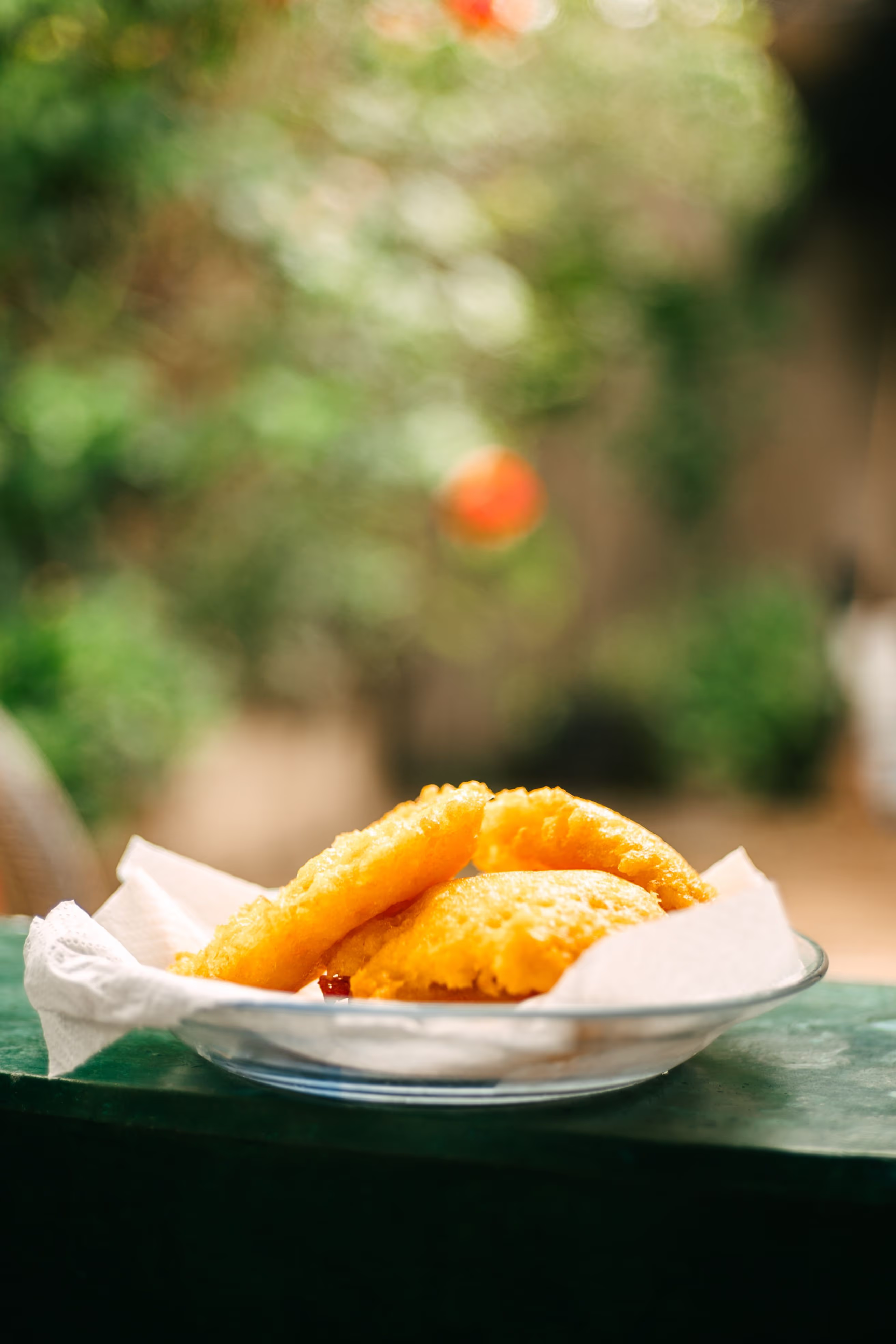
A good lunch along the way
Buenos Aires street food: eating al paso
Choripán, empanadas and pizza by the slice: make confident orders and fit informal food stops into the neighborhoods you want to explore.
Buenos Aires food on the move lives in carts, market counters, small shops and pizzerias. Choose a compact route, learn a few useful questions and let appetite set the pace.
Let lunch belong to the walk
A sandwich wrapped in paper, an empanada still too hot to bite, a slice of pizza eaten at a counter: Buenos Aires has plenty of meals that fit between the larger plans of a day. The useful phrase is al paso, eating on the way. It does not require a street cart, and it does not necessarily mean eating while walking. A small shop, market counter or pizzeria can offer the same quick, informal pause.
That distinction helps when you arrive expecting a street-food scene concentrated on one famous avenue. In Buenos Aires, the experience is spread across neighborhoods and different kinds of premises. You might choose a choripán during a waterfront outing, collect empanadas near your accommodation or stop for pizza between the city centre and an evening performance. The food becomes part of the route you already want to take.
Start with one neighborhood and one appetite. A food walk becomes less enjoyable when it requires crossing the city to collect several supposedly essential bites. Pick a small area, identify a couple of possibilities and let the first order guide the next. A good lunch does not need to be a tasting competition.
This is a guide to choosing, ordering and enjoying those informal meals. It is not a ranking of vendors or a promise that a particular stall will operate on the day you pass. Use current menus and opening information for individual businesses. The pleasure is in understanding enough to make a confident choice when the food is in front of you.
A quick meal can still deserve your attention
The advantage of eating al paso is flexibility. You can stop when hungry and keep the rest of the day open. But a short meal is still a meal: give yourself a place to put down a bag, enough time to handle hot food and a moment to work out the order and payment system.
If you are traveling with someone else, decide whether you want a shared tasting or separate lunches. Sharing can help you compare a couple of fillings or styles, but it is awkward if one person wanted a substantial meal and the other expected a single bite. Say what you are planning before ordering.
Keep the next activity in view. A filled sandwich and several pastries may be too much immediately before a long walk; one small empanada may be too little for an afternoon without another stop. Choose for the day you are having, not the number of foods a guide says you should try.
Choripán: begin with the sandwich
A choripán is the straightforward pairing of grilled chorizo and bread. The sausage, bread and whatever dressing you choose provide the structure; you do not need a complicated order to begin. Visit Argentina describes chimichurri and salsa criolla among the familiar accompaniments. Recipes and toppings vary, so look at what the particular kitchen offers.
Chimichurri can bring herbs, garlic, vinegar and seasoning to the richness of the sausage. Ask for the sauce separately if you want to try it first or control the quantity. There is no need to cover the sandwich before tasting the combination already in your hand. A small initial amount makes it easier to decide what you prefer.
The city's tourism guide places choripanes and other grilled sandwiches among the familiar foods of its waterfront outings. That makes the Costanera an area to investigate for the experience, rather than a guarantee about any individual cart. Check what is operating and how it fits your chosen walk before making a special journey.
Order the sandwich you actually want
Read the board for what is included. A basic choripán and a more elaborate version may differ in toppings, portion and price. If you want the simpler option, ask for it directly. If a topping is unfamiliar, ask before ordering rather than assuming the name translates into the combination you know at home.
A few short phrases are enough: “Un choripán, por favor” requests one; “La salsa aparte” asks for the sauce separately. Add a drink only if you want one, and check whether a displayed combination price includes it. Clear quantities matter when you are ordering for a group.
After collecting the food, step out of the service area before opening bags and arranging sauces. Keep the paper or tray beneath the sandwich and eat where the premises or public space permits. This is practical food, but it can still be messy. The first bite is easier when both hands are available.
A sandwich is not a whole parrilla order
If you want a leisurely meal built around several grilled cuts, plan a separate parrilla visit. A choripán stop offers a different rhythm: one item, a short pause and the continuation of your day. You do not need to add every available grilled dish to make the experience feel complete.
The same applies to other sandwiches on the board. Choose one that interests you and ask about the filling or preparation if it is unclear. A long menu does not oblige you to compare every meat. You can return another day if the location works well within your neighborhood routine.
For a waterfront outing around Puerto Madero, separate the dockside walk from any onward plan toward the Costanera. Look at the actual route and the place you intend to eat. The neighborhood name alone does not tell you which food options will be along your path.

Empanadas: make a small order with a clear plan
An empanada turns a filling into a portable meal by enclosing it in pastry. The national tourism guide emphasizes the variety of fillings and the distinction between baked and fried versions. In a Buenos Aires shop, the menu may bring together several regional references and house recipes. The label is a starting point for a question, not a complete list of ingredients.
Choose a few contrasting fillings if you want to explore. One familiar option and one that interests you can be a more useful first order than a large mixed box whose contents you cannot identify. If you are sharing, ask the shop how it marks the different varieties and keep that explanation with the order.
Do not treat the pastry's edge as a universal code. A business may use a fold, stamp, mark or box diagram to distinguish fillings, but your safest guide is that business's own explanation. This matters when one person is avoiding an ingredient as much as when everyone wants to remember which one they liked.
Baked, fried and filled in different ways
Ask “¿Son al horno o fritas?” if the cooking method matters to you. A shop may offer one method, several styles or different methods for different fillings. You are not choosing between an authentic and an inauthentic version; you are choosing the experience you want to eat.
For meat fillings, ask whether the description refers to a particular preparation or house seasoning. For vegetable or cheese options, read the actual ingredient description. A filling name is not enough to answer every dietary question. If you need to avoid an ingredient, say so clearly and ask the kitchen to confirm.
Empanadas are also a useful way to calibrate appetite. Start with an order that makes sense for the size you can see and the meal you want. You can often buy more if still hungry, whereas a large box can turn a pleasant tasting into a duty to finish everything.
Eating now and taking away are different orders
Tell the server whether you want to eat there or take the food away: “para comer acá” or “para llevar.” Ask how long the order will take if you have a timed visit ahead. A quick-looking counter does not guarantee every item is already prepared.
If you are collecting food for several people, count the varieties aloud or show a short written list. Check the total and the way the box is labelled before leaving. It is easier to resolve a missing item at the counter than after walking back to your accommodation.
Take time with the first bite. A warm exterior does not tell you how hot the filling is. Find a comfortable place to stop rather than trying to eat, navigate and carry a drink at the same time. Portability gives you choices; it does not require multitasking.
Pizza by the slice belongs in the conversation
Buenos Aires pizza deserves a place in an al paso day because a portion can be a meal in its own right. The city’s pizza-style glossary distinguishes three bases: al molde is the thicker, spongier pan style; media masa is a lower pan-style variation; a la piedra has a thinner base. These describe the dough and format rather than a promise that a particular shop serves all three, while cheese and toppings create another comparison. Look at what is being served rather than assuming every pizzeria makes the same kind.
Ask whether the variety you want is available by the slice. A menu may show whole pizzas, portions or both. “Una porción” makes the quantity clear. If you want to try more than one style, begin with a manageable order and compare the combination of base, topping and cheese while it is still warm.
Fainá, made with chickpea flour, is an accompaniment to look for, not a fourth kind of pizza dough. The city guide presents it as a portioned preparation that can accompany pizza. Order it separately if it interests you, and decide how you prefer to eat the two. You do not need to perform a ritual correctly to enjoy lunch.
The vocabulary carries some of the city’s migration history. Buenos Aires Tourism traces an important part of its pizza tradition to late nineteenth-century Genoese arrivals in La Boca, alongside other Italian influences, and identifies fugazza, fugazzetta and fainá as names with Genoese roots. That background helps explain why an Argentine pizza counter has its own familiar language. Read the local names on their own terms: the thicker base, generous cheese and separate portion of fainá belong to the city’s developed traditions, rather than needing to match the pizza you know from another country.
Understand the counter before joining the flow
Some places separate ordering, payment and collection; others handle them together. Pause long enough to see the arrangement or ask where to order. Keep any receipt or token until you have your food. A moment of orientation is easier than standing in the wrong line with a cooling slice.
If there is a standing counter, use it as intended and leave room for other customers. If you need a seat, establish whether one is available before ordering. Eating al paso should fit your comfort and mobility, not force you to balance a plate in a situation that is difficult for you.
A pizza stop works particularly well during a city-centre outing. Use the Monserrat and Microcentro guide to shape the broader day, then select food around the part of the centre you will actually visit. If you have a performance booked, protect the arrival time instead of planning an ambitious tasting immediately beforehand.

Markets gather options, but they are still working places
A market can make an informal meal easier because different kinds of food sit within a compact area. It also gives a group with different tastes more choice. Before everyone orders separately, decide where you will meet and whether there is a shared place where you can eat.
The city's official description of Mercado de San Telmo identifies a mixture of food stalls, shops and antiques. Treat the market as part of a day in San Telmo, with time to look around before choosing lunch. There is no reason to commit to the first counter at the entrance if you would enjoy seeing the range of options.
Individual businesses set their own service arrangements. A seat beside one stall may belong to that stall rather than functioning as a general food court. Ask before placing food from another counter on a table. The same courtesy applies when you stop to take photographs in front of a working service area.
Choose one reason to stop
You might visit the market for empanadas, coffee, a particular cuisine or the building itself. Let that reason anchor the outing, then leave room for something unexpected. Trying to sample a little from every counter can make the meal more expensive and less satisfying than choosing two things you actually want.
If a queue is long, decide whether that specific food matters enough to wait. Popularity can be interesting context, but it is not a requirement to spend your afternoon in line. A nearby alternative may better suit your appetite and schedule.
Keep the market's location in relation to the rest of your day. A San Telmo food stop can sit comfortably within a neighborhood visit; it becomes a different undertaking if you are also trying to reach several distant districts. Plan the walk and transport as carefully as the list of dishes.
Belgrano broadens the idea of eating al paso
Belgrano offers another way to think about informal food. The city tourism office describes Barrio Chino as a commercial and dining area shaped by Asian communities, and identifies nearby Pasaje Echeverría as a corridor of small food premises. Its account notes that many businesses there operate without conventional table service.
This is a useful reminder that Buenos Aires street food is not limited to a fixed set of national symbols. A food walk can include different cuisines without becoming less connected to the city. Read the menus in front of you and choose for your own interests rather than looking only for the same dishes everywhere.
Before buying food that needs a bowl, cutlery or a stable surface, think about where you will eat it. A sandwich and a hot soup create different practical needs. If the seating arrangement does not suit you, choose a different business or a dish that works better for the space.
Plan the visit around a small area
Give Belgrano its own outing rather than treating it as a quick detour between southern neighborhoods. Check how you will arrive, where you want to walk and the current hours of the places you hope to visit. Food can provide the centre of the visit without consuming every part of it.
If you are traveling with a group, agree on a meeting place before exploring different counters. Keep the shared timetable loose enough for differing preparation times. One person receiving food quickly should not have to finish lunch while another is still deciding what to order.
A successful informal meal often depends on these modest arrangements. Knowing where to meet, where to sit and how to get home leaves more attention for the food itself. The practical side should make the outing easier, not turn it into a tightly controlled tour.
Fit food stops into the neighborhoods you came to see
In Palermo, the city tourism authority describes Cosí mi piace, on El Salvador 4618, as an Italian cantina making Roman-style pizza. A seated restaurant meal there is a contrast to an al-paso counter order. Being a pizzeria does not automatically make it a takeaway or slice stop; choose the full-table format deliberately.
For Villa Crespo and Chacarita, El Imperio de la Pizza supplies the counter comparison. The city authority places it in Chacarita at Avenida Corrientes 6891 and describes high al-molde pizza and customers ordering portions at the counter. That is a specific format to investigate on the neighbourhood outing, rather than an assumption about every pizzeria along the route.
A Recoleta visit to Bellas Artes can call for a deliberate seated rest. Pairing a museum with one full meal is an editorial itinerary alternative; it does not establish a restaurant next door or suggest that standing at a counter suits everyone. Read the bodegón Story when that different meal format fits the day.
In La Boca, the city authority associates Banchero with fugazzeta and lists its La Boca address as Suárez 396, at Almirante Brown. This is a particular pizza tradition to consider within the neighbourhood visit, without assuming slice sales or current opening hours. Confirm the format offered when planning the meal.
Build a day from two stops, not ten
One substantial savory stop and one later snack can create a satisfying food-focused day. You might choose empanadas for lunch and a pizza portion later, or make a choripán the main event and keep the rest flexible. The order should follow appetite and location.
Leave room for ordinary meals on other days. If every afternoon becomes a checklist of rich snacks, you may lose interest in the longer restaurant experiences you also wanted. A food trip works best when different meals have different rhythms.
A simple note on your phone can help: what you ate, where you were and what you would choose differently next time. Keep it personal and useful. You do not need to score every bite or turn lunch into a research assignment.

Ask clearly about ingredients and portions
An informal counter can still be a place to ask careful questions. If you are vegetarian, vegan or avoiding a particular ingredient, describe the requirement rather than relying on a broad menu label. Ask about the filling, dough, dressing and preparation where relevant.
For a food allergy or coeliac disease, communicate the specific restriction and ask whether the business can meet it, including preparation and cross-contact considerations. If the answer is uncertain, choose somewhere that can explain its process. A dish's main ingredient does not establish that the finished food is suitable.
Portion questions are useful for everyone. Ask whether a displayed price is for one item, a pair, a portion or a whole pizza. If you are sharing, find out whether the item can be cut or whether you should order separate pieces. This avoids both over-ordering and the awkward discovery that everyone expected the same last empanada.
A small vocabulary removes most uncertainty
You can keep a short set of phrases ready without memorizing a restaurant script. “¿Qué lleva?” asks what is in the dish. “¿Cuánto tarda?” asks how long it takes. “Para llevar” makes a takeaway order clear. If you do not understand the response, ask the person to repeat it more slowly or point to the relevant menu item.
For payment, establish the accepted methods before the food is prepared if you have limited options available. Read the amount and currency on the current menu or payment display. A price mentioned in an old travel post is not a useful budget for today's order.
Speak plainly and leave room for the server to answer. There is no need to apologize for every question, but a busy service counter is easier for everyone when quantities and choices are ready. Decide the essentials before stepping forward.
Keep the budget as flexible as the route
Eating al paso can help you control spending because you choose individual items, but it is not a guarantee of a cheap meal. Several small purchases, drinks and transport between distant stops can add up. Compare the whole outing rather than just the price of the first empanada.
If budget is the priority, choose a neighborhood you were already planning to visit and check the complete order before paying. A modest meal close to your route may provide better value than a famous snack that requires a separate journey. Avoid buying more simply because each item appears inexpensive on its own.
For a group, agree whether costs are shared or individual. Mixed boxes and combined drinks are convenient until the payment becomes unclear. Keep the order and the split simple, especially when one person is translating for everyone.
Leave room for a different kind of meal
Street food is one way to eat in Buenos Aires, not a summary of the city's entire food culture. On another day, sit down for a longer lunch, explore a cafe or plan a parrilla evening. The contrast gives each experience more character.
The bodegón guide takes you through the slower meal: reading a menu, judging portions and choosing dishes to share. Use it when you want a table and time to settle in. Here, the pleasure is the shorter pause that belongs naturally to the day outside.
You do not have to decide which style is more authentic. A quick lunch and an unhurried dinner can both reveal something about the city. Choose the one that fits the moment, then give it enough attention to enjoy it.
Eating alone makes the small order easier
A solo food walk gives you freedom to order one item and change direction afterward. It also means you may not have someone to hold a bag while you collect a tray or pay. Put the essentials within reach before joining the queue and choose a place where you can handle the meal comfortably.
If a mixed box is larger than you want, ask which varieties are sold individually. A single slice or empanada can be enough for a first taste, followed by another only if you feel like it. You can explore variety across several days instead of trying to reproduce a group's tasting in one sitting.
Finish with appetite for the next day
The most useful food walk leaves you with a few clear memories and perhaps one place you want to revisit. It does not need to include every neighborhood, every filling or every celebrated sandwich. Buenos Aires offers enough variety for another day.
Before setting out, keep the plan small:
- Choose one area and check the places that matter to the outing.
- Decide whether you want a snack, lunch or a shared tasting.
- Read quantities, ingredients and prices before ordering.
- Find a comfortable, permitted place to eat.
- Let appetite determine whether there is another stop.
A choripán, an empanada or a slice of pizza can be the reason to pause without becoming the only reason to explore. Give lunch a place in the walk, keep the next turn open and let the city provide the rest of the afternoon.


