An Andean pass, a visit to the other side of Iguazú, or the overland journey to Tierra del Fuego. Plan the crossing as part of the route, with its own documents and conditions.
A land crossing can be a worthwhile part of an Argentina trip, but its demands depend on the people, the vehicle and the route. A day visit from Puerto Iguazú to Brazil differs from a high Andean drive into Chile. The overland approach to Argentine Tierra del Fuego also passes through Chile, even when both overnight destinations are in Argentina. Work through the requirements for every country you enter and for the return journey. A ticket or rental agreement provides transport; it does not establish permission to enter. Use the current official advice for your passport and travel circumstances before committing to a route that cannot easily change.
01
Name the actual crossing
Record the official crossing name and the road on each side. Nearby passes can have different operating hours, seasonal access and vehicle restrictions. A general statement that the border is open is not enough for a specific route.
02
Keep the onward day flexible
Immigration, customs, traffic and weather all affect the crossing. Avoid a plan that depends on arriving at a remote hotel, ferry or last bus immediately after the fastest expected border time.
03
Prepare the return as well
A short outing still means leaving one country and entering another. Check re-entry permission, the passport or accepted document you must use and any visa conditions for each direction. Keep proof of your onward plans available.
Mendoza · Mountain-road country
The Andes
Choose the right pass.
Argentina and Chile meet along a mountain frontier with many distinct routes. The Cristo Redentor corridor from Mendoza uses the RN7 approach through the high Andes; Cardenal Samoré connects the Villa La Angostura area with Chile's Lake District using RN231 and CH215. These routes serve different journeys and should not be treated as interchangeable backup roads. Snow and weather can interrupt operations, including on an established main crossing. Consult the official status for the named pass before setting out and again close to departure. A longer detour may involve an entirely different travel day, surface or overnight plan. For the Mendoza–Santiago journey, use the Cristo Redentor route guide and check the official live crossing report before departure.
01
Separate opening hours from road access
A border's published schedule does not guarantee that the approach is passable that day. Read current alerts and road reports together. Winter restrictions, chain requirements and a temporary closure can override the ordinary timetable.
02
Plan a place to wait
Choose a sensible town or city from which to reassess the journey if the pass closes. An extra night in Mendoza or the Lake District is easier to manage when you have not made every later booking depend on one crossing day.
03
Do not improvise a remote detour
Ask about the full alternative route, its vehicle requirements and whether the rental permits it. A pass that appears close on the map may add substantial distance or use a road unsuited to your vehicle.
04
Bolivia and the Quebrada
La Quiaca–Villazón is a named Argentina–Bolivia crossing useful to understand when connecting Bolivia with Jujuy and the Quebrada de Humahuaca. Confirm the exact service and controls; do not mistake an onward connection within Argentina for a through international ticket. Consult Argentina's official border-status service for La Quiaca–Villazón before setting out.
05
Salta towards San Pedro de Atacama
For a journey between Salta and northern Chile, confirm whether your transport uses Paso de Jama and read the report for that pass. Jama and the Mendoza corridor serve different regions. Leave room for altitude, border procedures and a changed departure rather than adding a tightly timed outing on arrival. Use the official border-status service for Jama close to departure.
Reaching Argentine Tierra del Fuego by road from the mainland requires a Chilean transit and a ferry crossing of the Strait of Magellan. The provincial tourism guide describes the route from Río Gallegos through Integración Austral, across at Primera Angostura and back into Argentina at San Sebastián before continuing south. This means international entry requirements apply even if the purpose is simply to travel between two Argentine destinations. The ferry is another operating service within the day, with its own payment and weather considerations. Read the whole sequence before choosing an arrival date in Ushuaia.
01
Include all passengers and the vehicle
Every traveller needs appropriate documents for Chile and Argentina. For a rental, tell the company explicitly that the route enters Chile and returns. Do not assume a domestic final destination makes a standard contract sufficient.
02
Prepare for the ferry section
Confirm the current operator information, accepted payment and boarding arrangements. Wind can affect operations. Carry what you need for a longer day and avoid depending on a precise ferry departure without checking how the service works.
03
Give the island its own time
The crossing is a means of reaching Tierra del Fuego, not a substitute for a stay there. Keep time for the island's roads, towns and landscapes after the border formalities and the long approach.
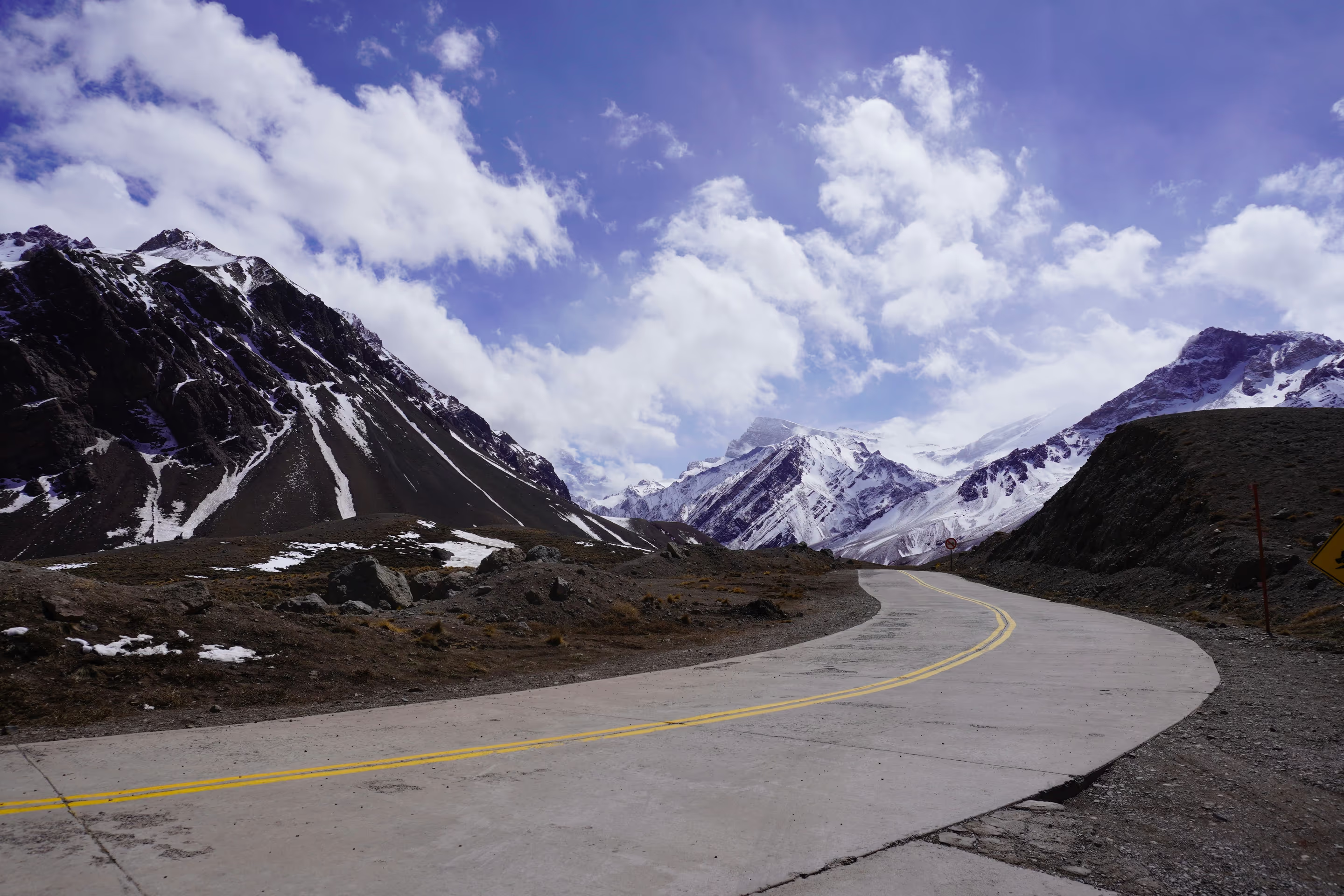
The Andes · A winding road across open mountain slopes
Documents and inspections
Pack for the crossing.
Keep passports or the officially accepted travel documents, any required visas, the vehicle documents and rental permissions together where they can be reached. The requirements for children can depend on nationality, residence and the accompanying adults; verify those circumstances with the relevant authority. Food is a separate issue from immigration. Chile's SAG requires declarations covering plant and animal products, and inspectors decide what can enter. Argentina's SENASA also restricts some foods and agricultural products. A picnic that is harmless within one country can therefore need declaration or be refused at the border.
01
Declare rather than guess
Fruit, meat, cheese, seeds and some natural-material souvenirs can fall within agricultural controls. Follow the declaration for the country you are entering and ask the inspector when unsure. Declaring an item does not guarantee its admission.
02
Use the current official process
Digital declarations operate at some Chilean controls, while procedures can differ elsewhere. Complete the form appropriate to the crossing and retain its confirmation. Do not use an old pandemic-era form found in a general web search.
03
Treat insurance rules as current information
Argentina's post-2025 entry framework includes a health-insurance declaration provision, with implementation guidance that needs checking for your trip. Consult the responsible consulate or Migraciones and carry suitable cover and its evidence. Do not assume a free public-healthcare system covers every visitor service.
Choose the crossing first, then settle the personal documents, transport permissions and arrival. Keep current official information close to the decision it affects.
01
Entry
Check your own passport.
Visa exemptions and permitted travel documents depend on nationality and circumstances. Advice for Argentine citizens or residents does not automatically apply to a foreign tourist. Use the relevant consular information for both countries, including a same-day return.
Confirm document validity and any visa before buying transport.
Ask about children and accompanying-adult requirements separately.
02
Iguazú
A short trip is still international.
Visiting the Brazilian side from Puerto Iguazú involves crossing into Brazil and returning to Argentina. Check Brazilian entry permission for your passport, even for a day visit. Choose a transport service that explains the border stops and the return arrangements.
Carry the required original travel document.
Leave room for queues before a timed flight or long-distance bus.
03
Rental cars
Get the papers before collection.
Ask the rental company for written permission, the appropriate cross-border paperwork and insurance for the countries and dates on your route. Confirm which crossings and roads are allowed. Some arrangements need preparation before the car is handed over.
Tell the company about every entry and re-entry.
Do not assume an international one-way return is available.
04
Coaches
Keep documents in the cabin.
An international coach may organise when passengers approach the controls, but the carrier does not replace immigration clearance. Keep travel documents and required confirmations with you rather than in inaccessible hold luggage. Read the company's baggage and border instructions.
Confirm the actual arrival terminal and date.
Avoid a tight separate-ticket connection after the border.
For Colonia del Sacramento, choose the actual ferry route and allow time for international check-in. Migraciones' January 2024 notice describes joint Argentine–Uruguayan controls at Colonia and Montevideo; follow the current carrier's instructions for your port and direction. See the Colonia day-trip guide.
05
Money
Allow for two payment systems.
A card or wallet that works on one side may not work at the next small stop. Confirm how a ferry, transfer or other required service takes payment and in which currency. Keep enough practical backup for the journey without carrying an unnecessarily large sum.
Do not assume Argentine pesos are accepted in Chile or Brazil.
Save booking and payment confirmations offline.
06
Conditions
Check again before leaving.
Use the official border alert and road-condition channels on the travel day. A screenshot from planning week is not live information. If the route closes, contact the next accommodation and transport provider while there is still room to change the plan.
Keep a realistic waiting or overnight option.
Let changing conditions decide the day, not a fixed mileage target.
Useful visitor information
Before you book.
Use the official border and consular information for the exact crossing and passport. The Tierra del Fuego and SAG guides explain two details that are easy to miss: Chilean transit and agricultural declarations.