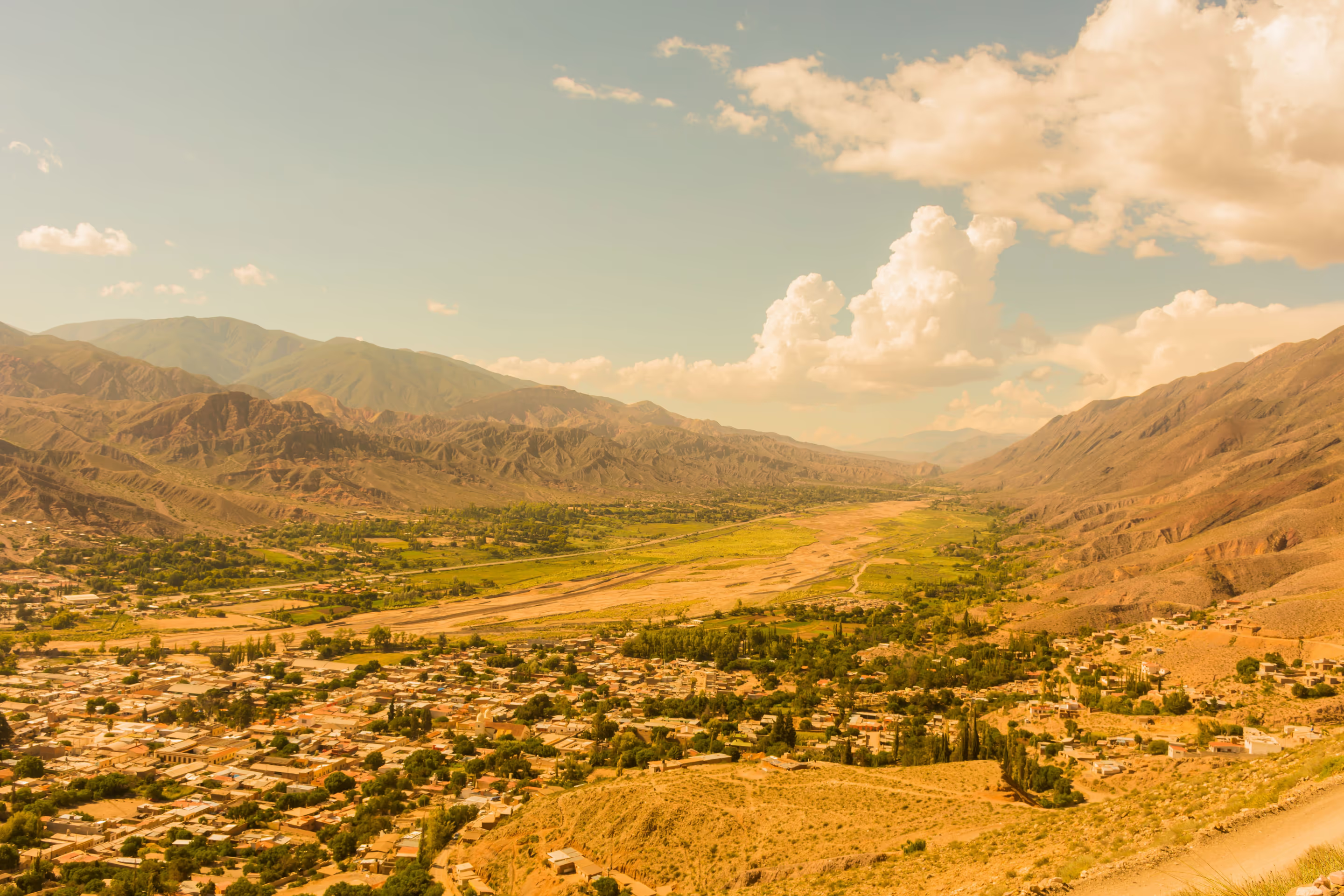
Stone above the valley. Cacti against the hills. Music in a street where the afternoon is still unfolding. Tilcara gives you several reasons to settle in before travelling farther north.
Tilcara works well when you want more than one kind of day in the Quebrada. The archaeological site and museum provide a historical focus; the town gives you places to eat and settle between outings; the surrounding terrain offers walks that need their own preparation. Choose an address that makes the mix comfortable. Staying for several nights is useful when it gives you time to understand a place, not just a new departure point each morning. Tilcara’s average elevation is about 2,465 m, according to Visit Argentina. Give the first days a manageable pace and distinguish town time from higher excursions. See altitude and health when choosing the sequence of nights.
01
A day with archaeology
Pair the Pucará with the archaeological museum in town, allowing time for interpretation and a break. Check the university's current opening and guiding arrangements before deciding which to visit first.
02
A day on foot
Choose a walk for its terrain, conditions and your experience. The Garganta del Diablo area is one possibility, with local access advice needed before you set off. Keep a shorter option in mind.
03
A day with the valley
Visit a neighbouring place that interests you or give Tilcara another slower morning. A settled base lets the forecast, an open museum or a conversation influence the order of the stay.
Pucará de Tilcara · Stone and cactus
At the archaeological site
Read the stone with its history.
The Pucará is a hilltop archaeological site where paths connect traces of a former settlement. What you see also reflects later restoration and reconstruction. Approach it through the interpretation, considering homes, work and ceremonial life alongside the view. The site is managed by the University of Buenos Aires and remains significant to the valley's Indigenous communities. Check Pucará visitor information for the visit you intend, and consider the high-altitude botanical garden within the grounds for a separate introduction to the Quebrada and Puna's plant life.
01
Use a guide or the interpretation
Check current university information for guided visits and independent entry. Ask what is original, what was reconstructed and how archaeologists reached their conclusions. Those distinctions make the visible stonework more meaningful.
02
Connect landscape and collections
Leave time for the archaeological museum in town. The university's high-altitude botanical garden offers another perspective on regional plants; check access separately before adding it to the same day.
Tilcara · Street musicians
Between the outings
Let the afternoon find a rhythm.
Tilcara's streets make room for markets, food and music as well as departures into the valley. Give yourself time to return from an outing, sit down and see what is happening nearby. Seek out a performance because the music interests you, and ask what is planned rather than expecting a particular scene to appear on demand.
01
Choose a comfortable evening base
A central stay simplifies the walk to meals and music. If you choose a quieter edge of town, check the return route, lighting and any transport you will need after dinner.
02
Take an interest without intruding
Ask before close photographs of people and respect performers' space. Community celebrations have their own meaning and arrangements; being nearby does not make every gathering a visitor event.
Tilcara surroundings · Walking among rock walls
The country around Tilcara
Choose a path. Give it time.
A walk beyond town brings the scale of the valley closer: rough rock, dry ground and slopes that change with the light. The Garganta del Diablo area is a distinct outing rather than an extension of a town stroll. The provincial Tilcara route guide distinguishes an approximately 6-kilometre vehicle approach from a 4-kilometre bridle-path approach from Tilcara. Arrival at the water intake is not arrival at the waterfall, which involves a further walk. The site is on Ayllu Mama Qolla community land, and community members manage its preservation and visits. Confirm access and river conditions with them before deciding on the approach or continuation; these distances are orientation, not a promise of an open route.
01
Check the whole outing
Discuss terrain, distance, exposure and the return with a local guide or visitor office. If driving part of the approach, confirm the road and vehicle requirements. A short final path can follow a demanding access journey.
02
Leave space for the weather
Recent rain can change paths and stream conditions. Follow local closures and turn back when needed. Tell someone your plan for a longer walk and carry what you need for the actual route.
Plan your visit
Make a settled base work well.
Our time allowances are editorial suggestions. Check access, opening days and transport for your own dates.
01
How long
Give each interest a usable day.
Three nights is our suggested starting point for archaeology, town time and a suitable walk. Add a night when you want neighbouring villages or a slower photographic visit. Check arrival and departure times carefully: the same booking length can provide two full days or leave little time between travel.
02
Where to stay
Compare the daily walk.
Look at the route between your accommodation, the centre and the places where outings begin. A hillside property may have views and quiet, with steps or a climb to match. Ask about the approach, parking and evening return before choosing purely from room photographs.
03
Pucará and museum
Check the university before visiting.
Opening days, guided reservations and weather-related access can change. Use the Centro Universitario Tilcara's Pucará visitor information for current arrangements. Keep enough time for the interpretation and the museum rather than treating the Pucará only as a viewpoint. Follow the marked paths and avoid touching or climbing the archaeological fabric.
04
Walking
Match the route to your experience.
A town walk, the Pucará paths and a canyon outing involve different surfaces and effort. Describe your mobility and experience when asking for advice. Confirm the current approach to Garganta del Diablo and whether a guide suits your plans; do not rely on a photograph to judge the route.
05
Neighbouring villages
Choose an outing with a purpose.
Purmamarca, Maimará and places farther north can each add something different. Pick the church, landscape, market or walk that interests you and allow time for it. Trying to see every village in one day often leaves the journey dominated by departures and the next parking place.
06
Higher country
Keep another level of planning.
Tilcara is already an elevated base, but nearby higher excursions may climb substantially farther. Sleeping here does not remove the need to consider gradual ascent, road conditions and how you feel. Keep the valley day as a valid alternative rather than treating a high viewpoint as compulsory.
Before you go
Check the details for your dates.
These official sources provide current access information and the background to the places described here.