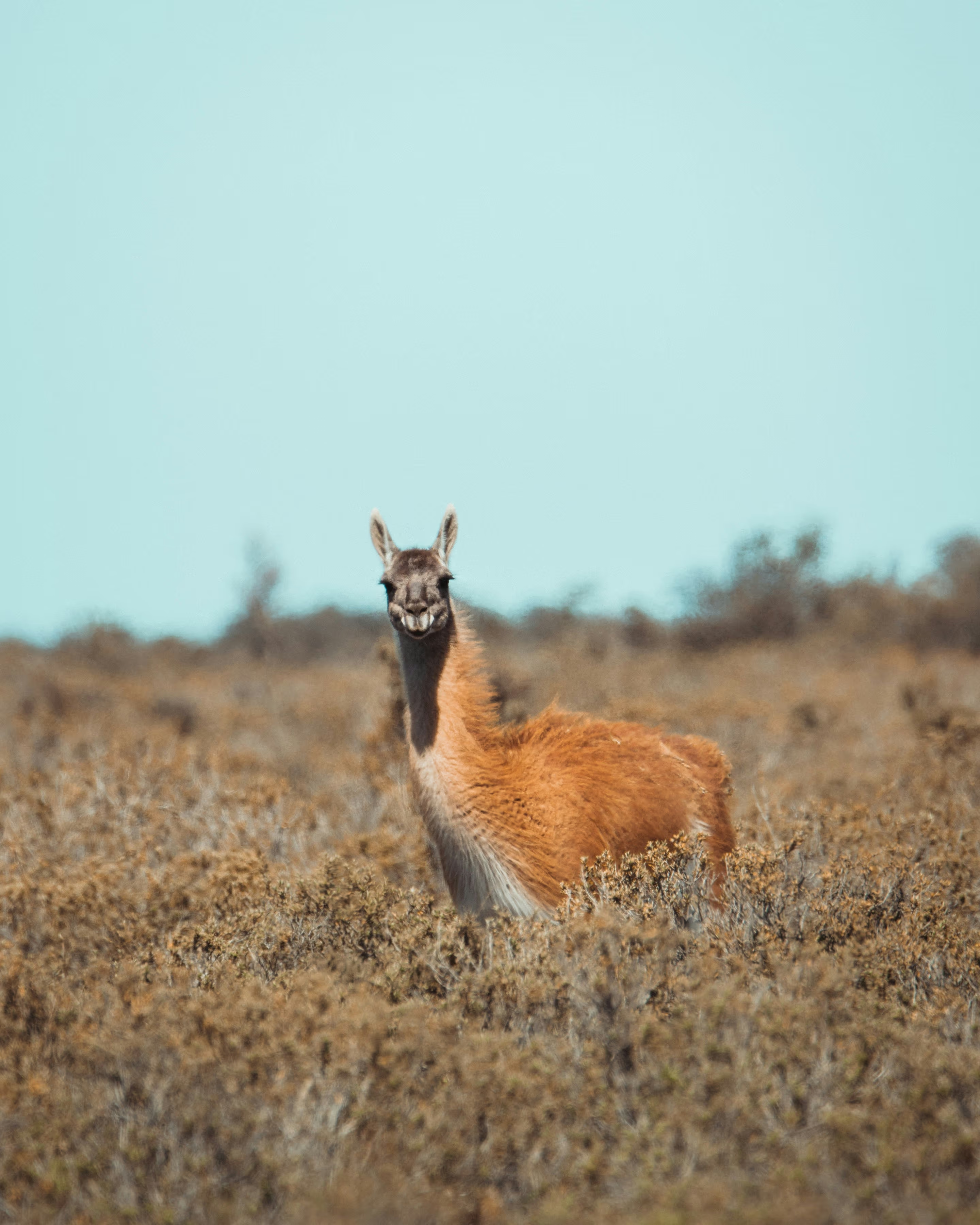
Península Valdés is a large landscape, not a single wildlife attraction. Golfo Nuevo lies to the south, Golfo San José to the north, and the exposed Atlantic forms its eastern edge. Between them are salt flats, scrub, estancia land and long gravel roads where a guanaco or a choique may become the day's most absorbing sight. The protected area has been a UNESCO World Heritage Site since 1999, recognised for its importance to marine mammals. A day from Puerto Madryn gives a first introduction. Staying two nights in Puerto Pirámides changes the pace, leaving a separate window for a boat trip and an unhurried journey to the eastern coast.
01
Start at the isthmus
The Centro de Visitantes Istmo Carlos Ameghino is the useful first stop for interpretation and current road, tide and wildlife information. Let that advice shape the day's route rather than treating every named point on the map as equally accessible.
02
Choose a coast, then a second focus
Puerto Pirámides faces Golfo Nuevo and the whale-boat season. Caleta Valdés and Punta Norte belong to a longer eastern or northern outing. Combining everything in a single day can make the animals feel like interruptions to the driving schedule.
03
The calendar changes the journey
Whales, nesting penguins, breeding sea lions and elephant seals do not follow one shared peak. Decide which encounter matters most and accept that other species may be absent, distant or doing very little when you arrive.
Golfo Nuevo · A whale off Puerto Madryn
The isthmus and Golfo Nuevo
Begin between two bodies of water.
The narrow land connection makes the peninsula's geography easy to grasp: two gulfs separated by a strip of steppe, then a much wider country beyond. After the visitor centre, Isla de los Pájaros offers bird observation from the mainland shore. The island itself is protected from visitor access; the point is to watch across the tidal shallows. Continue towards Puerto Pirámides when a whale-boat departure is the day's priority. Its small bay gives the peninsula a human scale, with boats, places to eat and a beach that feels very different once the day visitors have left.
01
Choose the shore thoughtfully
The island viewpoint and a boat excursion are different experiences. On a limited day, the longer activity needs first claim on the schedule; a quick look at both is not necessarily the richer visit.
02
Keep the whale day flexible
Boats generally operate in the June–December season, subject to the port and sea conditions. Sleeping nearby gives more room to adjust a departure than a tightly timed return to Madryn.
On the eastern side, Caleta Valdés stretches behind a long barrier of gravel, sand and pebbles, with an opening to the Atlantic at its southern end. The geography is part of the attraction: protected water, an exposed outer shore and marine mammals gathered along their edges. The administration distinguishes the seasonal penguin viewpoint from the Punta Cantor sector farther south, where elephant seals are a central interest. Caleta is around seventy-five kilometres from Puerto Pirámides by gravel road. Give the journey and the observation time equal respect; the visit loses much of its character if it becomes a hurried photograph before the next long drive.
01
Look at the scale of the shore
Binoculars help you separate resting animals from the stones and sand. The designated viewpoints keep people above or away from the colonies, so close-up photographs should come from a lens rather than a closer approach.
02
Penguins are a seasonal addition
The colony belongs to the spring-to-autumn breeding cycle. If penguins are the main purpose of your journey, compare the available visit here with a dedicated day at Punta Tombo instead of assuming the two are interchangeable.
Punta Norte is known for breeding sea lions, elephant seals and the possibility of watching orcas hunt close to shore. The celebrated intentional beaching behaviour is exceptional, seasonal and never an appointment visitors can book. Late summer and early autumn are especially associated with observation there, with tides influencing the possibilities. Stay attentive to the colony even when no orca appears. Inland, the peninsula has another cast: guanacos, maras and choiques in the steppe, with domesticated sheep on estancia land. These encounters make a journey across Valdés more than a transfer between marine viewpoints.
01
An orca trip needs a different expectation
If this behaviour is your main interest, a specialist guide and several suitable days make more sense than fitting Punta Norte into a general tour. Even then, the value of the visit cannot depend on a guaranteed hunt.
02
Travel slowly enough to notice
Pull over only where it is safe and permitted, without blocking the road or crossing fences. An animal close to the road may move suddenly; patient observation protects both the encounter and the journey.
A full circuit on a map can hide a great deal of driving. Choose the experience you want, then build a realistic day around it.
01
Time
Use a full day for a first introduction.
From Madryn, choose the gulf and a boat trip, or a longer land route with selected wildlife stops. Two nights in Pirámides let you separate those interests. More time is worthwhile for photographers or a particular seasonal behaviour.
Leave time for the visitor centre.
Give a long eastern-coast route its own day.
02
Base
Sleep on the peninsula for flexibility.
Pirámides reduces the repeated drive from Madryn and lets you enjoy the village outside excursion hours. Madryn offers more services and accommodation choice. The right balance depends on whether the peninsula is one outing or the centre of your trip.
Book limited village accommodation early in busy periods.
Use a split stay when you have enough nights.
03
Roads
Treat gravel as part of the schedule.
Rain can close roads and strong wind can change the day. Distances between Caleta Valdés, Punta Norte and Pirámides are substantial; travel time depends on the surface, visibility and stops. Ask for current conditions before leaving the isthmus.
Do not rely on continuous mobile coverage.
Finish remote driving with daylight to spare.
04
Seasons
Build around one main wildlife interest.
June–December is the broad whale-boat period. Penguins are associated with the spring-to-autumn nesting season. Orca observation requires more specific local timing and patience. A seasonal overlap widens possibilities without making every sighting likely.
Check the relevant tide for the observation point.
05
Visits
Compare what a tour actually includes.
A peninsula excursion may mean very different routes, time at viewpoints and optional boat charges. Ask which stops are included and how port closure changes the plan. A smaller list of visits with longer observation can be the more rewarding choice.
Separate protected-area entry from operator charges.
Book through authorised local providers.
06
Supplies
Prepare in the village or city.
Take water, lunch or snacks, a warm windproof layer and binoculars before the longer land circuit. Services are concentrated, and a remote viewpoint is a poor place to discover an empty fuel tank or an unavailable meal.
Use the marked paths and observation areas.
Carry rubbish back and leave wildlife undisturbed.
Useful visitor information
Plan with the latest local details.
Official and specialist information for the places in this guide.
A day circuit introduces the peninsula. A night nearby lets the landscape settle around you: the last beach walk, a small restaurant and tomorrow's possibilities still open.