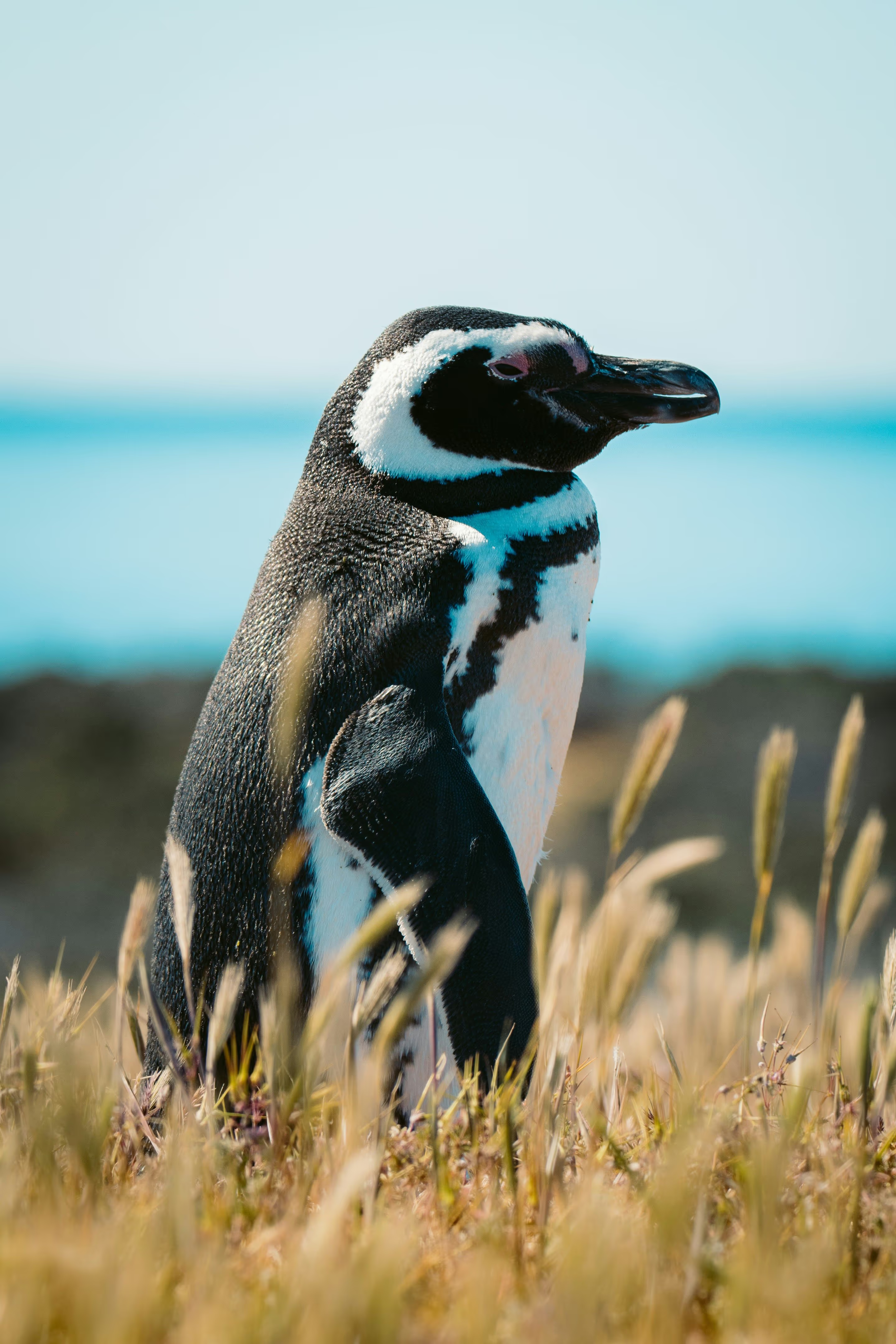
Punta Tombo · A Magellanic penguin in its nesting habitat
Atlantic Patagonia · A seasonal Magellanic penguin colony
Punta Tombo
Small paths cross a much larger world of nests, birds and journeys to sea. Come to watch the colony's daily life, and give its residents the right of way.
Punta Tombo is a breeding place, and that is the key to understanding a visit. Magellanic penguins return to this dry stretch of Chubut coast to nest, raise young and later replace their plumage before returning to life at sea. What you see depends on where the colony is in that cycle. The reserve's interpretation centre and marked route bring the story into focus: burrows beneath low vegetation, birds moving towards the water, others waiting or resting by their nests. Set aside a proper day for the outing. The drive from Trelew is substantial, and starting from Puerto Madryn adds more distance before you reach the first penguin.
01
Choose the stage, not just the month
Early-season nest preparation, the period with chicks and the later moult produce different scenes. The broad September–April window describes the breeding cycle, not a promise that the visitor site is open on every date within it.
02
A walk through occupied habitat
The approximately three-kilometre return visitor trail crosses part of a living colony. Stop when birds cross, remain on the marked route and watch without surrounding them. A penguin approaching the path is not an invitation to touch or follow.
03
Put the outing on its own day
A penguin visit, a long peninsula circuit and a whale departure cannot all receive proper attention in one day. Choose a realistic base and give the interpretation centre, trail and coastal views the time they deserve.
Chubut coast · Penguins in their nesting habitat
Nests and the seasonal return
Begin with the smaller details.
The nesting ground can look surprisingly dry if your mental picture of penguins begins with ice. Here the birds use a Patagonian landscape of earth, stones and low shrubs beside the Atlantic. Males generally arrive first in spring to prepare nesting sites, followed by females. Pairs usually lay two eggs, with the adults sharing the work of incubation and feeding. A visit becomes more interesting when you notice those responsibilities rather than simply count birds. Watch a nest from the path, follow the direction of a returning adult and let the colony's repeated small movements explain the setting.
01
Early season has its own interest
Nest preparation and the return of breeding birds make spring a story of reoccupation. There may be fewer visible young than in later months, but the relationships between birds and their nesting sites are particularly clear.
02
Chicks change the scene
Later in the breeding cycle, the adults' journeys to feed young become central. The timing and success of breeding vary, so use current information to understand what is happening rather than expect every nest to look alike.
Start with the interpretation centre before stepping onto the colony trail. It connects the birds on land to their marine environment, making the movements you later observe easier to read. The route continues through designated viewing areas with the coast in sight. Rather than walking straight to the farthest point, pause where you can see birds travelling between their nests and the sea. The apparent awkwardness of a land crossing belongs to an animal adapted to swimming. The ocean is the essential half of the story, even on a day when most photographs are taken beside the path.
01
Take the centre seriously
A few minutes with the interpretation gives names and meaning to behaviours that could otherwise pass unnoticed. Families can use it to choose two or three things to look for together on the walk.
02
Let the trail set the distance
Nests can be close to visitor routes, which makes staying on them especially important. Use a long lens for a closer composition and leave every animal a clear route to where it is going.
Late in the season, changing plumage can make a penguin look dishevelled rather than immaculate. Moulting is a demanding part of its annual cycle, and resting birds should be allowed to do exactly that. The nesting colony is also only one part of the species' range: these animals spend much of their lives at sea, where feeding conditions affect what happens on land. Long-term research at Punta Tombo follows individual birds and changes within the colony. Keep that wider scale in mind. A visit is a brief view into an ongoing natural history, not a performance created for the people walking through.
01
Observe without directing
A sleeping or motionless bird is still worth watching. Do not make noise, offer food or step closer to provoke a more animated photograph; behaviour is the subject, not something to manufacture.
02
The dry landscape belongs in the picture
Low vegetation protects nesting places, and the space between birds is part of their habitat. Leave stones, feathers and plants where they are, and make photographs from the public route.
Good planning here is mostly about choosing the right seasonal visit and keeping the journey from overwhelming it.
01
Timing
Confirm the actual opening season.
The birds' broad breeding cycle runs from spring into autumn, but the reserve sets visitor opening and closing dates. Near either end, verify the current announcement before building the trip around a visit. The colony's appearance also changes markedly through those months.
Ask which breeding stage is underway.
Do not assume peak numbers throughout the season.
02
Duration
Allow several hours at the reserve.
The trail length is modest, but stopping to watch is the point. Interpretation, photography and a slower pace can readily fill a substantial visit. Add the road journey separately; this is more satisfying than measuring success by how quickly the loop can be completed.
Use an early start for an unhurried day.
Keep a meal break in the plan.
03
Base
Trelew makes the shorter approach.
The colony lies roughly 110–115 kilometres from Trelew, depending on the access described. Madryn is farther north and produces a longer day. If you are already moving between regional bases, a Trelew night can make the route fit more naturally.
Choose the base before booking a timed transfer.
Leave Valdés boat departures for another day.
04
Access
Check the final road conditions.
Access routes include unpaved sections, and weather can change their state. A guided outing removes the driving task and adds interpretation; a self-drive visit gives more control over the pace if conditions and your vehicle are suitable.
Follow the current official approach information.
Return with daylight and fuel in reserve.
05
Walking
Prepare for an exposed coastal route.
Wind, sun and stretches of uneven ground shape the walk even though it is not a mountain hike. Bring water, sun protection and a warm outer layer. Visitors with mobility needs should confirm the currently accessible portions and facilities directly before travelling.
Wear shoes comfortable on gravel.
Plan pauses rather than rushing past the viewing areas.
06
Connections
Give the valley its own attention.
Trelew's paleontology museum and Gaiman's heritage make a strong companion to the colony, especially across two days. A hurried stop for tea after a long wildlife outing leaves little time to understand the town. Choose a combination that fits your actual energy and interests.
Pair the colony with a quieter evening.
Use another day for MEF and Gaiman.
Useful visitor information
Plan with the latest local details.
Official and specialist information for the places in this guide.
The day's small encounters connect to a much longer natural history. Continue to Trelew and Gaiman for dinosaurs, migration stories and an afternoon around the tea table.