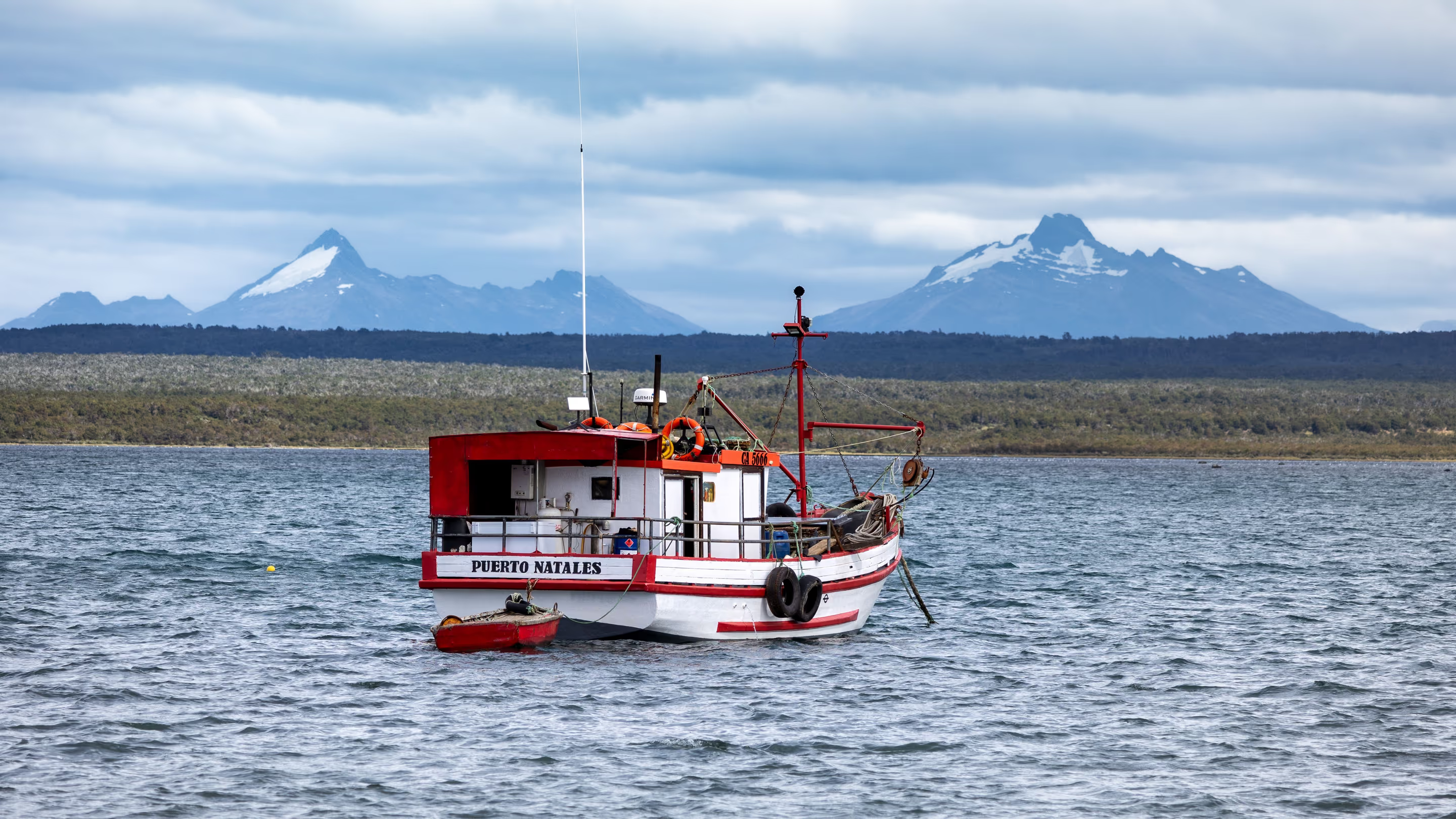
A wooden fishing boat on calm water beneath the mountains at Puerto Natales
Southern Patagonia · Across the border
El Calafate to Puerto Natales.
Connect the glaciers of Argentina with Chilean Patagonia through a transfer day built around the crossing, your documents and the next place you will sleep.
El Calafate and Puerto Natales make useful bases for different parts of southern Patagonia. Joining them can give a trip real variety, but the link is an international journey rather than a quick extension of a glacier excursion. Decide whether you need to reach Natales itself or continue towards Torres del Paine; that choice affects the road plan, accommodation and the service you should book. Begin with a confirmed transport option for the actual date, then arrange the surrounding nights. A route that looks direct on a map still needs time for departure, border formalities and arrival at your next property.
01
Choose the destination precisely
Puerto Natales, a lodge outside town and an entrance to Torres del Paine are different drop-offs. Give the full address when asking about transport, and find out where a through service actually ends.
02
Protect the first night
Make the border crossing the main commitment of the day. A fixed evening excursion or a second onward bus gives a delayed arrival consequences beyond simply reaching the hotel later.
03
Read the return as a separate journey
If the rental or flight requires you to return to Argentina, put that leg into the plan from the beginning. Confirm both countries' entry requirements and the rental's permitted crossings.
A stop sign beside a street in El Calafate at sunset
Choose how to travel
Let the booking define the route.
For a journey between the two towns, compare an available through bus with driving an authorized rental. A bus can remove the need to handle vehicle paperwork, but you still need the personal documents required by both countries. Driving can make sense when the vehicle has a useful role on the following days. Price that whole period, including the return or a specifically agreed international drop-off, before deciding. This guide does not assume that a service operates every day or that a rental can be left across the border.
01
A through bus
Check the operator's own booking for your date, departure terminal, arrival stop, baggage allowance and change conditions. Ask which crossing it intends to use and how it handles a closure. Keep onward accommodation informed if the journey changes.
02
A rental car
Obtain explicit permission for Chile, the required vehicle documentation and applicable insurance before collecting the car. Confirm the crossing and return arrangements with the rental company. An ordinary domestic reservation does not settle those points.
03
An onward park transfer
If your real destination is a park lodge, compare a confirmed through arrangement with an overnight in Puerto Natales. Establish where responsibility passes from one provider to another and whether a missed connection is covered.
Forested mountain slopes above turquoise lake water
Use the official crossing names
Check the route your transport will use.
Argentina's crossing directory distinguishes several nearby corridors. Dorotea links Río Turbio with Puerto Natales; Laurita–Casas Viejas links 28 de Noviembre with Puerto Natales. Río Don Guillermo serves the Río Turbio–Torres del Paine corridor. These are useful names for checking a booking and reading an official notice, not interchangeable promises that every route is available. Consult the individual crossing record and current alerts before setting out, paying attention to the date and direction of any restriction.
01
Towards Puerto Natales
Ask whether your service uses Dorotea or another named crossing. Match the answer to the official record below; a general statement that the border is open may refer to a different post.
02
Towards Torres del Paine
If the plan uses Río Don Guillermo, check that specific crossing and the onward road arrangement. Do not assume a service to Puerto Natales will drop you at your park accommodation.
03
A different southern corridor
Integración Austral connects the Río Gallegos–Punta Arenas corridor. It is relevant to a wider journey through the south, but it should not be substituted casually for a Natales transfer without revising the distances, stops and booking.
A winding river through an open valley beneath El Chaltén's mountains
Doing both countries
Build two regional stays around one clear link.
Give each side a purpose. On the Argentine side, allow time for El Calafate's glacier visit and, if walking is central to the trip, a separate stay in El Chaltén. On the Chilean side, use Puerto Natales to organize the next leg, or plan directly around confirmed accommodation and access for Torres del Paine. Comparing nights rather than dots on a map makes it easier to see whether both countries fit comfortably.
01
Start with the least flexible booking
A reserved park stay, a limited transport option or your departure flight may determine the sequence. Fit the crossing around that commitment with enough room to adjust if transport changes.
02
Keep park arrangements distinct
Argentina and Chile have separate protected-area systems. An Argentine park pass does not establish admission or accommodation in Chile. Read the ticket and reservation conditions for each place.
03
Complete both kinds of formalities
Personal entry permission, vehicle permission and agricultural declarations are separate matters. Chile's SAG requires a declaration of animal and plant products; declare what you carry and let the authority determine what may enter.
Before leaving El Calafate
Put the essential details in one place.
A few confirmations make this transfer easier to manage on the road.
01
Documents
Check both countries' requirements.
Use the responsible consulates and migration authorities for the passport you will travel on. Keep your travel document and the evidence needed for your next entry accessible, rather than packed under the bus.
Check applicable documents for children separately.
02
Transport
Confirm the operating date.
Use the carrier's own booking confirmation, not a timetable copied into an old travel account. Record the exact terminal and pickup time.
Ask about changed departures and border closures.
Keep the operator's contact available offline.
03
Vehicle
Arrange the border paperwork early.
Tell the rental company that you intend to enter Chile before accepting the reservation. Ask which documents it supplies and which arrangements remain your responsibility.
Confirm insurance territory and validity.
Agree the return location and date.
04
Food and luggage
Prepare for inspection.
Check SAG entry guidance before packing food, plants or animal products for Chile. Keep the declaration and anything requiring inspection accessible.
A packed lunch can contain declarable items.
Ask the operator how luggage is handled at control.
05
Arrival
Book for the real destination.
Confirm whether the arrival stop is a terminal, a hotel or a separate meeting point. Arrange the final leg to an outlying property before departure.
Save the property address and check-in contact.
Keep the first evening flexible.
06
Return and flights
Leave room before the hard deadline.
Work backwards from the airport you will actually use. A return border journey and an onward flight are separate commitments; allow a margin appropriate to the consequence of missing that flight.
Compare the complete itinerary before buying flights.
Use a town night to separate uncertain legs where practical.
Useful visitor information
Check the details before booking.
Official and operator information for the decisions in this guide.
An old wagon beside an estancia building near El Calafate
The wider journey
Give both sides time to be more than a transfer.
The best sequence is the one that leaves room for the glacier, the walk or the landscape you most want to experience. Settle the border link, then build unhurried stays around it.