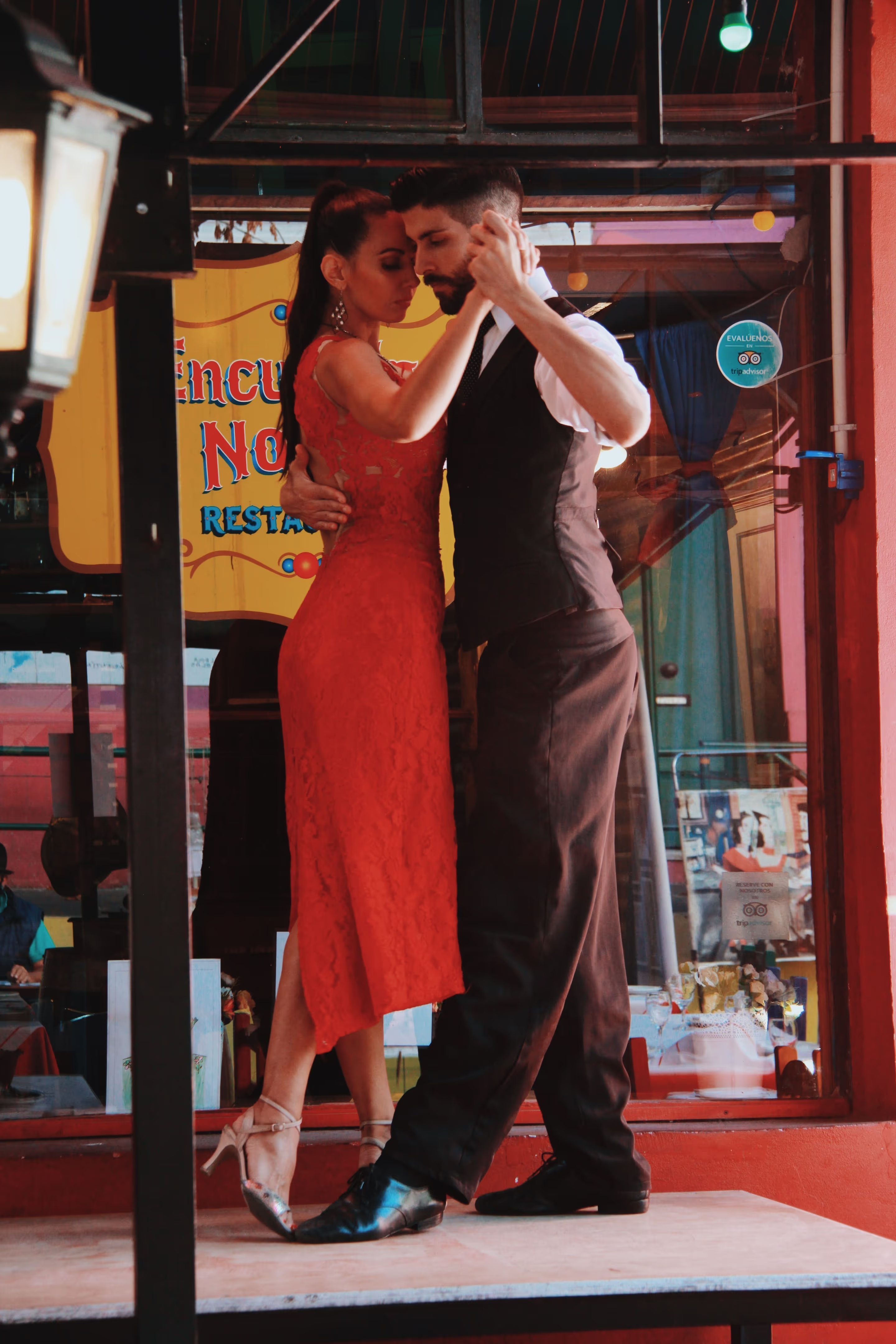
Watch a performance, learn the first steps or settle into a social dance evening. Choose the way into tango that makes you want to stay a little longer.
A tango show, a lesson and a milonga answer different wishes. A performance lets you enjoy musicians and dancers as an audience member. A class offers a first understanding of movement and connection. A milonga is a social dance gathering with its own atmosphere and customs. Choose one as the centre of your evening rather than assuming that every tango venue offers all three. The tradition belongs to the Río de la Plata, shaped in Buenos Aires and Montevideo through the meeting of European immigrant, Afro-descendant and criollo communities. Its music, poetry and dance remain part of a living urban culture, recognized jointly for Argentina and Uruguay by UNESCO in 2009.
01
Start with what you want to do
If watching is the pleasure, a well-chosen performance is a complete experience. If you want to try dancing, start with a beginner lesson and ask what follows it. There is no requirement to step onto a social floor simply because tango is part of the trip.
02
Choose the setting as well as the format
A theatre-style production, a smaller room and a neighbourhood social gathering create different evenings. Compare the actual programme, room and booking arrangement. A dramatic promotional photograph may describe the performers without telling you much about where you will sit or how the night is organized.
03
Keep the music in the picture
Tango is more than a sequence of dance figures. Listen to the instruments, phrasing and changes of pace, whether the music is live or recorded. A little attention to the sound can make both a performance and a first lesson more absorbing.
Buenos Aires · The drama of a tango performance
The show · An evening as an audience
Let the stage hold your attention.
A tango performance can offer an immediate sense of the music's theatrical range: a close embrace, a sudden change of pace, a singer or an ensemble filling the room. Productions vary in scale and style, from larger choreographed evenings to more intimate programmes. Decide whether dinner is part of what you want or whether you would rather eat elsewhere and focus on the show. The booking may offer several seating areas or packages, so read what each actually includes. A higher-priced category may change the table position or meal rather than the performance itself. Choose the experience that suits your interests and the shape of your evening.
01
Ask what is on the programme
Check whether the performance includes live musicians, singing and dance, and how much of the evening each occupies. If music is your main interest, that balance matters. Use the current programme rather than assuming an old review describes the same production or performers.
02
Keep dinner a deliberate choice
A meal package can make the evening straightforward, while a separate restaurant allows more freedom over food and timing. Confirm dietary arrangements and the difference between dinner arrival and show start. Avoid a tightly booked meal elsewhere immediately before a fixed performance.
Palermo · Tango on a colourful neighbourhood street
The first class · Learning through movement
Begin with a step you can feel.
A beginner lesson gives tango a different kind of immediacy. Walking, balance, listening and communicating with a partner can become interesting long before complex figures enter the picture. Tell the teacher that you are new and ask whether the session is intended for first-time visitors. Group classes offer a shared introduction; a private lesson can adapt more closely to your pace, language and interests. You do not need to buy a costume or arrive with a polished idea of how tango should look. Choose comfortable clothing and ask about suitable shoes for the room. The aim of a first lesson is to leave with a little understanding and the desire to hear the music again.
01
Check the practical details before arriving
Ask whether you need to bring a partner, whether partners rotate, what language is used and what level the class assumes. These arrangements vary. A class described as open may welcome visitors while still expecting some experience, so a direct question is more useful than guessing from the title.
02
Keep the first experience small enough to enjoy
One lesson can introduce the embrace, rhythm and movement without promising fluency. If you want to continue during the stay, returning to the same teacher may give the learning a clearer thread. Leave time afterwards to rest or watch, instead of immediately moving into a crowded social floor.
Buenos Aires Province · The details of a bandoneón
The social dance · An evening with its own rhythm
Listen before you join the floor.
Milongas take place in different kinds of rooms across Buenos Aires, including neighbourhood clubs, older halls and café settings. Each has its own character: some are especially welcoming to beginners, some are quieter listening and watching experiences for a visitor, and others expect confident social dancers. The city's official milonga directory helps you filter by day, neighbourhood and classes. Confirm the current event with the organizer and explain whether you hope to watch, learn or dance. On arrival, take time to understand the room. The invitation customs and flow of the floor are part of the experience, and a teacher or host can help you navigate them respectfully.
01
Learn the room's customs
Some milongas use mirada and cabeceo, a look and nod used to invite a dance. Customs and expectations differ, so ask rather than treating one rule as universal. Invitations should feel comfortable to both people, and declining is part of ordinary social choice. Follow the host's guidance about joining and moving with the floor.
02
Make watching a valid part of the night
You can enjoy the music and the interaction between dancers without trying to reproduce what you see. Ask whether spectator seating is available and avoid filming people without permission. A social gathering is shaped by the people who attend it, so give them the same consideration you would want as a guest.
A few clear questions before booking help the experience match the evening you have in mind.
01
Reservations
Confirm the exact programme.
For a show, check the date, seating, meal arrangement and what the advertised price includes. For a class or milonga, confirm the current organizer, venue and level. Events can change rooms or schedules, and an old listing may remain online. Keep the confirmation and address available offline so the arrival is simple, especially when the entrance is part of a larger building or club.
Check whether dinner and show times differ.
Ask about class and milonga admission separately.
For a visit built around the Tango BA Festival y Mundial, use the city's official festival page for that edition's programme and admission arrangements. Concerts, classes and the dance competition are distinct events; do not carry last year's dates or reservation window into a future trip.
02
Timing
Leave the evening enough space.
Tango experiences can run later than a visitor's usual dinner rhythm, but there is no single timetable for the whole city. Confirm the particular event rather than assuming that arriving late is always appropriate. A beginner class may start well before the social dance or performance. Choose a lighter afternoon beforehand if you want to enjoy a longer night without feeling hurried or exhausted.
Arrange the return journey before the event ends.
Keep an early flight or major transfer out of the following morning where possible.
03
Clothing and footwear
Dress for what you will actually do.
For watching a show, follow the venue's stated dress expectations and choose something comfortable for the room. For a class, ask the teacher about shoes that turn appropriately on the floor and clothing that allows movement. Specialist dancewear is not a prerequisite for a first lesson. At a milonga, suitable footwear and awareness of other dancers matter more than copying a stage costume.
Ask about changing shoes at the venue.
Avoid bringing bulky items onto the dance floor.
04
Arriving alone or together
Ask how participation works.
A performance is straightforward to enjoy alone, with a partner or in a group. Classes have different arrangements for pairing and rotation, while milongas vary in how visitors settle into the room. State your experience and preferences when asking about a class. If you would rather watch than dance, confirm seating and enjoy that choice without treating it as an incomplete version of the evening.
Do not assume a partner is required for every class.
Choose a beginner-friendly setting when starting out.
05
Music and context
Let the neighbourhood add another layer.
San Telmo's streets, Palermo's neighbourhood life and the wider city's cafés and cultural places can give the evening a setting beyond its venue. Street performances offer another glimpse, but they are distinct from classes and social milongas. Respect performers' arrangements for photographs and support a performance you enjoy. Leave room for the music and daily life around tango rather than turning every stop into a search for the same familiar pose.
Keep the afternoon close enough to the evening's venue.
Explore a neighbourhood at its own pace.
06
Learning more
Return with a little curiosity.
If a first class or milonga interests you, another visit can reveal details that were hard to notice at first. Ask a teacher for a suitable next step, or choose a performance with a different musical emphasis. A few evenings in Buenos Aires allow a more personal introduction than trying to fit a show, lesson and social dance into one crowded night. Let the experience grow from what you actually enjoyed.
Choose depth over a long list of venues.
Use the official directory to find the right day and setting.
Useful visitor information
Plan with the latest local details.
Official information for the places and experiences in this guide.
Choose a performance, a first lesson or a welcoming social evening. Tango becomes more interesting when you have time to listen, notice the people around you and find your own way into the night.