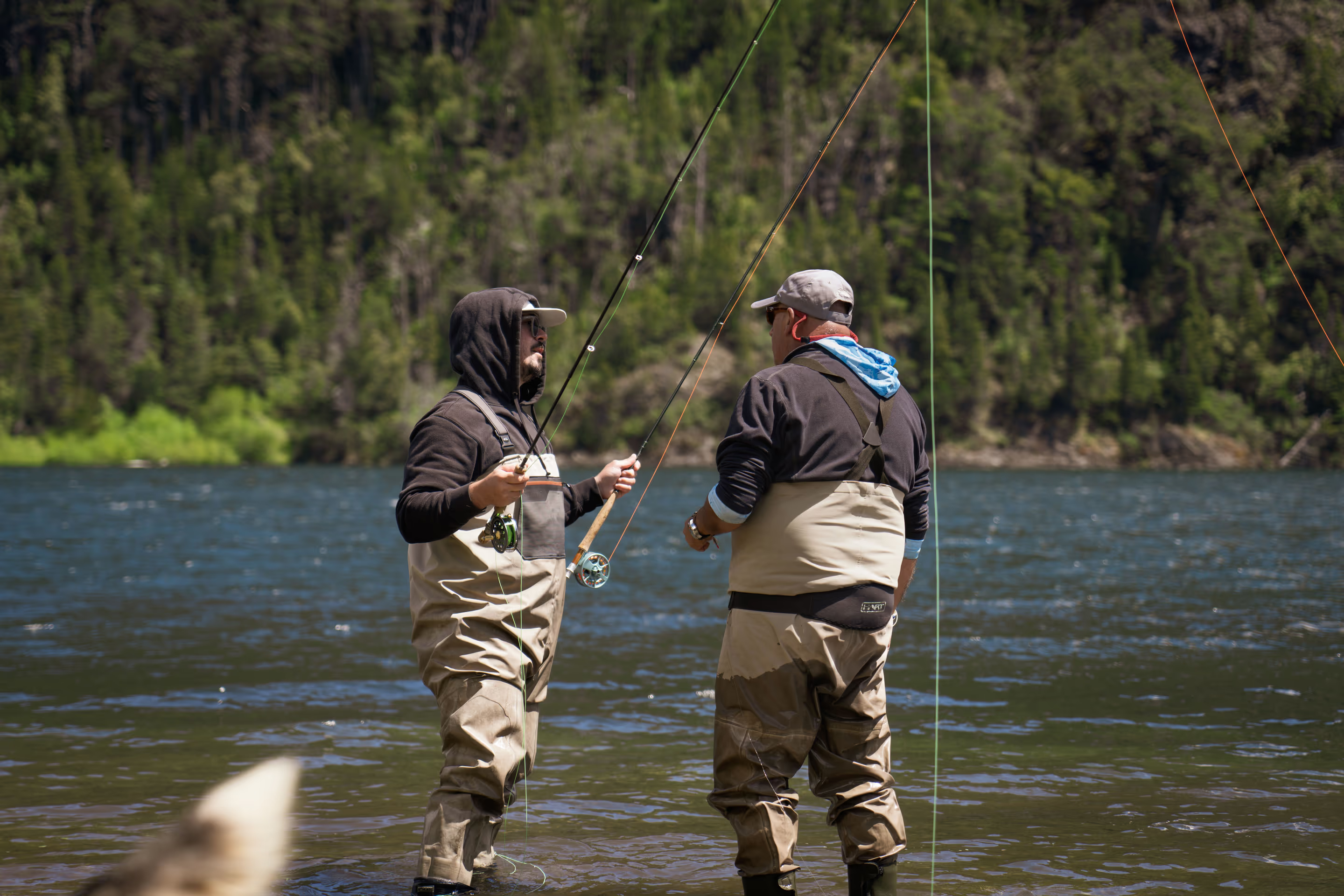
Two anglers fly-fishing in the water beside a forested Patagonian shore
Patagonia · Rural stays and river days
Estancias and fly-fishing in Patagonia.
Choose a rural base for the stay you want, match fishing to the exact water and season, and make room for companions whose ideal day is away from the rod.
An estancia stay and a fly-fishing trip can complement each other, but neither guarantees the other. A rural property may offer hospitality, meals and time in the landscape without a specialist fishing programme. A fishing lodge may organize the day around anglers and leave fewer independent options for companions. Start by deciding how many days you want on the water and how the rest of the group wants to spend that time. Then compare the actual programme, transfers and setting. Patagonia's distances make the location of the base a practical decision as well as an atmospheric one.
01
A stay with rural life
Ask what guests can actually take part in and what depends on the working calendar. A meal, a walk and time at the property can be enough without an activity scheduled every hour.
02
A fishing-led stay
Choose the water and style of fishing before the lodge photographs. Discuss your experience, mobility and preferred pace with the guide, and confirm what the package includes.
03
A mixed-interest trip
Ask for specific alternatives for people who will not fish: guided walks, riding where offered, transport or time at the property. Establish which are included and which require advance arrangement.
An old wagon beside an estancia building near El Calafate
Estancia and base choice
Look at what the stay makes possible.
Compare a town base with guided outings, a rural guest property and a lodge built around fishing. A town can offer more choice for meals and non-fishing days; a remote property can make the landscape central to the stay but require arranged transport. Santa Cruz's tourism information describes estancia hospitality around El Calafate and Río Gallegos, including rural meals and activities whose availability should be confirmed with the property. These are substantial Patagonian stays, with their own distances and routines, rather than a copy of a Pampas day trip.
01
Stay near the interests you share
Choose a base that works for the whole group. If some people want glacier visits, walks or town time while others fish, compare the actual transport for those separate days.
02
Read the programme in detail
Ask whether the price includes full board, transfers, guiding, equipment and activities. Find out how many guests share a guide and what happens when the planned outing changes.
03
Understand the approach
Confirm the exact pickup point and route to the property. Ask about luggage, arrival timing and the final road section, then arrange the vehicle or transfer that the property recommends for the actual conditions.
A dark forest path framed by trees in Los Alerces National Park
Fly-fishing areas and planning
Choose the water before the catch you imagine.
Patagonia is too large to treat as one fishing destination. Compare a town-based stay around Bariloche and Nahuel Huapi, the Esquel–Trevelin area in Chubut, or El Calafate beside Lago Argentino. Each gives the outing a different setting and access plan. Tecka is a separate western-Chubut option, rather than an extra stop assumed to fit any of those stays. Choose a suitable operator, then identify the exact river or lake, technique and approach. A famous name, a photograph or a fish species does not establish access on your date.
01
Bariloche and the Lake District
Bariloche offers a town base for Nahuel Huapi lake country, with other outings between fishing days. Bariloche’s fishing methods distinguish fly-casting, which uses the line to present an artificial fly, from spinning, which casts and retrieves a lure, and lake trolling, which draws a lure from a moving boat. Beginner casting instruction and a boat outing are different experiences. The actual water and chosen technique determine the applicable rules; the tourism description does not establish this season's opening dates.
02
Esquel, Trevelin and western Chubut
Use Esquel and the surrounding area with Trevelin as a regional base comparison. Chubut Tourism names Laguna Willimanco and Río Grande in an older fishing-event report. That establishes concrete regional settings, not current-season permission or a current festival. Choose the exact water with the operator and check its present jurisdiction, technique and access arrangements before fixing the outing.
03
El Calafate and Lago Argentino
El Calafate places the stay beside the Lago Argentino setting described in the destination guide. The 2026/27 annex for Lago Argentino’s water-specific rules explicitly marks the lake as shared with national parks. Check the provincial and relevant park requirements for the chosen shore or sector. A provincial permit or a lake-wide date does not establish permission for every sector, boat activity or private approach, and the fishing annex is not a land-access agreement.
A lone tree reflected in calm water at Lago Aruncohue
Permissions, seasons and preparation
Read the rule for the named water.
Fishing permission is tied to jurisdiction, dates and the particular environment. Check the current regulation and its water-specific annex with the authority and your guide before buying travel. For Santa Cruz, the 2026/27 regulation gives a general period of 1 October 2026 to 30 September 2027, explicitly subject to basin exceptions and biological closures; a season permit's end date is not a promise that every water is open throughout. Other provinces and national parks need their own current checks. No single opening date should be applied across Patagonia.
01
Permit, park admission and land access
Confirm the permit category for your residence status and planned dates, and how it must be carried. Check park admission and permission to cross private land separately. A guided booking should state which items the provider arranges.
02
Current restrictions
Ask about the exact water, allowed technique, equipment, catch-and-release rules and any closure in force. For national parks, use APN's current information and the relevant park's instructions; an older season's regulation is not confirmation for the next one.
03
Clean equipment between waters
Santa Cruz's current rules require equipment disinfection and additional care when changing basins. Follow the applicable authority's and guide's procedure for boots, waders and tackle. Ask how the operator handles cleaning before bringing equipment used elsewhere.
Before booking the stay
Make the programme fit the people.
A useful enquiry describes your experience, interests and dates clearly enough for the provider to propose the right day.
01
Experience
Describe what you have done before.
Choose between beginner casting instruction and an outing built around an experienced angler's preferred technique. Describe previous experience so the provider can explain the balance of teaching and fishing.
Establish the guide-to-guest arrangement.
Agree a pace appropriate to the group.
02
Equipment
Check what is supplied.
Request the supplied rod, line and fly selection for the proposed technique, plus the available wader and boot sizes. Identify anything you need to hire or bring.
Separate included tackle from additional hire.
Settle equipment cleaning and clothing requirements.
03
Access
Name the exact water.
Name the intended water and approach: shore, wading or boat. Identify the authority and any permission needed to cross private land before relying on that route.
Describe walking and boarding requirements.
Discuss mobility and comfort for that approach.
04
Non-fishing days
Give companions a real plan.
Compare a town base, where companions can plan independent outings, with a remote property where alternatives may need arranged transport. Ask what is actually available during the stay.
Identify any additional activity or transfer cost.
Establish meal and shared-space arrangements.
05
Terms
Read the changed-day policy.
Establish who makes the decision when weather, water conditions or a restriction changes the outing. Read the cancellation, changed-water and refund terms before paying.
Keep the agreed inclusions and alternatives in writing.
Identify the contact responsible for a changed day.
06
The wider trip
Allow time to reach the base.
Fix the pickup point and the road plan for reaching the base, then work back from the final flight or onward departure. A remote stay needs a confirmed arrival and return arrangement.
Leave the arrival day room for the transfer.
Keep the final pickup and onward connection together.
Useful visitor information
Check the details before booking.
Official and operator information for the decisions in this guide.
Sunlight through a winery window overlooking vines in Trevelin
Time in the landscape
Leave room for more than the fishing.
A well-chosen base gives every day a purpose, whether it is spent beside a river, walking near the property or sharing an unhurried meal. Let the setting and the people travelling with you shape the stay.