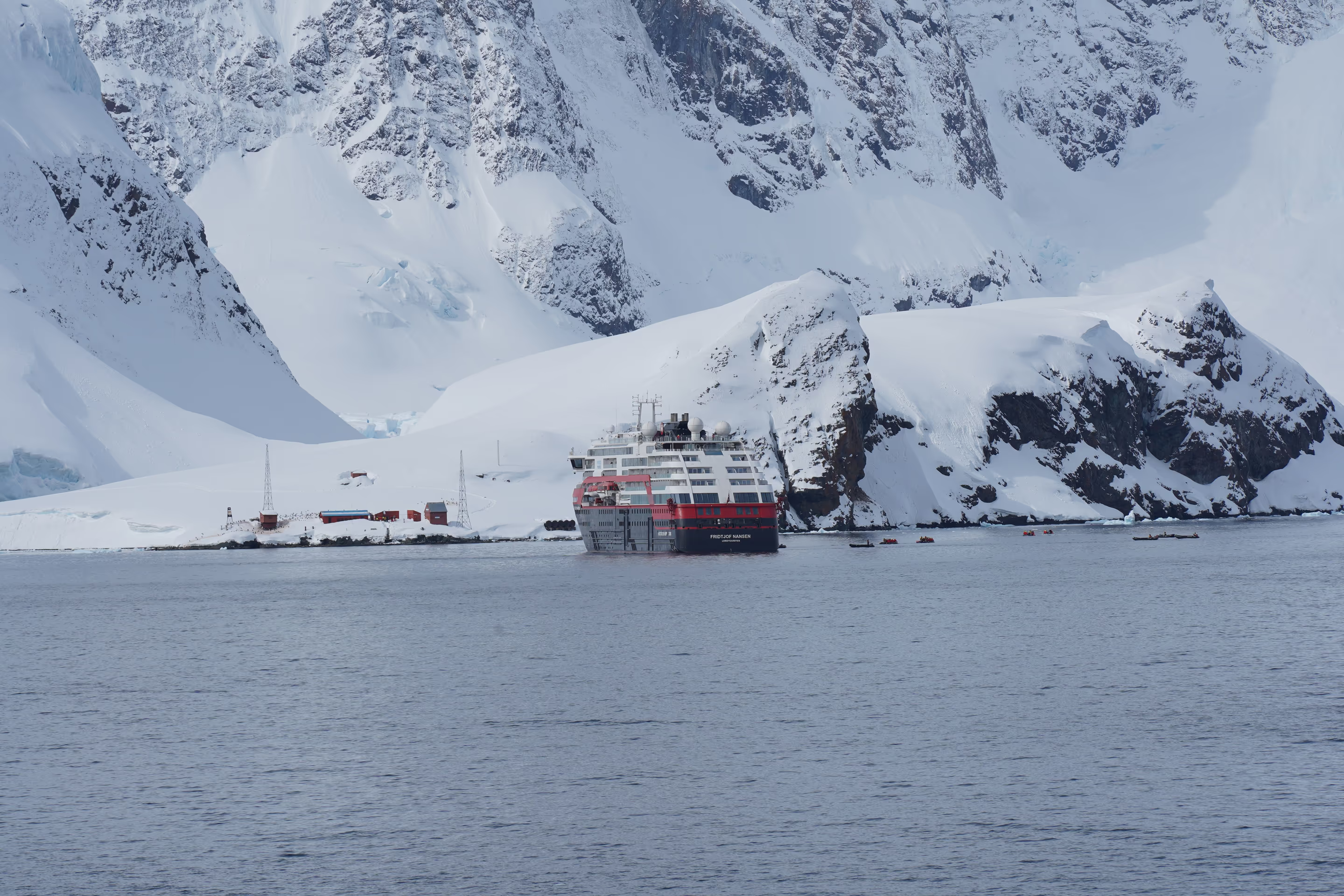
Ushuaia is an established gateway for Antarctic expedition cruises. Beyond the Drake Passage, the Antarctic Peninsula brings glaciated bays, mountain-backed channels and shore sites where a visit depends on conditions and permission. A landing expedition gives the ship a role as a moving base, with talks at sea and small-boat or shore outings when they can operate. A longer voyage that also visits South Georgia and the Falkland Islands has a wider geography and more sailing; those islands are not Peninsula day stops. Cruise-only sightseeing offers a third experience, seeing the coast from the ship without landings. Decide which kind of journey interests you before comparing cabins, then give Ushuaia its own time around the required arrival and departure arrangements.
01
Understand the voyage
Read whether the product is an expedition with intended landings or a cruise-only experience. Ask what is planned, what is optional and what conditions can change the programme.
02
Identify the operator
Establish which company operates the voyage, which vessel is named and who takes responsibility for your booking. A seller and the expedition operator may be different organizations.
03
Build the gateway days
Follow the operator's arrival instructions and leave room around flights. Confirm whether hotels and airport or port transfers are included before booking them separately.
Icebergs and a glacier across calm Antarctic water
Compare the expedition
Read beyond the cabin and the headline route.
A Peninsula landing expedition from Ushuaia crosses the Drake Passage before working among Antarctic islands, bays and landing sites. Ship days are part of the experience: expedition talks put ice, wildlife and human history in context, while time on deck offers chances to observe seabirds and the changing sea. In the Peninsula programme, small-boat excursions and shore visits depend on the conditions and permissions for that day. Longer itineraries extending to South Georgia and the Falkland Islands require a different voyage plan and more sea travel. Cruise-only sightseeing stays aboard rather than offering the same visit with fewer walks. The IAATO voyage and gateway guidance helps distinguish these forms of travel; fly-in programmes are a separate operation and should not be read as an Ushuaia sailing. The IAATO member directory identifies operators and associates, with the detailed booking checks below.
01
Landings and time ashore
Quark’s current example eleven-day Ushuaia expedition illustrates the scale: arrival on day one, embarkation on day two, two outward Drake days, a Peninsula programme and the return crossing before disembarkation. This is an example, not a universal schedule or operator recommendation. Crossing days belong to the journey, and a planned landing remains conditional.
02
Activities and suitability
Check the requirements and availability for any optional kayaking, camping or other activity in the particular programme. Discuss mobility, boarding small boats, equipment and assistance directly with the operator before paying.
03
The complete price
Request a clear list of inclusions and exclusions: flights, hotels, transfers, equipment, optional activities, insurance, gratuities and other charges. Compare the cancellation and itinerary-change terms alongside the quoted cabin price.
A fishing vessel in Ushuaia harbour with evening light and snowy mountains
Ushuaia and embarkation
Use the port information for context.
Argentina’s port authority publishes the Ushuaia cruise-call schedule, including the 2026/27 season. It shows the port’s place in the journey: expedition ships share a working waterfront with other cruise calls. A listed movement does not mean cabins are available, that every ship is bound for Antarctica or that its arrival cannot change. Treat the city as the shore-based chapter of the trip, with time to understand its maritime setting before days at sea. The operator’s final meeting and embarkation instructions, gathered in the practical notes below, determine where your voyage actually begins.
01
Before the voyage
Ask the operator when it requires you to be in Ushuaia and follow that instruction when choosing flights. Confirm the pre-voyage hotel and the point where any included transfer begins. Keep important documents and essential medication with you.
02
Your time in the city
Use spare gateway time for a flexible walk or meal, or place a separate Tierra del Fuego National Park visit on a day with enough room. Do not let a local excursion compete with mandatory expedition check-in.
03
After disembarkation
Confirm the operator's recommended onward-flight timing and what transport is included. Read how a changed arrival is handled. Keep the last night's accommodation and onward ticket terms visible when comparing the total trip.
Gentoo penguins on a rocky Antarctic shore with icebergs behind
Prepare to be a visitor
The expedition begins with how you pack.
Read the operator's packing and briefing material alongside the IAATO preparation guidance. IAATO's preparation page includes its 2026/27 avian-influenza protocols and resources on preventing the introduction of non-native organisms. Check clothing, footwear and outdoor equipment before departure, including kit previously used on walks elsewhere in Patagonia. Follow the expedition team's cleaning and inspection process and the current rules at each landing. The aim is to observe the place while leaving wildlife, research sites and the environment undisturbed.
01
Clothing and equipment
Confirm which boots or outer layers are provided and what you must bring. Ask about sizing and suitability before travel. Follow the operator's guidance for layers, waterproof protection and carrying equipment during small-boat transfers.
02
Wildlife and landings
Keep the distance and route directed by the expedition team. Do not touch, feed or pursue wildlife, and do not collect natural or historic objects. A changed landing or a closed site is a reason to follow the revised plan, not seek independent access.
03
Health and cover
Complete the operator's medical and fitness process honestly and discuss personal health questions with a clinician. Confirm insurance that meets the operator's requirements for the exact itinerary and activities, including its evacuation provisions. Keep the assistance details accessible.
Before confirming the voyage
Ask the questions that define your experience.
Get the answers for the departure and vessel you are actually booking.
01
Operator and seller
Know who does what.
Record the voyage operator, booking seller, named vessel and emergency contacts. Check current IAATO membership where claimed: operators run programmes, while associates may sell places in them. IAATO is a trade association, not a government immigration office. Obtain the responsible company’s contract and compare inclusions, exclusions, cancellation and itinerary-change terms for the particular departure, keeping those answers with your confirmations.
Verify the named vessel.
Keep all confirmations together.
02
The programme
Clarify planned and optional activities.
Establish whether the voyage is a Peninsula landing expedition, a longer island itinerary or cruise-only sightseeing. Ask how the intended shore and small-boat programme works for that vessel and passenger group, what language briefings use, and which optional activities need a separate reservation, payment or level of experience. Compare the actual included programme with the list of possibilities: kayaking, camping, wildlife sightings and named landing sites are not guarantees.
Check language and briefing arrangements.
Read the terms for changed activities.
03
Physical needs
Discuss the actual operations.
Explain mobility, boarding, dietary or other requirements early. Ask about the specific cabin, ship facilities and small-boat arrangements rather than relying on a generic accessibility label.
Obtain relevant answers in writing.
Confirm any required medical forms.
04
Travel documents
Check the gateway countries.
Confirm entry requirements for Argentina and any other country in the itinerary. Ask the operator which passport details and documents it needs and when.
Check the return journey as well.
Retain the required records offline.
05
Insurance and changes
Match the cover to the voyage.
Match the policy wording to the operator’s insurance requirements for the exact itinerary, activities and evacuation provisions. Confirm exclusions and the process for obtaining assistance with the insurer, then keep policy and emergency details accessible. Read how cancellation, a changed return and onward-travel disruption are handled before paying the balance; a voyage booking does not establish the cover provided by a separate policy.
Confirm exclusions with the insurer.
Keep assistance and policy details accessible.
06
Packing and arrival
Use the final instructions.
Use the operator’s final equipment and arrival instructions. Confirm which boots and outer layers are supplied, sizes, what you must bring, baggage handling, the pre-voyage hotel and the meeting point for any transfer. Arrive when the operator requires and keep embarkation day clear; a hotel check-in is different from reporting directly to the pier. Prepare outdoor kit for inspection and complete the required briefings. For the return, confirm disembarkation transport and the operator’s recommended onward-flight timing.
Reconfirm the flight and ground transfer.
Keep the embarkation day clear.
Useful visitor information
Check the details before booking.
Official and operator information for the decisions in this guide.
Les Éclaireurs lighthouse and rocky islands in the channel
Your gateway stay
Give Ushuaia time of its own.
A few well-planned gateway days can turn an airport-and-port connection into a worthwhile stay. Settle the expedition arrangements first, then enjoy the city and surrounding landscapes at a pace that fits.