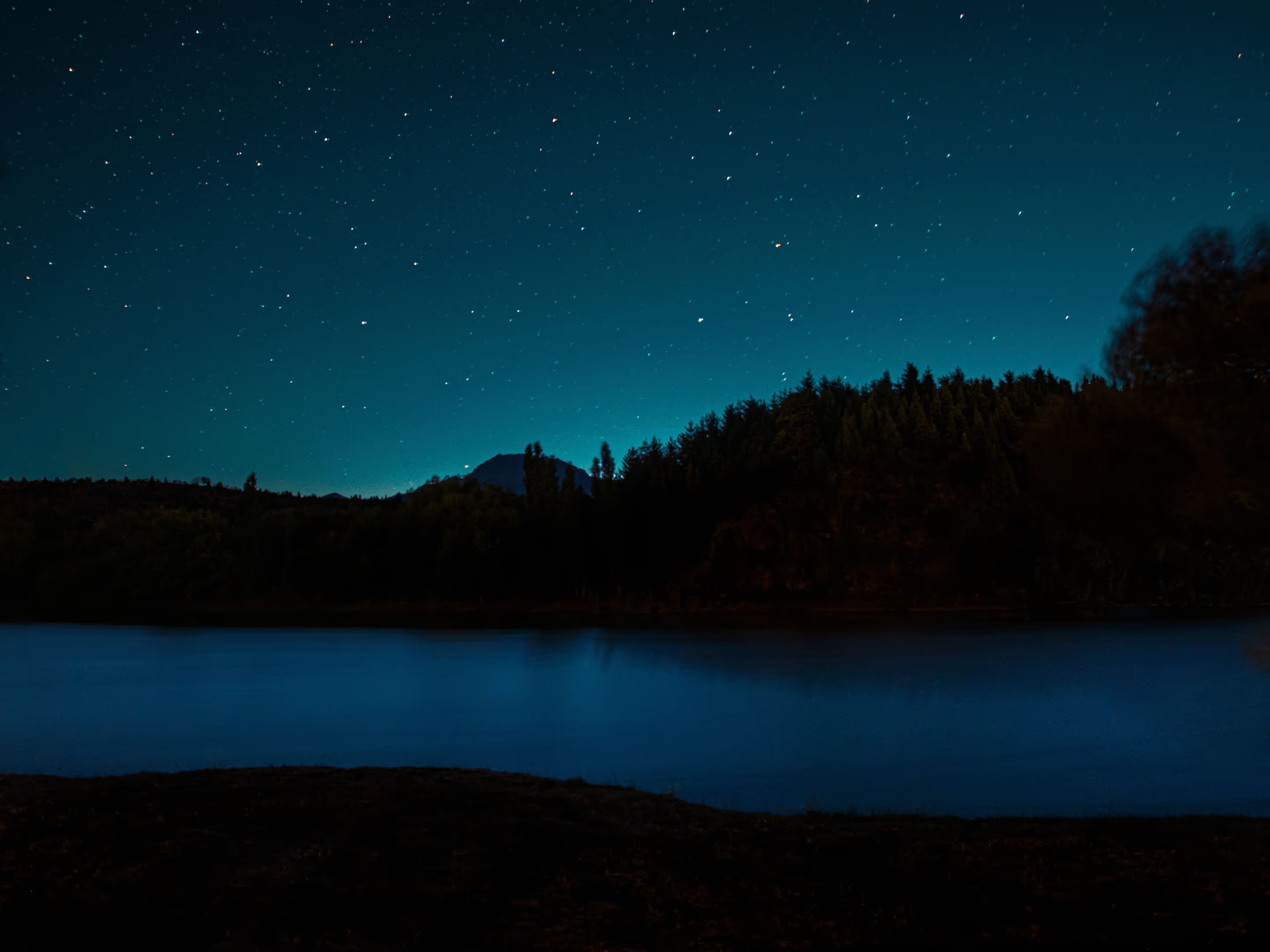
A fixed date beneath a changing sky
The February 2027 annular eclipse: planning a Patagonia journey
Choose an actual annular-viewing location, understand the local timetable and build a worthwhile Patagonia trip around 6 February 2027.
An eclipse gives a journey a precise appointment. Start with the coordinates of the place where you will watch, then arrange a comfortable base, a workable morning and enough time to enjoy the country around it.
Start with the place where you will watch
On 6 February 2027, an annular solar eclipse gives a Patagonia journey an unusually precise appointment. You can move a walk, linger over lunch or spend another morning beside a lake. The eclipse will not wait for a delayed transfer. Planning around it means choosing where you want to stand, making that place practical to reach and leaving enough room around the date to enjoy the rest of the trip.
The attraction is easy to understand: for an observer within the annular path, the Moon passes across the Sun without covering its bright face completely, leaving a luminous ring. This is an annular eclipse, not a total eclipse. A partial eclipse outside that path is a different experience, even where a large fraction of the Sun is obscured. The distinction matters more than whether a hotel describes itself as being in Patagonia.
NASA publishes the event's geographical path; the Universidad Nacional de La Plata provides calculated circumstances for named localities. Together these are a firmer starting point than a dramatic promotional map. Use them to identify your viewing location before buying a package that bundles an airport, hotel and vaguely described excursion. The date is confirmed by astronomy. Road access, permissions, transport and weather still need their own decisions.
Use NASA’s eclipse-path map and UNLP’s locality calculations to identify the actual observation site.
This guide takes you through those decisions without treating the whole region as a viewing platform. The northern Patagonia and Lake District guide helps with the mountain side of the journey, while Atlantic Patagonia introduces the coastal alternatives. Neither regional label establishes that a particular address is inside the annular path. Keep the astronomical location and the wider holiday route separate on your first planning sheet.
Annular and partial locations are not interchangeable
The UNLP locality calculations list annularity for Esquel, Trevelin, El Bolsón, Las Grutas and San Antonio Oeste. They list partial eclipses for Bariloche, Puerto Madryn and Trelew. Those are representative calculated locations, not permission to assume every excursion or rural property marketed under a town's name has identical circumstances. Check the coordinates of the actual viewing ground, especially when considering a site near a path boundary.
There is nothing wrong with choosing a partial eclipse as part of a broader holiday. It may suit someone who already has a journey arranged, prefers to avoid a major transfer or is more interested in the landscape than in photographing a ring. The mistake would be paying for an annular experience and discovering that the proposed place delivers something else.
Ask an organizer for a map pin rather than just the nearest town. Then ask whether that pin represents the hotel, a meeting point or the observation site. If transport goes elsewhere on the morning, the route and viewing location both belong in the booking description. A clear answer lets you compare two offers that might otherwise sound almost identical.
Understand the timetable before planning the day
For Esquel, UNLP’s published calculation gives the partial phase from approximately 10:23 to 13:36, with annularity approximately 11:53 to 12:00. These are calculated times in Argentine official time, UTC−3, rounded to the nearest minute, not a live event schedule. Its calculation for El Bolsón gives a shorter annular interval, approximately 11:54 to 11:59. Consult the locality table or its coordinate calculator for your specific site.
That sequence changes how you organize the morning. The ring is one part of a longer event. Arriving at the last possible moment leaves no time to find the permitted viewing area, set up comfortably or learn how an organized session will work. A sensible itinerary has you settled before the local partial phase begins, with the essentials already at hand.
Be careful with a time labelled simply “maximum eclipse.” An astronomy page may mean the global maximum somewhere along the entire path, whereas an event organizer may mean the maximum for a particular town. Neither automatically tells you when to meet a minibus. Ask which place, time zone and phase a quoted time refers to. Save that information with the transport confirmation so you are not decoding it at breakfast.
Read the columns before comparing sites
The two technical references answer different questions. NASA’s path table sets out the northern limit, central line and southern limit at successive Universal Times. Its latitude and longitude pairs trace the eclipse corridor across the Earth; they are not recommended observation grounds or a road itinerary. The duration alongside a central-line position describes that position, not every settlement at the same longitude. A town inside the annular band can therefore have a different interval from the central-line figure that first catches your eye.
UNLP’s locality table brings the comparison closer to a traveller’s decision. Read across one locality’s row: the beginning of the partial phase, the beginning and end of annularity, the maximum, and the end of the partial phase are separate entries. The solar-altitude column describes the Sun’s height above the horizon at maximum. It can help frame a question about an unobstructed view, but it does not account for a building, nearby ridge or tree at your chosen ground.
Use those distinctions when discussing a site with an organiser: which coordinates underpin the quoted duration, and has the actual sightline been checked? That turns a technical table into a precise conversation without mistaking astronomical calculations for access permission or a weather forecast.
Work backward from the viewing site
Start with the time you want to be ready at the observation ground. Add the organizer's check-in or entry process, then the realistic journey from your accommodation. A route that is easy on an ordinary afternoon may be less predictable when many people are attempting the same arrival. The purpose of an early start is to remove avoidable pressure, not to promise that a road will be congested.
If you are driving, identify a lawful place to park and the final walking distance. If you are taking an excursion, clarify whether the pickup is at your lodging or a central meeting point. A “transfer included” description can conceal a separate journey to the departure point. Families, anyone carrying equipment and travelers who need step-free access benefit from settling that detail before paying.
Avoid attaching a flight, a long intercity bus or a border crossing to the viewing morning. An extra night near the chosen site is often more valuable than another distant attraction. Keep the evening reasonably open as well. You may want to stay through the final partial phase, pack without rushing and eat before continuing elsewhere.

Choose a base that works beyond the eclipse
A good base gives you somewhere comfortable to sleep and somewhere worthwhile to be on the other days. It also provides a practical route to the observation point. These requirements sometimes point to the same town; sometimes they require a deliberate compromise. A cheaper room farther away may cost more once you add a private transfer and an early departure.
For a mountain-focused trip, Esquel and Los Alerces offers a natural place to begin comparing the wider stay. Consider how you will divide ordinary sightseeing days between the town, forest and neighboring valleys, then reserve the eclipse day for its own arrangements. Do not assume a park visit provides a suitable viewing clearing or that an admission ticket authorizes organized observation.
El Bolsón is another location to investigate using the actual observation coordinates and local calculations. Think about the kind of holiday you want around it: days based in one valley can feel very different from a driving circuit with a new bed every night. A home base also makes it easier to change an ordinary outing without disturbing the fixed eclipse appointment.
Bariloche can make sense as part of an extended Lake District journey, but the UNLP calculation for the city is partial. Treat it as a separate travel decision if your aim is annularity. An appealing arrival airport or familiar resort name does not remove the need to reach the chosen site. Work out the onward transport before assuming a morning excursion will solve the distance.
A coastal holiday needs the same precision
On the Atlantic side, distinguish the location where you will watch from the places you want to visit afterward. Puerto Madryn and Trelew and Gaiman belong on a wider coastal itinerary for their own reasons; the calculations above make clear why they are not interchangeable with an annular observation site. Plan any relocation as a real travel leg with luggage, meals and check-in included.
If you extend toward Península Valdés, choose wildlife outings according to the species, season and current local conditions relevant to those dates. The eclipse does not change a wildlife calendar. A photograph of whales attached to an eclipse package should not become an assumption about what will be available in February.
The coast and mountains can both belong in one longer trip, but joining them adds a significant transport decision. Draw the whole route before booking opposite ends independently. If the connection becomes the most tiring part of the holiday, choose one side and give it more time. A successful eclipse journey does not need to cross the entire region.
Book the fixed pieces in a useful order
Begin with a viable observation arrangement. That may be a confirmed organized event, a locally supported excursion or independently arranged access to an appropriate place. You do not need to buy the most elaborate package. You do need to know where you will be, how you can legally get there and what happens if the arrangement changes.
Next secure accommodation that supports that plan, including the preceding night. Read the cancellation terms, any minimum stay and the total amount due. A listing's proximity to a town center tells you little about the drive to a rural viewing ground. Ask for a route estimate based on the intended pickup or parking location rather than accepting a broad “near the eclipse” description.
Then connect the base to the rest of the trip. Compare actual transport offered on your dates rather than building around an assumed daily service or direct flight. If you enter Argentina through Buenos Aires, allow for the details of any onward connection, including whether the airports differ. The airport transfer guide helps separate the arrival journey from the domestic flight itself.
Only after those pieces fit should you fill the remaining days with timed activities. A sightseeing excursion that can move by a day is a useful companion to an event that cannot. Keep a clear record of which reservations are flexible and which are not. That makes a later adjustment a manageable choice instead of a chain of forgotten penalties.
Compare packages by what they actually provide
A package may earn its price through local organization, access, knowledgeable support and clear transport arrangements. Another may simply combine a room with a ride. Compare the complete offer in writing:
- Site and access: the actual observation coordinates, permission to use the ground, parking and the final route from vehicle to viewing position.
- Transport: accommodation pickup or a separate meeting point, return destination, baggage arrangements and who handles a changed site.
- Comfort: toilets, drinking water, food, seating and shelter; establish what is supplied and what guests must bring.
- Equipment and presentation: suitable solar viewers, any supervised instrument use and guidance about the phases. A telescope or lunch in an advertising photograph does not establish an inclusion.
- People and access needs: whether the route, toilet, seating and any alternate site suit the people travelling, rather than a broad “suitable for everyone” label.
- Contract and cost: the services booked in your name, exclusions, deposit, balance date, currency and cancellation conditions.
- Weather decisions: who chooses an alternate site, its possible effect on travel and return time, and whether cloud cover has different refund terms from an operator cancellation.
You are evaluating a service and a decision process, not purchasing clear sky. Use the same checklist for each offer so the cheaper headline can be compared with the journey it actually provides.
Check the costs that sit outside the headline price
Before choosing between two bases, total the expenses left outside the written inclusions. A lower room rate may require a separate transfer to the meeting point, baggage storage between stays or another vehicle-rental day. A hotel's inclusion in an organizer's suggested list does not mean a room has been secured in your name.
Independent travelers should compare the full vehicle cost, permitted use, pickup location and return arrangements. Driving is useful only if you are comfortable with the roads and have authorized access and parking. A locally organized transfer may be the simpler choice when you want to concentrate on observing rather than navigating. Compare that whole journey with the independent option before deciding which costs less.
Make the viewing ground comfortable
The best astronomical coordinates are only useful if the place is usable. Check whether access is public or requires permission, whether vehicles may enter and where people are expected to gather. Open land on a satellite image is not necessarily available to visitors. A property boundary, protected area rule or agricultural use can make an apparently simple location unsuitable.
Look at the ground itself. Uneven surfaces, a long approach and a lack of shade can matter more than the view on a booking page. Someone who is comfortable walking around town may find a prolonged stand on rough terrain difficult. Ask about the complete route from transport to the viewing position, including steps, gradients and the nearest usable toilet.
Take enough water and food for the actual outing, including the wait before and after the central phase. If lunch depends on reaching a town afterward, carry something that makes a delayed departure unimportant. Use a bag that keeps small items together and can be carried comfortably. A complicated setup is harder to manage when you are sharing a site with other people.
Plan for the people in your group
For children, describe the event as a sequence rather than a single spectacular instant. Agree who manages the equipment and what happens when someone needs a break; a notebook or simple observation activity can give the waiting time a purpose. Resolve the physical access needs using the package checklist above, including the alternate site.
The rest of the holiday need not be one continuous group outing. A long walk and a town afternoon can suit different people, provided everyone shares the eclipse meeting arrangements and understands the day’s plan.

Watch safely throughout the event
NASA's guidance for an annular eclipse is straightforward: there is no total phase when direct viewing without proper protection becomes safe. Use suitable solar viewers complying with ISO 12312-2 for direct viewing; ordinary sunglasses are unsuitable. Inspect viewers for damage, discard damaged ones and supervise children.
Do not look through a camera, telescope or binoculars while wearing eclipse glasses. Optical equipment requires its own appropriate solar filter secured over the front, with expert advice on use. An indirect pinhole projection is another option: observe the projected image with the Sun behind you, never look at the Sun through the hole. Read NASA's eclipse safety guidance before buying or using equipment.
Decide whether photography will add to your day
Photography can become an absorbing project, but it also brings preparation and equipment demands. Decide early whether your main aim is to observe, make a few records of the gathering or attempt a specialist image. Those are different activities. An ambitious setup that you have never practiced may occupy the very minutes you hoped to enjoy.
If you plan specialist solar photography, learn the equipment and filtering requirements well before traveling, with qualified guidance. Do not improvise a solution at the viewing site. Check how your equipment will be transported and whether the excursion has room for it. A tripod can need more space than a passenger expects, particularly in a shared vehicle or crowded observation area.
You can also tell the story through ordinary photographs of the landscape, your companions and the place where you waited, without attempting a direct image of the Sun. Keep those choices separate from specialist solar work. Sometimes a small collection of contextual photographs leaves more attention for the experience itself.
Give weather a plan without pretending to control it
An eclipse calculation can be precise while the sky remains uncertain. A cloud forecast is not a contract, and a historical climate summary is not a prediction for your particular hour. Treat long-range weather claims cautiously when comparing packages. As the date approaches, use current forecasts and the judgment of local organizers to assess the choices that are actually available.
Mobility can help only when it is practical. A vehicle, a reachable alternative site and permission to use it are different things. Moving a group with luggage along unfamiliar roads can consume the time an alternate site was meant to save. Work through the logistics while you are still relaxed, then identify who will make the final call and when.
For independent travelers, establish a primary site and a realistic alternative in advance. Compare access, road conditions, services and the calculated eclipse circumstances at each. Avoid a plan that requires crossing the region at the last minute. The willingness to accept uncertainty is part of event travel; it should not become pressure to drive tired or stop somewhere unsuitable.
Choose a holiday you would still value under cloud
The strongest backup is a trip whose other days already appeal to you. If you enjoy walking, town life, landscapes or time beside the water, make room for those things. The eclipse can be the reason you chose the dates without carrying the entire emotional weight of the holiday.
This is also a useful spending test. Ask how much extra you are comfortable paying for the event arrangement itself, apart from the accommodation and travel you would enjoy anyway. Keep that amount visible when comparing offers. It helps distinguish worthwhile support from a premium driven mainly by a dramatic label.
If the sky disappoints, you still have a real place to explore and people with whom you shared the wait. That is not a substitute for the ring you hoped to see. It is a reason to build a generous journey around the possibility, instead of treating the rest of Patagonia as a corridor between airport and telescope.
Build a route around the fixed date
Editorial example: Esquel, 4–7 February 2027 — four calendar days, three nights. Arrive on 4 February, settle into the same base for the nights of 4, 5 and 6 February, and use the remaining daylight to orient yourself and identify the viewing-day meeting or driving route. On 5 February, choose a local town or forest outing from the Esquel and Los Alerces guide, leaving time to reconfirm the observation site’s access and arrangements. On 6 February, watch at the verified actual observation coordinate, using its local calculations and agreed transport. Depart on 7 February. The mountain-and-forest setting gives the ordinary day a different character from the eclipse ground; a park visit is not itself permission to observe there.
Editorial example: Las Grutas, 4–7 February 2027 — four calendar days, three nights. Arrive and orient yourself on 4 February, staying the nights of 4, 5 and 6 February. Use 5 February for a local coastal outing and to reconfirm access to the chosen viewing ground. The Atlantic Patagonia guide helps place this coastal stay within a wider journey, while the actual observation coordinates remain a separate choice. On 6 February, travel to that verified site and follow its calculated phases; depart on 7 February. Choose this example for a shore-based holiday around the fixed event, rather than expecting the mountain and forest outings of the Esquel example.
These are planning examples, not sold itineraries. Neither assumes a flight, scheduled bus, public observation event or clear sky. The arrangements for the actual site and the connections on your dates must work before either four-day outline becomes a booking.
Be selective about a southern extension
Some travelers will want to connect the eclipse journey with southern Patagonia. That can work within a longer Argentina itinerary, but it is another substantial leg, not an automatic nearby addition. Compare the available connections and the number of nights you can give each part before promising yourself both ends of the country.
The Bariloche to El Calafate transport guide helps frame the choice between flying, buses and a longer road journey. Use actual services and your preferred pace to decide. If the connection takes away the days you wanted for the mountains or coast, a narrower trip may offer more time in the places you came to experience.
Keep the reasons for each stop explicit. The eclipse provides one fixed appointment; a glacier visit, a walk or a coastal stay has its own requirements. Combining them well means respecting those differences, including entry bookings and transport, rather than squeezing them into the spaces left by a flight schedule.

Agree on the viewing experience
Decide together whether the outing is mainly an observing session, a photography project or a family day. Those expectations determine which presentation and equipment provisions in the package checklist matter to your group. Share one site name, meeting arrangement and local timetable so everyone prepares for the same experience.
The final check before you leave
Keep a copy of the observation coordinates, calculated local phases, accommodation address and organizer contact available without reception. Then make one brief departure check:
- Reconfirm the observation site, lawful access, pickup or parking, and alternate-site decision.
- Label the local timetable as Argentine time; recalculate if the observation location changes.
- Prepare appropriate viewing equipment and learn its use.
- Pack water, food, suitable clothing and required seating.
- Protect time for arrival, waiting and the return.
The ring may last only minutes; the wider trip is the time you choose to spend in the mountains or beside the coast around it.


