Culture and city life
Buenos Aires beyond the first impressions
Follow architecture, art, tango and café life into a richer, more attentive city visit.
The landmarks are a beginning. Give museums, streets, tables and cultural evenings enough time to reveal the connections between them.
Buenos Aires offers an easy set of first impressions: a painted street, a cemetery avenue, a steak arriving at the table, dancers framed by warm light. There is nothing wrong with beginning there. The question is whether those images become the whole visit or the beginning of a more interesting one.
The city's depth appears when you make connections. A grand façade leads to questions about who commissioned it and what stood nearby. A museum changes the way you read the monuments outside. A tango evening becomes more compelling when you understand the kind of room you have entered. A café gives you somewhere to let those impressions settle before the next walk.
This is a way to build several days around that kind of attention. It is not a promise that every district must be covered, or that the less famous stop is always the better one. Choose a few cultural threads, follow them far enough to become curious, and leave intervals in which Buenos Aires can be a living city rather than a sequence of appointments.
Begin where the city tells its public story
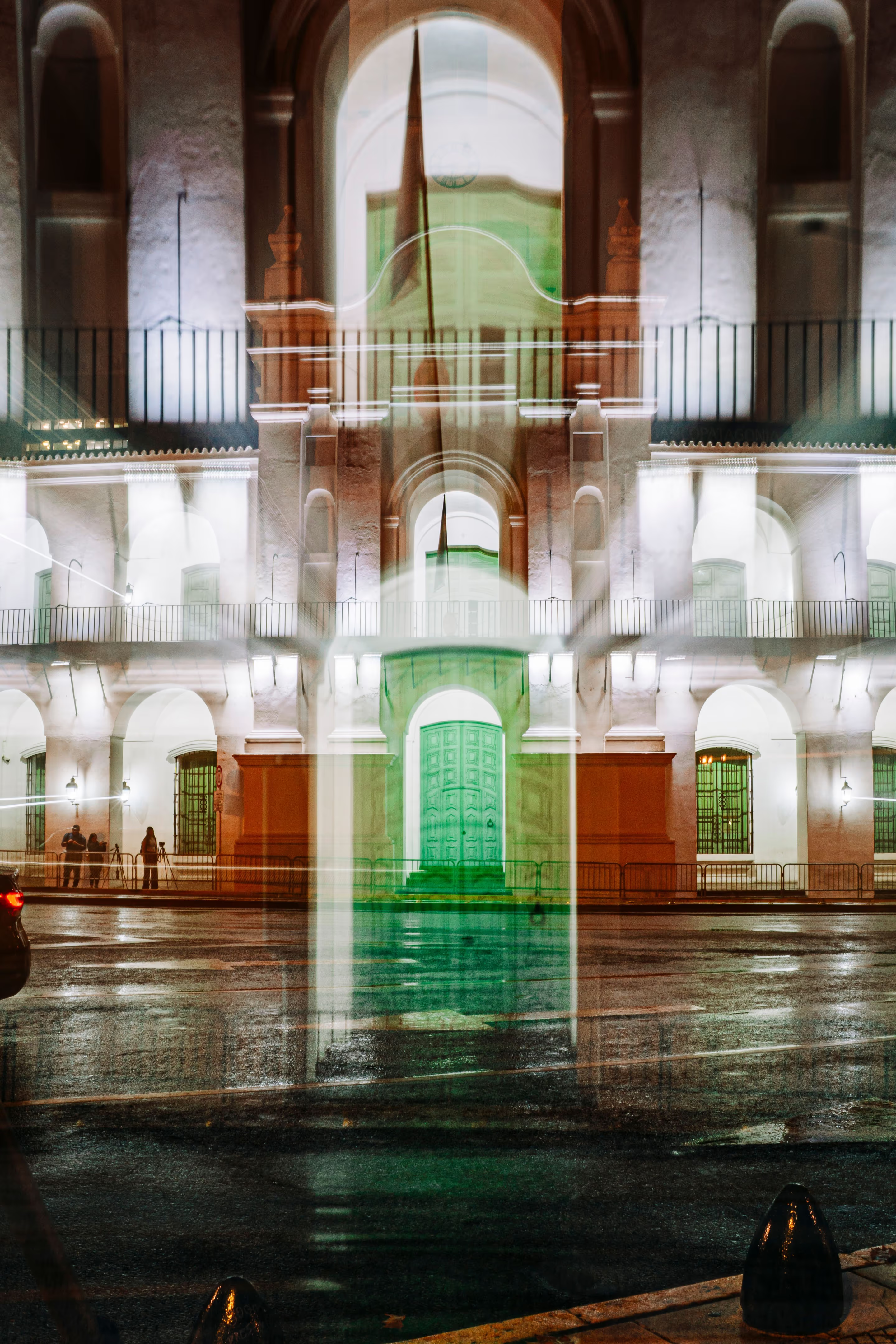
The civic centre is a useful place to start because it makes several versions of Buenos Aires visible at once. Around Plaza de Mayo, institutions, public space and the movement of ordinary working days occupy the same setting. Instead of treating the square as a quick photograph, use it to ask what the surrounding buildings are trying to communicate.
The architectural and historical routes through Monserrat and Microcentro help give that first walk a shape. Look at the relationship between the square, the avenues and the scale of the façades. Notice where the street invites you to stop and where it channels movement. The city is being expressed through space as well as through monuments.
Avenida de Mayo rewards a different pace from simply walking between two endpoints. The façades offer domes, balconies, entrances and decorative details that become easier to see once you stop trying to collect every building. Choose a short section, cross when it is appropriate to improve the view, and let one particularly interesting building hold your attention.
Palacio Barolo is a strong example of architecture carrying an elaborate idea. The city tourism account describes its references to Dante's Divine Comedy, including the division into hell, purgatory and heaven. You can use that idea to look more closely at the exterior, then investigate current tour arrangements if the building's story interests you. Do not assume that admiring a façade guarantees access inside.
Leave room for more than admiration. Monumental architecture expresses aspiration, wealth and power; it also raises questions about whose stories are most visible. A thoughtful city walk can hold both responses. You can enjoy the craftsmanship while recognising that the official face of a city is only one part of its history.
Use museums to change the walk outside
A museum visit becomes more valuable when it influences the rest of the day. Rather than scheduling several collections in succession, choose one and give yourself time afterwards to notice what it has brought into focus. That might be an artistic movement, a political period, a representation of landscape or an unfamiliar account of urban life.
In Recoleta, the Museo Nacional de Bellas Artes provides a substantial encounter with Argentine art alongside international works. Let the collection guide you beyond the artists or images you already recognise. Read the interpretation where it helps, choose a handful of works to spend time with, and resist the pressure to turn every room into evidence that you completed the building.
MALBA offers another possible direction through Latin American art. The Museo de Arte Moderno de Buenos Aires, in San Telmo, can become the anchor for a day in the older city. Check current exhibitions and visitor arrangements before deciding which institution best fits your interests. A changing programme is a reason to make a fresh choice, not to rely indefinitely on somebody else's museum ranking.
A useful approach is to leave with one question. How is the city represented? Who is present in the images, and who is absent? What materials or forms recur? You do not need specialist knowledge to look carefully. A small, sincere question often produces a more lasting visit than trying to memorise an entire chronology.
Then go outside. Have lunch, walk a few nearby streets, or return to a square with the museum still in mind. Cultural depth does not require constant intellectual effort. It can come from the quiet interval in which a painting, a building and something happening on the pavement begin to speak to each other.
Recoleta Cemetery: architecture, memory and respect
Recoleta Cemetery is visually extraordinary, but approaching it only as a collection of photogenic tombs leaves much of its interest untouched. The avenues, sculptural details and elaborate funerary buildings form a landscape of memory. They reveal choices about how individuals and families wished to be remembered, and about the resources available to make those wishes visible.
Begin by looking at scale and detail rather than rushing towards the best-known name. Notice the variety of doors, materials, inscriptions and figures. Compare an imposing frontage with a smaller or less maintained structure. The contrast is part of the place's meaning, although it should not become an excuse to invent a family's history from its appearance.
Eva Perón's burial place is a familiar point of interest, but it should not reduce the visit to a single destination. If you want historical context, use reliable interpretation or a suitable guide. Distinguish documented biography from the legends that often accumulate around cemeteries. A dramatic story is not necessarily an accurate one.
This remains a cemetery. Keep voices appropriate, leave space for people who are there to remember someone, and avoid making other visitors or mourners part of a photograph without consent. Follow current access rules and any restrictions affecting particular areas. Respect is not an interruption to the experience; it is what allows the place to retain its significance.
Afterwards, return to the living district. A cultural centre, an art museum, a café or a simple walk can keep the day from being defined entirely by death and monumentality. That movement between memory and ordinary city life is one of the reasons Recoleta can sustain much more than a short stop.
San Telmo: look beyond the busiest hour
San Telmo is often introduced through its Sunday fair, but the district has more than one rhythm. The antiques fair around Plaza Dorrego is a particular event in a particular setting. Market activity, cafés, cultural spaces and residential streets continue to exist outside that moment, and they can reward a visit with a different purpose.
If you come for the fair, accept its pace rather than trying to combine it with an overfilled list of appointments. Allow room to stop, browse and move around other people. Look at objects with curiosity, but do not assume that age, provenance or value can be established from appearance alone. Ask questions if you are considering a purchase.
On another day, the district may lend itself to a museum visit and a shorter walk. The Museo Moderno offers a useful cultural anchor, while the streets around it provide a contrast between contemporary artistic ideas and an older urban fabric. That juxtaposition can be more interesting than searching only for scenes that match a nostalgic image of Buenos Aires.
The market is a place to eat and observe activity, not a stage set built solely for visitors. Choose something that appeals, find an appropriate place to pause, and give people room to work. If you want to photograph a stall or the person preparing food, ask first, especially when the image would make them the main subject.
San Telmo's appeal grows when you leave enough time for modest discoveries: an entrance, a small display, a café table, the transition between a busy block and a quieter one. None needs to be labelled a secret. The pleasure lies in paying attention to a real district without demanding that it perform a fixed version of the past.
Tango: decide what kind of evening you want
Tango can be a performance, a social dance, a lesson, a musical encounter or several of those things across a trip. Those formats are related, but they are not interchangeable. Before booking, decide whether you want to watch a staged production, learn some foundations, listen closely to musicians or enter a social setting where dancing is the main purpose.
A staged show can offer a clear introduction, particularly if you enjoy choreography and theatrical presentation. Compare what is actually included and the kind of venue involved. A dinner package, transport arrangement and performance are separate parts of the experience, even when they are sold together. Choose them because they suit your evening rather than because one format claims to represent all of tango.
A lesson asks for a different kind of participation. Look for an appropriate level and an explanation of how the class works. You do not need to arrive with experience, but it helps to understand whether the session is designed for visitors, regular students or a mixture. Comfortable preparation and realistic expectations will do more for the experience than trying to look accomplished immediately.
A milonga is a social dance gathering with its own practices and atmosphere. Use the city’s milonga directory to check whether visitors can attend as observers, whether a lesson precedes the dancing and what the venue expects. Watching respectfully can be rewarding, but the people on the floor are not automatically performing for your camera. Ask about photography and avoid obstructing movement or interrupting dancers.
Do not reduce the choice to tourist versus authentic. A professionally staged performance can be artistically compelling, and a social event can be difficult to understand without context. The better question is what you hope to experience and whether the format lets you participate appropriately. The city's tango life is richer than a competition between those labels.
Build the following morning with the evening in mind. A late event paired with an early, ambitious museum programme can make both less enjoyable. Give the night space, arrange a suitable return and allow the next day to begin more gently. Cultural planning works best when it takes account of the body as well as the calendar.
Cafés and tables are part of the cultural day
A café can provide more than a break between important things. It is a place to watch how a street is used, read what you have just seen, discuss a museum or simply enjoy being somewhere for longer than a photograph requires. The room, the service, the sound and the view from the table all contribute to the city's texture.
Historic cafés offer one version of that experience, but they are not the only worthwhile one. A contemporary coffee bar can reveal another part of Buenos Aires through design, working routines and the people who use it. Choose both if they interest you. There is no need to make every table prove that it belongs to a golden age.
Food can become a cultural thread without turning the trip into a sequence of famous dishes. Notice how different settings change the meal: a market counter, a neighbourhood restaurant, a grill, a bakery or a room chosen for a longer dinner. Read the menu, ask useful questions and order according to appetite. A dish is not improved by forcing it into a checklist.
Street cooking deserves the same attention as a polished dining room. The preparation, heat and movement can be visually compelling, but the cook is working. Keep clear of equipment and service areas, ask before making a close photograph of a person, and buy food because you want to eat it rather than treating a stall as a free photographic location.
Make practical space for these stops. If every hour has an appointment, the café becomes a rushed necessity and lunch becomes a scheduling problem. Leave an interval after a museum or before an evening event. Some of the most useful understanding of a city arrives while you are sitting still enough to notice what is happening around you.
Palermo: gardens, art and contemporary city life
Palermo can be approached through several different interests. Its parks and gardens offer a change of pace, its cultural institutions can anchor an indoor visit, and its dining and shopping streets bring another kind of activity. The district is too large and varied to be understood through one café, one label or one afternoon.
Choose a manageable part of it rather than connecting every well-known place on foot. A garden visit followed by a nearby meal can be a complete and satisfying plan. So can an art museum and a short walk that lets the collection settle. Check the actual entrance and visitor arrangements for the places you choose, particularly when large green spaces make distances look simpler than they are.
The contrast with the civic centre and San Telmo is useful. Look at how buildings meet the pavement, how outdoor space is used and how contemporary design sits beside older structures. This is another Buenos Aires, but it is not separate from the city you have already seen. The interest comes from recognising both the differences and the connections.
If shopping or dining is part of the day, follow your taste rather than a prescribed list of fashionable streets. Step into places that interest you, leave those that do not, and allow the district to be ordinary as well as attractive. Cultural curiosity does not require every purchase or coffee to carry a larger meaning.
A Palermo day also works as a deliberate lighter interval in a trip with substantial museums and late nights. That is not wasted time. Gardens, an unhurried lunch and a shorter walk can restore the attention that makes the next cultural visit worthwhile. A city becomes harder to appreciate when every day is designed as an endurance exercise.
La Boca: give art and port history room beside the colour
The colour around Caminito is an understandable draw, but La Boca becomes more interesting when you build the visit around more than that image. Its relationship with the port, its artistic associations and its cultural institutions offer ways to look beyond a familiar photographic scene.
Investigate the current programmes and access arrangements at institutions such as the Museo Benito Quinquela Martín and Fundación Proa. Choose one according to your interests, then give it enough time to become the centre of the outing. A purposeful museum visit can provide context for the streets outside rather than functioning as an optional extra after the photograph.
Look carefully at how the neighbourhood represents itself and how it is presented to visitors. Painted surfaces, signs, work, public space and art can coexist without being reduced to a single story. Avoid assuming that the most colourful corner explains the lives of the people who live nearby. A neighbourhood is always larger than the image through which it becomes famous.
Plan the arrival and departure around the exact places you intend to visit, checking current information and opening arrangements. Keep the outing geographically coherent rather than adding long, unexamined walks simply because the map appears to connect them. The goal is a rewarding visit with enough attention for the chosen places, not proof that you covered every surrounding street.
As in San Telmo, photograph people with consideration and leave room for work and daily life. You can appreciate visual drama without demanding a performance from everyone in the frame. That small adjustment changes the tone of the visit and makes it easier to see La Boca as a living part of Buenos Aires.
Puerto Madero: read the change in the waterfront
Puerto Madero offers a useful contrast after several days among older streets. Around the former docks, the relationship between water, converted buildings and newer development makes urban change visible. Walk with that relationship in mind rather than treating the waterfront only as a place to photograph a skyline.
Notice the scale of the blocks, the crossings and the way buildings face the water. Compare it with the narrower streets you have already explored. The difference is not simply old versus new; it concerns how space is organised and what kinds of movement or activity it encourages. A short, attentive walk can make those distinctions clear.
The Reserva Ecológica Costanera Sur introduces another layer, with habitats that differ markedly from the built waterfront. If it interests you, plan it as a separate visit with current access information, suitable clothing and enough time. Weather and operating conditions can affect entry, so do not make the whole day depend on an unchecked assumption.
You do not need to fit the docks, reserve and a major meal into a single outing. Choose the version that suits your energy and the conditions. Sometimes a waterside walk is the right counterpoint to a dense museum morning. At other times, the reserve can become the day's main purpose, with the city providing the changing backdrop on the way there and back.
Belgrano: another scale of cultural attention
Belgrano is worth considering when you want to change the scale of the visit. The Museo de Arte Español Enrique Larreta combines a former residence, a Spanish art collection and an Andalusian-style garden. That combination creates a different kind of cultural stop from a large national museum or a monumental civic building.
A house museum encourages attention to the relationship between rooms, objects and the person who assembled them. Let the setting matter as well as the individual works. The garden can be part of that experience when access and conditions allow, rather than an item to be crossed off before moving to the next district.
Barrio Chino provides another possible thread in a Belgrano visit. Approach it through curiosity about shops, food and the area as it is used today, avoiding the temptation to make one street stand in for a complete account of migration or identity. If you choose to eat, let the menu and your interests lead the decision.
Belgrano does not have to be added to every first trip. It is useful when it advances something you already care about or provides a different rhythm after the central circuit. That is a better reason to go than wanting to claim a less obvious discovery. A thoughtful visit can be selective without being narrow.
Tigre: make the extra day a different experience
Tigre and the delta can extend a Buenos Aires stay when you have enough time to give it a day of its own. The attraction is the change in setting and movement: a waterside town and the possibility of exploring part of the delta through an appropriate boat trip. It should feel different from another hurried city excursion.
Choose the format before building the day. A visit centred on the town, a sightseeing boat outing and a stay or activity at a particular island property require different arrangements. Do not assume that every service reaches the same places or that an island stop automatically includes the return journey you need.
Check the actual departure point, schedule, booking conditions and weather implications with the operator. If you are visiting a specific property, confirm how it is reached and how you will leave. Those details give the day its shape and keep an appealing waterside plan from becoming a chain of uncertain connections.
The delta is also a place where people live and work. Waterways and banks are not an invitation to enter private spaces or photograph residents at close range without permission. Keep the same considerate approach you would use on a residential city street, adjusted to the setting and the guidance of the people operating your trip.
Add Tigre because you want that experience, not because every Buenos Aires itinerary seems to mention it. If your time is short, another carefully chosen city day may be more rewarding. The strongest longer visit combines different kinds of attention without turning variety into another obligation.
Language can also change the experience of a cultural visit. Before choosing a guided walk, building tour or class, confirm the language and format in which it is offered. Written interpretation may be enough for a self-directed museum visit, while a discussion-led tour will depend more on understanding the guide. Choose the arrangement that lets you engage with the content, rather than simply gain entry to the room.
Build several days with room to absorb them
A useful cultural day can have three parts: one substantial anchor, a nearby walk and a meal or pause that belongs naturally between the day's commitments. An evening event can be a fourth part when you have the energy, but it should influence the following morning. This structure gives the trip shape without making every hour rigid.
One day might connect the civic centre with Avenida de Mayo and an architectural visit. Another could place an art museum beside time in Recoleta. San Telmo and a tango evening can form a different kind of day, while Palermo's gardens or the waterfront provide a lighter interval. These are combinations to adapt, not a timetable that overrides exhibitions, weather or your own interests.
Avoid clustering all the demanding visits together. A large collection, a guided building tour and a late performance can each deserve fresh attention. Spread them across the stay where possible, and keep a short list of alternatives for changing conditions. Flexibility is most useful when the alternatives are already relevant to you.
Before leaving Buenos Aires, return to one place that interested you. It might be a street seen in different light, a café where you felt comfortable or a district you initially rushed through. Returning lets you notice what the first impression left out. That second look is often where a city begins to become more than the sum of its famous images.


