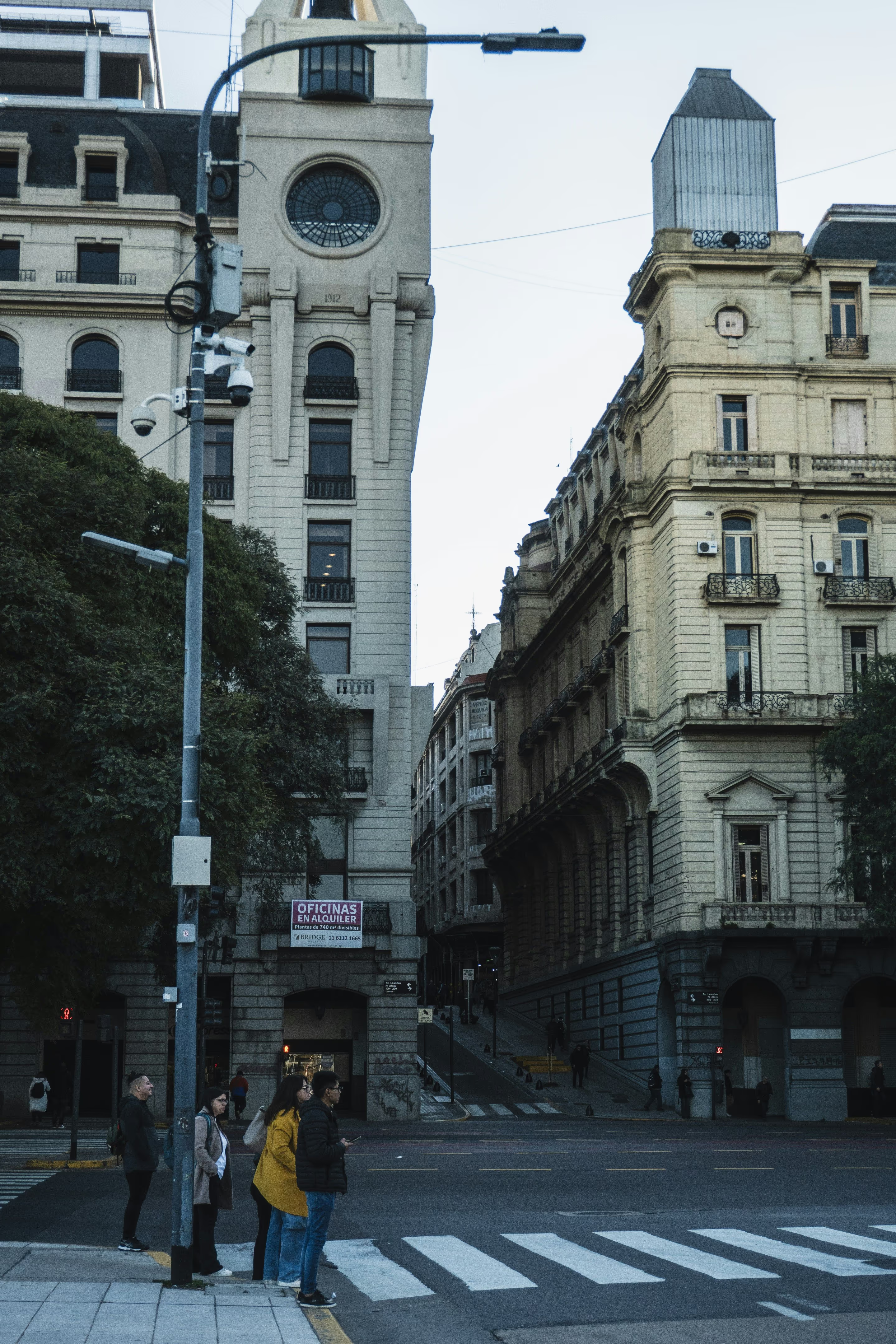
A city routine with room to explore
Six months in Buenos Aires: planning a longer stay
Choose a workable base, organize the ordinary week and plan travel around the permission that applies to your stay, rather than assuming a six-month entitlement.
A longer stay is made from ordinary Tuesdays as much as memorable weekends. Plan the permission, the room and the routine together.
Six months in Buenos Aires is best approached as a plan for ordinary life, with travel woven through it. You will still want the museums, neighbourhood walks and memorable meals. You will also need somewhere to do laundry, a place to work if that is part of the stay, and a routine that does not require making every decision from the beginning each morning.
The phrase “six months” describes an ambition for the calendar. It does not promise that every visitor can remain for that period under the same permission. Settle the immigration route relevant to your purpose before turning the idea into a long accommodation commitment.
Once that foundation is clear, the interesting questions become practical and personal.
- Which part of the city would you enjoy returning to on a Tuesday evening?
- How much of the week belongs to work?
- What would make the stay feel worthwhile after the first burst of sightseeing has passed?
Begin with the purpose of the stay
A long holiday, remote services for clients abroad, local employment and study are different circumstances. Describe the activities you intend to undertake accurately when checking the relevant official route.
The long-stays and remote-work guide separates the practical planning from the permission categories. The permitted-stay guide explains why the actual authorization and its expiry matter more than a generic day count.
Make the desired duration provisional
Start with the length you would like, then check how the official process applies to your circumstances. Keep major bookings adjustable while an important permission question is unresolved.
Migraciones publishes separate information for tourist extensions and digital-nomad residence, as well as a wider directory of residence categories. Read the route that applies rather than assuming one label covers every longer visit.
Keep the final decision and conditions with your records. An application, an appointment or an accommodation booking is not interchangeable with the permission granted.
Keep work and tax questions separate
If you will work during the stay, confirm what the relevant permission allows and obtain qualified advice for questions that depend on your employment or personal circumstances.
Do not infer tax treatment from an immigration label, a length of stay mentioned in a blog or the location of the bank account receiving income. Those questions need their own assessment.
The practical consequence is simple: resolve what you need to know before promising a particular working arrangement to an employer or client. A clear agreement about hours, availability and the intended location is easier to manage than an improvised explanation after arrival.
Choose a first base that lets you learn
It can be useful to begin with a shorter accommodation commitment before deciding where to spend the larger part of the stay. The right length depends on availability, cost and your tolerance for moving, but the principle is to leave room to test the routine.
The Buenos Aires base comparison helps narrow the neighbourhood choice, but an area can feel different in a travel photograph, during an afternoon visit and on a working weekday. Use the first part of the stay to understand the journeys and services you will use repeatedly.
Evaluate the exact address
Buenos Aires is too large for a neighbourhood name alone to settle the choice. Compare the property with your likely workspace, language class, groceries and regular activities.
Walk the useful routes when practical. Check how long they feel with shopping or after dinner, not only how short they look on a map. Try the public-transport journey you expect to repeat.
The best location may be the one that reduces small daily inconveniences. A slightly less photogenic street can be a better base if it puts ordinary errands and the activities you enjoy within a workable routine.
Read the apartment as a place to live
Ask about the exact unit: natural light, noise, ventilation, heating or cooling, kitchen equipment, laundry and the work area. A building's general description may not answer those questions.
If you need to take calls, check whether there is a door between the working space and the rest of the apartment. If two people work at once, one small table may not be enough.
Confirm how repairs and problems are handled. Know who to contact, how access is arranged and what the agreement says about included services. Those details matter more over several months than they might over a weekend.
Understand the financial agreement
Clarify the currency, payment method, deposit, included bills, cleaning and conditions for extending or leaving. Read the actual written terms before transferring money.
Do not assume a quoted monthly amount includes every recurring cost. Ask about electricity, internet, building charges and any other item relevant to that property.
Keep receipts and the condition record agreed at arrival. If you later extend, confirm the new dates and terms rather than relying on a casual conversation that leaves the amount or notice period unclear.
Match the neighbourhood to your week
A long stay does not require choosing the district most often described as ideal for foreigners. Start with the activities and atmosphere that matter to you, then compare specific streets and properties.
The city guides can help you choose places to explore. Use those visits to test a potential base rather than treating a short description as a guarantee about every address.
Palermo and a wide choice of evenings
Palermo covers several different kinds of setting. Park-focused visits and the smaller restaurant streets associated with Soho or Hollywood can involve different daily journeys.
If meals and evenings out are important, compare the accommodation with the particular places you expect to use. If a quiet workday matters more, ask about street activity and the position of the room.
Avoid paying for a broad neighbourhood label without checking the practical benefit. A location is valuable when it improves your actual week.
Recoleta and a culture-focused routine
Recoleta can be a starting point for a routine built around cultural visits and walks. Check the routes from the property to the places that interest you rather than assuming everything associated with the district is nearby.
A longer stay gives you the freedom to make shorter visits. You can spend time with one collection or exhibition and return another day instead of trying to complete a cultural area in one afternoon.
That rhythm can change how you choose accommodation. Being able to reach an activity comfortably several times may matter more than being beside a single famous sight.
Belgrano, Villa Crespo and Chacarita
Belgrano offers several different settings within the same district. Explore the area around the address you are considering and check the transport for your wider routine.
Villa Crespo and Chacarita can also be worth exploring when you have time beyond the best-known visitor circuits. Choose a reason to spend an afternoon there, then notice the everyday services as well as the cafés or shops that first attracted you.
These are places to investigate, not interchangeable recommendations for every long stay. The right choice depends on the property, the street and the life you intend to build around it.
San Telmo, the centre and the waterfront
San Telmo may appeal if its older streets and market setting are central to what you enjoy. Assess the particular building and the likely sound around it as carefully as the atmosphere.
Monserrat and Microcentro and Puerto Madero offer different central and waterfront contexts. Compare them through the routes you would use for work, errands and evenings rather than treating centrality as one uniform advantage.
Spend time in a candidate area before deciding when possible. A good base is a place you want to return to repeatedly, including on an uneventful day.

Build a workday before filling the weekends
Use the first week to test the routine at your actual address. Mark the hours that must overlap with colleagues or clients, checking time zones when the other location changes its clocks. Agree with companions which meals and outings to share and which hours belong to individual work or interests.
Test the setup below, try the journeys you expect to repeat and leave an interval for practical tasks after arrival. If one part fails, address that problem before replacing the whole plan: a nearer activity or a suitable workspace may be enough.
Test the connection that reaches your room
Ask for recent evidence of the connection in the exact unit, then test your working applications on arrival during the hours you expect to use them. A speed result alone does not establish stability, shared usage or call quality. Check the desk, chair, lighting and power at the same time.
The connection and language guide covers the wider practical setup. Identify a backup workspace before a critical meeting depends on it, confirming access, hours and call-space rules; a nearby café is not automatically a private working room.
Leave some evenings ordinary
A six-month plan does not need six months of special occasions. Cooking, a short walk or reading at home can be part of the pleasure of having a base.
Choose a few repeatable activities and leave other evenings open. An ambitious list of restaurants and performances can start to feel like another job if every night has a deadline.
The point of staying longer is partly to stop needing every day to prove its value. A routine creates space for the experiences that become meaningful through repetition.
Learn the errands that make the city easier
Keep the useful addresses and contacts for the household services below. Their actual arrangements matter more than a general promise that an apartment is equipped for a long stay.
Groceries and cooking
Check what the kitchen actually contains before buying ingredients for several elaborate meals. A small hob, limited storage or a missing utensil can change what is practical.
Begin with a few simple meals you enjoy and learn where to buy the ingredients. Notice portion sizes and what you can use before it needs replacing.
Shopping can become part of understanding the neighbourhood, but it does not have to be an expedition every time. A reliable nearby option is valuable on a busy working day.
Laundry and household needs
Confirm whether laundry is in the unit, shared in the building or arranged elsewhere. Ask about the actual process and any charge rather than assuming the listing's wording means an unrestricted machine in the apartment.
Keep a small stock of the ordinary items the accommodation does not provide for the whole stay. Clarify which supplies are included and which you replace.
These details are rarely the reason to choose Buenos Aires, but they influence how comfortable the months feel. Solving them early leaves more attention for the city.
Transport you can repeat
The city's transport orientation links an interactive map where you can choose a mode and how far to walk. It also directs visitors to SUBE information, the EcoBici programme and BA Taxi. Use those current service details to compare the journeys from your address rather than assuming one payment rule applies to every mode.
Try your regular route before a time-sensitive meeting: identify the stop, direction and final walk, with another option when that route does not suit. The city describes licensed street taxis by their black-and-yellow colours; confirm the service you are choosing rather than treating any waiting car as a taxi.
Budget from settled costs
A workable budget begins with the agreement for accommodation and the routine you expect to live. Add food, transport, workspace, insurance, communication, activities and regional trips.
Use the payments-and-currency guide for the terminology around cash and card conversions. Track the actual amount charged or settled rather than building the whole budget around a rate seen on one day.
Separate recurring costs from travel
Keep ordinary monthly expenses distinct from flights, a regional holiday or a major course. That makes it easier to see whether daily life is fitting the budget or whether a few planned trips account for the difference.
Allow for occasional costs such as replacing equipment, arranging documents or changing accommodation. A reserve can make a change manageable without forcing an immediate decision about the whole stay.
Review the budget after the first few weeks. Real spending is a better guide than a generic cost-of-living estimate that assumes a different apartment, dining pattern or exchange arrangement.
Read subscriptions and commitments
Before joining a workspace, gym, class or other service, understand the period you are paying for and how cancellation works. A monthly price may come with a longer commitment.
Check whether you will actually use the service often enough. A flexible option can be useful while testing a routine, even if its individual visits cost more.
Keep renewal dates visible. A long stay can end with several small commitments still running if nobody records how and when they stop.
Keep payment records
Save receipts for accommodation, deposits and substantial bookings. Record the currency and payment method so that a later question can be resolved from the actual transaction.
If an amount is unclear, ask the supplier before paying. A friendly relationship does not remove the usefulness of a written confirmation.
The aim is not to turn daily life into accounting. A clear record of the important payments lets you spend less time trying to reconstruct them.

Make the city more than a list of first visits
The advantage of time is the ability to return. A neighbourhood, museum or café can feel different when you are no longer trying to extract a complete impression in one visit.
Choose a few interests that invite continuity: language learning, music, food, architecture or another activity you already enjoy. Look for current programmes and participation arrangements that fit your schedule.
Learn enough Spanish for your own routine
Start with the conversations you repeatedly need: accommodation, shopping, transport and appointments. A class or tutor can help, but the best format depends on your aims and the time available.
Ask about the level, group size, schedule and cancellation terms before enrolling. A course that is too demanding for the working week can become another obligation you avoid.
Use what you learn in ordinary interactions while respecting the other person's time. A busy counter is not always the right place for a long practice conversation, and mistakes are easier to navigate with patience.
Choose an activity you want to repeat
A regular class, a cultural series or another shared interest can provide a reason to return somewhere. Select it because the activity appeals, not because it is supposed to produce an instant social life.
Read the current programme and ask how newcomers join. Some activities welcome drop-ins; others need a continuing commitment or a particular level.
Give the experience time. Familiarity often develops through showing up and taking an interest, rather than through finding the perfect venue on the first attempt.
Put a neighbourhood library on your map
The city’s public-library directory gives a long stay another kind of cultural address: reading rooms, collections and activities distributed through the neighbourhoods. Its online catalogue lets you look for a particular book and identify the branch associated with it. This is useful if you want to explore an Argentine author over several weeks, rather than buy a pile of books on the first afternoon. Check with the branch that the title is available before making the journey.
The network includes Alfonsina Storni on Venezuela in Monserrat, Guido y Spano on Güemes in Palermo and Casa de la Lectura y la Escritura on Lavalleja in Villa Crespo. These are starting points within neighbourhoods already discussed here. Choose the one that fits your actual address and reading interests; branch services and opening arrangements differ. A reading room can give a quiet hour a clear purpose, while a talk or workshop offers another way into the same institution. It should not be assumed to function as a private office for calls.
Borrowing books involves a separate step. The city’s membership instructions currently list a miBA account and a Buenos Aires city address among the requirements, with confirmation after registration. Ask the network how those requirements apply to your documents before relying on a loan. Using a reading space, joining an activity and taking a book home are distinct arrangements; clarify the one you want.
Programme dates deserve the same care as book availability. The network’s April–May 2026 workshop announcement included writing, reading groups and film-related work, illustrating the range rather than promising those exact classes throughout your stay. Use it to recognise the kinds of activity offered, then consult the current intake. A continuing reading group may ask you to finish a text between meetings; a single talk asks for a different commitment. That distinction helps you choose something you can enjoy alongside the rest of the week.
Let meals introduce different settings
A long stay gives you room to distinguish a quick meal from an evening built around the table. The street-food feature and bodegón guide explore different kinds of eating.
You can try a celebrated address if it interests you, then return to places that fit ordinary life. There is no need to turn every dinner into a search for the city's definitive version of a dish.
Pay attention to what you actually enjoy: the room, the cooking, the journey home and the company. A place that suits your routine can become memorable without appearing on a ranking.
Use weekends without making them exhausting
The ability to travel does not mean every free weekend needs a departure. Alternate bigger plans with time in the city, especially if work makes the weekdays full.
Choose outings by the time they leave for enjoyment, not only by whether transport makes them technically possible. Packing, transfers and a late return can make a short trip feel much longer.
Start with a nearby change of scene
Tigre and the Delta can offer a different setting from the city. Plan the particular outing and return rather than assuming that arriving in Tigre automatically includes a boat experience.
San Antonio de Areco offers another possibility, with a town visit and any rural programme treated as separate choices.
Choose one purpose for the day and leave enough room for it. A nearby trip can still become rushed if it is asked to contain every available activity.
A Uruguay side trip is its own journey
Colonia del Sacramento can be a worthwhile visit for its historic quarter and river setting. It is also an international trip requiring the documents and permissions relevant to entering Uruguay and returning to Argentina.
Use the Colonia day-trip feature for the ferry and visit-planning questions. Confirm the entry requirements for your circumstances before buying the ticket.
Keep the travel interest separate from any question about the duration of your Argentine permission. A brief trip abroad should not be treated as an assumed method of extending the stay.
Save distant regions for real time off
A flight can make another region accessible without making it a restful two-day break. Add airport transfers, the journey to the destination base and the return before deciding how much usable time remains.
If Patagonia, Iguazú or the Northwest is an important part of the plan, give it a block of leave that allows a meaningful visit. Keep the Buenos Aires accommodation arrangement in mind while budgeting for nights elsewhere.
The freedom of a longer stay is partly the ability to choose a good moment. You do not need to fit every regional journey into the first month.

Keep health and administration in the routine
Confirm how your insurance or other health arrangement applies to the full period and the activities you intend to undertake. Keep the assistance contact and understand the process for payment or reimbursement.
Use the health-planning guide for general information, and obtain personal medical advice when needed. A long stay benefits from resolving ordinary care questions before they become urgent errands.
Keep the important dates together
Record the actual immigration expiry, any application or appointment, insurance dates, accommodation end date and onward travel. Review them when one part changes.
Give document gathering enough time. If an authority requests translation, legalization or additional evidence, follow the current instructions for the actual procedure rather than assuming another person's checklist applies.
Keep correspondence and decisions organized. A simple folder of important records can make a later question much easier to answer.
Review the stay as it develops
When changing accommodation, work arrangements or the length of the stay, use the relevant agreements and official processes. Keep revised dates, costs and responsibilities with the original records.
Plan the final month before the final week
The end of a long stay has more moving parts than a hotel checkout. You may need to close memberships, collect a deposit, arrange luggage, finish a course and leave the property according to its terms.
Work backwards from the confirmed departure. Agree the checkout, condition review and any final payment or deposit process in advance.
Leave room for a proper ending
Do not reserve the last few days for every place you still hope to see. Choose the experiences that matter most and leave time for the ordinary tasks.
A return to a favourite neighbourhood or a meal with people you have met may be more satisfying than another rushed first visit. The stay does not need a final burst of sightseeing to justify its length.
Keep the airport transfer and luggage arrangements clear. A calm departure is part of a successful long stay, especially when another journey follows.
Keep the useful records afterwards
Retain the documents relevant to immigration, payments and accommodation after leaving. If a deposit or another transaction is still pending, keep the agreed contact and timeline.
Close the services you no longer need through their proper process. Check that a verbal goodbye has not left an automatic renewal running.
The practical ending creates room to appreciate what the months contained: familiar streets, ordinary meals, a workable routine and the freedom to experience Buenos Aires beyond a first impression.
A six-month plan succeeds when the permission, the daily life and the travel ambitions fit together. Begin with the official questions, choose a base you can live in comfortably and let the city become familiar at a pace that suits you.
This is general travel information, not legal advice. Immigration permissions and conditions can change; confirm the rules that apply to you with Argentina’s Dirección Nacional de Migraciones or the responsible Argentine consulate.


