Make the journey make sense
The real distances of Argentine Patagonia
Understand Patagonia's regional distances, travel days and transport choices before deciding how much of the map belongs in one trip.
Lakes, whales, glaciers and the Beagle Channel can share a journey. The space between them needs a place in the plan, too.
Patagonia's distances are difficult to understand from a row of photographs. A forest lake, a whale surfacing beside a boat, the pale front of a glacier and a harbour beneath mountains can look like chapters of one compact journey. Put them on a map and the space between them begins to tell a different story.
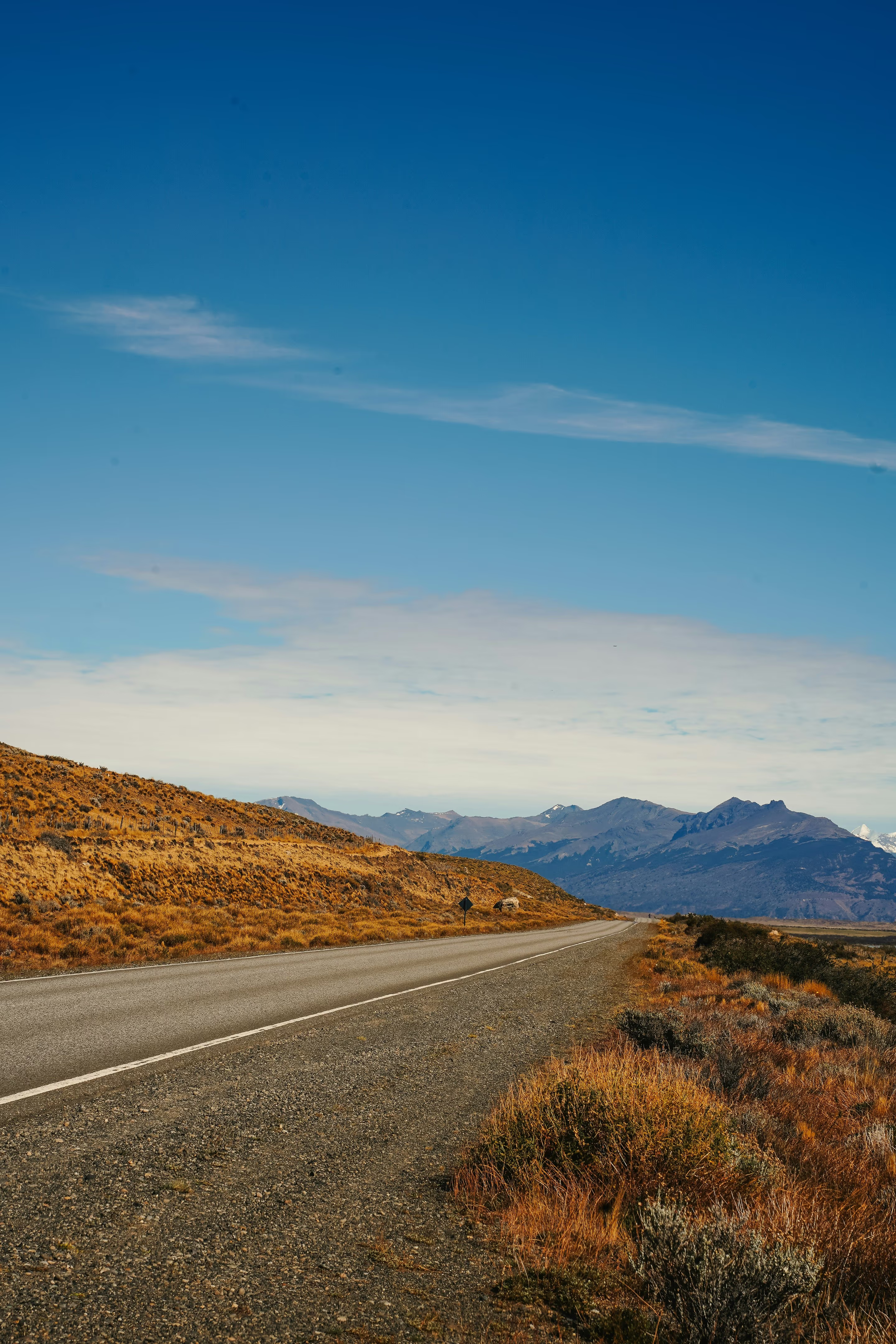
That space is part of Patagonia's character. Roads pass through country where the horizon holds attention for a long time. Towns are separated by substantial stretches of landscape, and the mountains occupy one edge of a much wider region. The trouble begins when a holiday plan treats those distances as blank intervals to be crossed as quickly as possible.
A satisfying trip makes a decision about movement. You might choose one regional cluster and settle into it, connect two areas by air, or make an extended road journey the main purpose. All three approaches can work. What rarely works well is borrowing the highlights of each while giving the travel almost no time of its own.
Read Patagonia across the map, not only down it
Argentina's Patagonian journeys often follow a north-to-south imagination: Bariloche, glaciers, Ushuaia, with a few places added between. The east-to-west dimension matters just as much. Atlantic wildlife country is not simply another stop on a road running beside the Andes.
A useful first sketch divides the region into separate travel clusters. These are planning tools rather than hard cultural boundaries. They help reveal which places naturally share a stay and which require a larger change of location.
- The northern lakes and forests: towns around Nahuel Huapi and Lácar, with a longer southern extension towards El Bolsón and Esquel.
- The Atlantic wildlife coast: Puerto Madryn and the wider Península Valdés area, with distinct coastal outings.
- The southern glacier and walking country: El Calafate and El Chaltén, connected by a substantial but manageable road journey.
- Tierra del Fuego: Ushuaia, the Beagle coast and the island's interior, with their own access decisions.
Choose the cluster containing your strongest reason to travel. Only then consider adding another. This approach protects the visit from becoming a list whose most striking feature is how often you move.
An attractive line is not yet a route
A line on a map reveals direction. It does not show whether the road is paved, whether a service operates on your dates, how a rental return works or how much of the journey crosses an international border. These practical differences can outweigh the apparent neatness of the itinerary.
Use route planning to test the original idea, rather than to defend it. If a connection consumes most of a day in each direction, the destination needs to repay that investment with enough time on the ground. If it does not, changing the plan is a useful result of the research.
The northern lakes: a journey with several possible shapes
Bariloche is a natural starting point for many visitors, but it should not become a label for every northern Patagonian destination. The surrounding lakes, the journey towards San Martín and the extension south to Esquel offer different scales of travel.
For a short visit, a settled base can be more rewarding than a long loop. You spend less time arranging departures and more time choosing an outing that suits the day. With longer, a carefully chosen move can reveal a different landscape and town rhythm.
Bariloche to San Martín is a regional connection
The route towards San Martín de los Andes can make sense as a scenic change of base. The Seven Lakes section is a reason to enjoy the journey, not simply a means of covering ground. A few well-chosen stops give it a character that a fast point-to-point drive would miss.
Still, the move has an arrival at the end. Luggage, a meal and finding the accommodation belong in the day's calculation. Leave enough room for them and the new town begins comfortably; use every remaining hour on roadside stops and the evening can become a recovery exercise.
Our Lake District base comparison deals with the choice of towns in more detail. For the wider Patagonia plan, the important point is that this is a connection within one regional journey. It is a different proposition from linking the lakes with the far southern glacier country.
A lakes loop can change the road beneath you
The Bariloche tourism route description distinguishes returning by the Seven Lakes road from making a loop through Paso Córdoba. The latter leaves RN40 for RP63 towards Villa Lago Meliquina and Paso Córdoba, then connects with RN237 through the Limay–Traful area. It exchanges part of the lakeside route for a different landscape and includes gravel. “Return by another road” is therefore a choice about surfaces and scenery, not merely a way to avoid seeing the same view twice.
Read those route numbers together with the rental agreement and current road report. A proposed loop can look attractive on a small map while asking more of the driver or vehicle than the outward road. If the alternative’s landscape is the reason you want it, give it a deliberate place in the journey. If your main interest is the lakes, returning along the same corridor can be a positive choice: stops you passed on the outward leg can become the focus. Neither version needs to be sold as the universally better circuit.
Continuing to Esquel changes the size of the commitment
Esquel and Los Alerces can make an extended northern journey much richer. The reason to continue is the old forest, the park and the surrounding towns, rather than a desire to keep the car moving south. Those places need full days after you reach them.
Do not treat Esquel as a scenic stop you automatically make while crossing all of Patagonia. A road journey that passes through a region can easily leave little time to visit it. If the alerces are important, give their actual access arrangements first claim on the local stay.
Los Alerces introduces a similar distinction between a town base and the route into the park. APN’s access guide describes the approach from Esquel to Villa Futalaufquen by RN259 and RP71, while the northern entrance can be reached from El Bolsón by RN40 and RP71. From Trevelin, APN describes the central-entrance approach by RP71, distinct from the road towards the southern Futaleufú hydroelectric area. “Go to Los Alerces” therefore needs a destination within the park: the entrance, administrative centre, lakeshore and departure point for an activity are not all one pin.
Place that named destination beside the direction from which you will arrive. A northern approach may suit one through-route, whereas a stay in Esquel or Trevelin leads you to compare other access points. This is a map-reading distinction, not a claim that every park road is open or equally suitable. Use current park advice for the section you intend to travel. It lets the forest visit determine the approach instead of reaching an entrance and only then discovering that the booked outing starts elsewhere.
This is also where the distinction between a regional holiday and a long-distance expedition becomes useful. You can spend an entire worthwhile journey between the northern lakes and Chubut's forests. Continuing hundreds of kilometres farther south is a new decision, not the inevitable completion of that trip.
The Atlantic coast is a destination, not a sideways detour
Puerto Madryn belongs to a different Patagonian experience from the Andean lake towns. Its setting faces a gulf, and the wider region's wildlife visits are organised around coasts, colonies and seasonal movements. The journey there should reflect that difference.
The mistake is to add Madryn as though it were a convenient pause between two mountain bases. Look at the actual transport connection and what happens after arrival. A stay on the coast needs enough time for the excursions that justified changing region in the first place.
One town can involve several substantial outings
Staying in Madryn does not place every wildlife viewpoint just outside the hotel. A visit to Península Valdés has its own scale, with distances between the entrance, settlements and different coastal areas. A boat departure and a broad peninsula circuit create different days.
This matters when counting time. A late arrival followed by one full day and an early departure may allow a particular outing, but it gives little room to adapt if conditions affect it. More nights are most valuable when they create opportunities to change the order, rather than merely adding more separate excursions.
The wildlife calendar should shape the decision before flights are booked. There is no single season in which every animal and behaviour can be assumed. Choose the encounter that matters to you, consult the relevant current local guidance, and accept that observation is never a scheduled performance.
A coastal stay has its own quieter pleasures
The waterfront, local interpretation, a seafood meal and a shorter shore visit give Madryn a life beyond major excursions. These are not filler between “real” Patagonia days. They are part of understanding the Atlantic side as a place rather than a collection of wildlife products.
This distinction can improve a broad itinerary. Instead of making three large outings fit into the smallest possible stay, choose the most important ones and leave an interval for the coast itself. The resulting visit is less vulnerable to fatigue and more attentive to the setting.
The southern pair: close enough to combine, large enough to deserve time
El Calafate and El Chaltén are one of Patagonia's more coherent combinations. They provide contrasting access to Los Glaciares National Park: glacier viewing in the southern visitor area and mountain walking around the northern town.
The road between them is roughly two hundred kilometres in the park's visitor information. Compared with the much greater distances across Patagonia, that makes a combined stay practical. It does not turn the move into a negligible event or make the major experiences fit into the same day.
Combine interests, not merely famous names
Give Calafate time for the ice experience you actually want and Chaltén time for the walking or valley visits that interest you. If one of those activities has little appeal, a combined stay may be less compelling than it first appears on a map.
The detailed comparison of El Calafate and El Chaltén answers that question separately. Within a wider route, the important task is protecting the local days once you arrive. A long journey south is poor value if the stay then allows only a hurried glimpse before another flight.
The southern pair can therefore anchor a trip on its own. Add a second region only if the remaining nights can support a real visit there. Patagonia does not become less authentic because you have chosen one substantial part of it.
The approach is a different experience from the trail
Between the towns, open steppe and large waters reveal the scale of the country east of the peaks. It is a landscape worth noticing, not an empty space before the mountains begin. A safe designated stop can let passengers and driver enjoy it together.
Once in Chaltén, the physical demands change. A road day and a long mountain walk use time and energy differently. Allow the arrival to finish before asking the group to begin another demanding activity, particularly after a journey that already involved a flight and a road connection.
Ushuaia: the extra chapter with an island crossing behind it
Ushuaia can be a compelling extension because the setting changes again: a working harbour, the Beagle Channel, forest and mountains close to the city. It should be added for those experiences, not merely because the phrase “end of the world” seems to provide a satisfying finish.
The geography makes the transport choice especially important. Tierra del Fuego is an island, and the overland approach from mainland Argentina involves Chilean territory and a ferry crossing of the Strait of Magellan before returning to Argentina. It is not simply another uninterrupted domestic road segment.
Air and land create different journeys
A flight can connect a Fuegian stay with another part of a larger trip when the actual services and dates fit. The relevant comparison is the complete journey, including airports, baggage and any connection. Do not assume a direct flight exists because two destinations appear together in suggested itineraries.
The land approach may appeal to someone who wants the journey itself. It also adds border formalities, ferry operations and road conditions to the planning. Vehicle permissions and personal entry requirements need to be checked for the actual travellers and rental arrangement before committing.
Neither option is universally superior. The question is whether crossing the landscape is part of the purpose or primarily a way to reach the city. A short holiday organised around activities in Ushuaia may use time differently from a long road trip in which the island crossing is one of the experiences.
Give the island enough time after arrival
A brief stop can feel especially compressed when both arrival and departure are substantial. Decide which Fuegian experience matters most: the channel, the national park, a particular walk or the city and its history. Then allow enough settled time to enjoy it properly.
Do not make the last added destination carry the pressure of completing the whole region. Ushuaia is a place with its own character, not a stamp at the end of a journey. If its stay would be squeezed between awkward connections, it may deserve a separate trip.
Count travel as a day you will live through
When a guide refers to a “full transfer day”, the useful meaning is simple: keep that day mainly for getting from one base to the next, with meals, luggage and settling in included. It does not mean you will necessarily spend every hour inside a vehicle. It means a major excursion should not depend on the leftover time.
Use door-to-door arithmetic
Consider an illustrative day, rather than a promise for any particular route. Packing and reaching a departure point might occupy part of the morning. A service of a few hours then places you in the next town, where luggage, check-in and finding a meal take another interval.
The advertised moving time may be modest, but the useful part of the day left for an outing is much smaller. A delay can remove it entirely. Planning this honestly protects the evening from becoming a scramble and makes an on-time arrival feel like the comfortable result it should be.
For each change of base, write down:
- Leaving the room and reaching the departure point.
- Check-in or boarding requirements for the chosen service.
- The journey itself and any intermediate connection.
- Reaching the next accommodation, eating and settling in.
- The consequences if one part runs late.
That final question reveals whether the plan is resilient. A late arrival that costs a relaxed dinner is different from one that breaks a separately booked connection or makes an important activity impossible.
Test the plan with ten blank nights
Imagine ten nights available within Patagonia, with the arrival and final departure already accounted for separately. This is a planning exercise, not a suggested itinerary. It shows how the same holiday length can create very different amounts of settled time.
Put all ten nights in one base and there are nine complete days between the arrival and departure dates. Split them into six nights and four nights, with a single moving day between, and the two stays contain five and three complete days respectively. The second base has cost one otherwise uninterrupted day.
Now divide the nights into stays of four, three and three. Each base needs its own arrival and departure, leaving three, two and two complete local days. You have gained another destination, but the experience now depends more heavily on each short stay working as planned.
Those numbers assume straightforward connections completed within a day. A routing that needs an intermediate overnight stop, or a service that operates only on particular dates, can change the calculation. The calendar should follow the real connection rather than the most convenient hypothetical one.
The exercise does not identify a universally correct number of bases. Two or three places may be exactly what you want. It reveals what each move is buying and what it uses up, so you can make the choice deliberately instead of discovering the cost after booking.
Choose the transport that suits the scale
Air travel, coaches, arranged transfers and a rental car each solve different parts of the map. A good route may use more than one. The goal is a coherent journey, not loyalty to a single mode of transport.
Flights connect regions; local plans still matter
Compare flights on the dates you intend to travel. A route shown in an old article may be seasonal, indirect or unavailable when you need it. Build the regional sequence around verified options, then make the accommodation decisions that depend on them.
Look beyond the departure and arrival city names. Airport location, onward transport and baggage conditions all affect the usable day. If an itinerary involves changing airports during a connection, that is another journey to arrange, with its own allowance rather than a small footnote.
A lower fare is only useful in the context of the whole trip. An extra overnight stop, a difficult onward transfer or the loss of a valuable local day can change the comparison. Decide what the connection costs in both money and experience.
Coaches and transfers make different promises
A coach can be a practical way to move between towns without taking on the driving. Its value depends on the actual departure, arrival, stops and service on your dates. A night journey may save a hotel booking, but it does not guarantee the same rest as a night in a room.
An arranged transfer can simplify a particular connection or fit a group well. Clarify whether it is a direct move or includes sightseeing, how luggage is handled and where passengers are collected and dropped off. The phrase “private transfer” does not describe every detail of the journey.
Use each service for the job it does well. A straightforward move can be ideal when you want to arrive rested enough to enjoy the next place. A separately planned excursion can turn a journey into an experience when the route and time genuinely support it.
A rental car adds freedom and responsibilities
A car is particularly useful when the journey includes scenic stops, outlying accommodation or regional outings that are awkward without one. It also introduces rental conditions, fuel planning, parking and the need for someone to stay attentive to the road.
Check the actual collection and return locations before drawing a long one-way route. Not every proposed pairing will be available or priced as you expect. Border permissions are a separate matter, and an international crossing should never be assumed to be covered by a domestic rental.
For current roads, use the relevant road authority rather than an old description of a famous route. Weather, works and surface conditions can alter the practical choice. Route 40's name is not a promise that every section behaves like the paved road you drove yesterday.
Let the road trip be a road trip
There is a real pleasure in travelling through Patagonia at ground level. The country changes gradually, and places between the best-known destinations become part of the story. That kind of journey deserves enough time to be enjoyed as something more than the slow alternative to flying.
It also benefits from a different definition of a successful day. A modest distance with a worthwhile stop, a comfortable arrival and time for the landscape can be more satisfying than a long stage completed late. The driver should have a holiday too.
Divide the journey by useful stopping places
Choose overnight stops for their position, available services and what they allow the following day to become. A line divided into equal distances may produce less sensible stages than one organised around real towns and dependable arrangements.
Think about fuel and food before they become urgent. Check the service points along the actual route and avoid assuming that every settlement offers what you need at the hour you arrive. Keep the planning specific without treating the landscape as something to be feared.
The same applies to communication. Save the information needed for the day's route and arrangements before relying on a signal in open country. A booked room and clear arrival plan are especially useful after a long stage, when making new decisions is least appealing.
Give weather and wildlife room
Wind, changing visibility and winter conditions can affect a drive independently of the distance. The useful response is to adjust the stage to the actual conditions and current advice, rather than hold tightly to a schedule made far away.
Animals may appear near or on the road. Observation should happen from a safe, permitted stopping place without pursuit or pressure. A photograph is not a reason to stop abruptly, block a route or cross private land.
The landscape is richer when it is approached with attention. Notice where water changes the vegetation, where the mountains fall away into open country and how a settlement fits into the surrounding terrain. Those observations turn a long road from an obstacle into a meaningful part of the visit.
Edit the trip before it edits your holiday
The final planning task is often subtraction. Put the strongest reason for travelling at the centre, protect the days it needs and test every addition against that choice. The result can still be ambitious, but the ambition will have a workable shape.
For a shorter trip, one regional cluster may provide all the variety you need. With more time, two contrasting areas can make a satisfying partnership if the connection is sound. An extended road journey is another possibility when the days between destinations are part of what you want.
Patagonia rewards both movement and staying still. The trick is to choose which one each part of the journey is for. Once you make that distinction, the distances stop being awkward gaps in the itinerary and become part of understanding the country you came to see.


