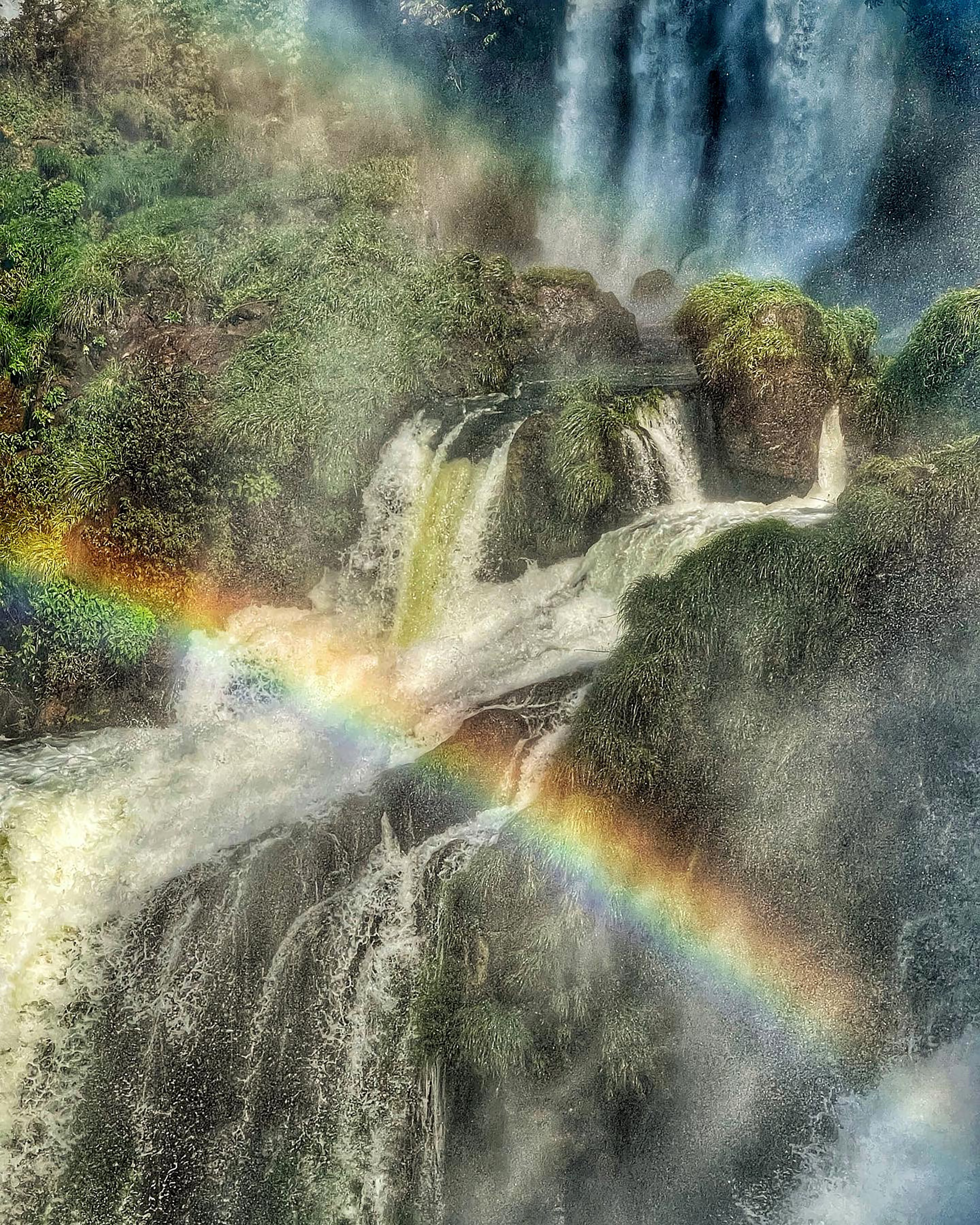
Water, forest and time
Giving Iguazú the time it deserves
Above the river, beside the cascades and into the forest: shape your falls days, then choose a Northeast extension that earns its place.
The falls are not one viewpoint. Choose the encounters that matter most, distribute the walking and decide whether another day—or another Northeast destination—will enrich the journey.
Iguazú can overwhelm the idea of an itinerary. Water, forest, mist and sound arrive at such a scale that the planning seems almost irrelevant. Yet the way you arrange the visit changes what you notice. A day spent watching a departure time is different from one with space to wait at a viewpoint, follow a quieter path or return to a scene after the light has shifted.
The falls are not one viewing platform. On the Argentine side, different circuits place you above the water, beside individual cascades and near the concentrated force of Garganta del Diablo. Forest paths add another subject altogether. Across the border, the Brazilian park offers a different relationship with the wider panorama. These experiences overlap, but they are not substitutes for one another.
The useful question is not how quickly you can say you have seen Iguazú. It is which encounters matter to you, how much walking and travel they involve, and whether another day would make the visit more satisfying. Start there, then decide whether the rest of the Northeast belongs in this journey or deserves a separate return.
Understand the place before choosing the number of days
Iguazú Falls is a river-and-forest landscape rather than an isolated attraction beside a car park. The Argentine national park protects part of the Selva Paranaense, and the experience includes the approach through that environment as well as the views over falling water. Giving the forest a place in the plan changes the visit from a sequence of platforms into something more complete.
Begin with the different kinds of view. The Upper Circuit follows the water around the top of the falls. The Lower Circuit brings individual cascades and the surrounding terrain closer. Garganta del Diablo has its own approach and viewing area. A forest outing such as the Macuco Trail involves another kind of walking and should not be treated as spare distance added at the end of an already demanding day.
The park's current operating conditions matter because routes can be affected by weather, water and safety decisions. A published description explains the intended experience; it does not guarantee that every circuit will be open on your date. Check the current information before travelling and again on arrival, then build the day around what is actually available.
You do not need equal time everywhere. Someone interested in photography may want to revisit a view, while another traveller may prefer a shorter circuit and a comfortable pause. Choose according to the people travelling rather than assuming that completing every route is the measure of a successful visit.
Puerto Iguazú: let the base support the park days
Puerto Iguazú is a practical base for visiting the Argentine park, but accommodation choices still influence the trip. An address near town's restaurants offers a different evening from a more secluded property surrounded by greenery. Compare the exact location, the journey to the park and the places you would use after returning.
For an early start, establish how transport works before the morning of the visit. Confirm the departure point or pickup arrangement, the return options and what happens if you finish earlier or later than expected. A flexible park day becomes less flexible if the return depends on a connection you have not investigated.
The accommodation should also suit the hours around the outing. After time in heat, rain or spray, a comfortable room and somewhere to dry clothing can matter more than an elaborate list of facilities. If you expect to spend an afternoon at the property, consider shade, usable common space and food arrangements as well as the photographs.
Keep the arrival day honest. A late flight, luggage collection and the journey to the hotel can leave little meaningful time for a park visit. That is not a reason to rush directly into the most important part of the trip. A meal, a short walk and preparation for the following morning may make a better beginning.
Count nights and full days separately when comparing stays. Two nights can provide one intervening full day, depending on arrival and departure times. If you want two unhurried park days or a visit across the border, make sure those days actually exist in the schedule rather than being implied by the number of hotel nights.
The Upper Circuit: follow the river towards the edge
The Upper Circuit offers a way to understand how the river reaches the falls. Its elevated walkways provide views across water approaching and passing over different drops. Instead of treating it as a less dramatic prelude to another circuit, give it time to reveal the relationship between islands, channels, forest and the edge.
This perspective can make the wider landscape easier to read. You can notice where the water spreads, where it gathers and how vegetation divides the scene. A view from above often explains something that is harder to understand when you are standing close to an individual cascade, surrounded by noise and spray.
The official park description identifies the Upper Circuit as a route without stairs. That is useful information, but it does not remove the need to consider distance, surfaces, weather and the needs of your group. Discuss current access and assistance arrangements with the park if mobility is a significant part of your planning.
Do not assume that the best way to experience it is to keep moving. Where space and the visitor rules allow, pause without blocking the walkway. Let other people pass, then look again. A changing cloud, a shift in spray or the movement of the water can make the same position feel different without requiring another journey across the park.
The Lower Circuit: choose the closer encounter deliberately
The Lower Circuit offers another relationship with the falls, bringing individual cascades, rock and forest into a more immediate view. It can be a powerful contrast with the Upper Circuit, particularly if you enjoy seeing how the water occupies the surrounding terrain rather than only looking across its upper edge.
Its stairs make it a different walking proposition. The official park information and concession descriptions agree on that practical distinction, even where published circuit distances differ. Plan using the current map and the terrain you can manage, rather than relying on one remembered distance as a complete measure of the effort involved.
Give the changes in level their own time. A route can feel straightforward on the way down and more demanding during the return or the next climb. Heat, humidity and the amount of walking already completed can influence how enjoyable it feels. Choose the sequence with the whole day in mind.
The closer views can encourage people to concentrate entirely on the camera. Take the photograph if you want it, then protect the equipment and spend a moment simply looking. The scale is partly visual, but the sound, moisture and movement are what distinguish being there from seeing an image. Leave room for that experience rather than making every pause a technical exercise.
Garganta del Diablo: allow space around the main encounter
The description below applies when the Garganta circuit is operating. Check the operator's current Garganta del Diablo information before planning around this walkway; a park admission ticket does not guarantee that every circuit is available.
Garganta del Diablo is the most concentrated expression of the river's force on many visitors' itineraries. The approach crosses the upper water before the viewing area reveals a very different scale of movement and sound. That change is part of the experience, so do not treat the walkway only as distance to get through quickly.
The park's internal train connects the visitor areas and stations used for the circuits, with current ticketing and boarding arrangements managed inside the park. Confirm how it works on the day rather than planning around an assumed immediate departure. Waiting and boarding are part of the complete outing, particularly when the park is busy.
At the viewpoint, spray and visibility can change. You may see a wider view at one moment and far less at another. A clear panorama is not the only meaningful encounter: the disappearance of detail into water and mist is part of the place's power. Avoid making the visit dependent on reproducing a particular photograph.
Be considerate in the viewing area. Take turns where space is limited, keep equipment and bags out of other people's way and follow the staff's directions. A longer stay does not mean claiming a position indefinitely. It means giving yourself enough time to experience the place while allowing others to do the same.
Do not attach a tight departure to the end of the visit. The return includes the approach route and the park's transport arrangements, not just leaving the platform. A comfortable margin lets the experience finish naturally and reduces the temptation to hurry the final part of the walk.
One day can work; two days change the pressure
A single full day can provide a strong introduction when you choose a realistic selection of open circuits and give the day your attention. Start with the experiences that matter most to you. Leave some flexibility for conditions, movement between areas and pauses, rather than treating every route as a commitment that must be fulfilled.
Two days can be valuable because they change the pressure, not because they guarantee twice as many attractions. You can distribute the walking, revisit a view and leave more room for forest or photography. A second day may also help if weather or an operational change affects part of the first, although it cannot guarantee that a closed route will reopen.
APN's published conditions provide a 50% reduction for a second visit to the same park within 72 hours of the first entry. The return ticket can be bought online or obtained at the park entrance using the first ticket within that period. Read APN's current conditions before purchasing, since admission products can change.
An extra day is especially worth considering when people in the group have different energy levels. You can share the most important experience, take a pause and avoid making the slower walker feel responsible for an incomplete list. The itinerary should support the people involved rather than turning the park into a test of endurance.
There is also a case for one carefully planned park day within a shorter trip. If that is your available time, concentrate on a coherent experience and accept what you leave out. The mistake is not visiting for one day. It is pretending that a partial arrival day and an early departure provide the same freedom as a full day inside the park.
The forest deserves its own attention
Iguazú's forest can be overshadowed by the falls, but it is part of what gives the place its character. Along the visitor routes, look beyond the next view of water: changing light beneath the canopy, the structure of vegetation and the sounds around the path offer another scale of experience.
The Macuco Trail is a more rustic forest walk, described by the park as a seven-kilometre return outing. It differs from the main constructed circuits and has its own access conditions. Decide whether it belongs in your visit before the day becomes crowded, and ask at the visitor centre about its current suitability and the information you should carry.
A forest walk should not be sold to yourself as a guaranteed wildlife encounter. Animals move according to their own patterns, and the pleasure of the route needs to survive the absence of a particular sighting. A guide can help with interpretation, but cannot promise that every hoped-for species will appear.
Keep the forest experience attentive rather than intrusive. Remain on authorised routes, follow the park's guidance and give wildlife space. Food should stay where it belongs, with no feeding or attempts to attract animals for a photograph. Those rules protect both the animals and the possibility of observing behaviour that has not been shaped by a visitor's snack.
If a longer forest outing is not suitable, you can still bring that attention to shorter connections and pauses within the main visitor area. The difference is often in how you look and listen, not simply in how far you walk. A quieter interval can make the return to the falls more striking.
Choose boats and special visits for the experience they add
Boat excursions near the falls offer a different kind of encounter from the walking circuits. They are optional activities with their own bookings, participation requirements and conditions. Decide whether the format appeals to you rather than assuming it is necessary to complete the visit.
Look at the whole programme, including the approach, boarding arrangements and the amount of spray or exposure involved. Check the operator's current restrictions for age, mobility, health and equipment. A dramatic activity should be chosen because it suits the people travelling, not because a photograph makes it look like an automatic part of the park ticket.
Keep essential belongings protected according to the operator's guidance, and avoid taking equipment that you are not prepared to manage in those conditions. The excursion is not the ideal moment to discover that a bag or protective cover is less suitable than expected. Simpler preparation can leave more attention for the experience.
Special evening or moonlight visits also have their own programmes, availability and weather conditions. Treat them as separate experiences and verify what is included. They can add another atmosphere to the trip, but should not replace the daylight visit by assumption or be inserted into a schedule without considering the following morning.
You can have a substantial Iguazú experience without adding either format. The circuits, forest and changing views already offer a great deal. Choose an extra activity when it adds something you genuinely want, rather than allowing every available product to become another requirement.
The Brazilian side offers a different view
A visit to the Brazilian park can complement the Argentine circuits by changing the viewpoint on the same wider falls system. It is a separate park visit across an international border, with its own ticketing, transport and visitor arrangements. Compare the Argentine and Brazilian visits and plan it as a deliberate addition rather than an informal detour.
Compare what you want from the experience. After spending time among the Argentine-side circuits, a different panorama may help you understand the scale of the whole landscape. If your main interest is returning to a particular Argentine viewpoint or reducing the amount of travel, a second day on the same side may be the better use of time.
Check entry requirements for your nationality and the documents needed for the crossing and return. The site's border-crossing guide is a starting point for the planning questions, while the responsible authorities and the Brazilian park's official information should govern the actual arrangements. Do not assume that permission to enter one country also covers the other.
Allow for the complete journey, including border formalities and the park's internal movement. Avoid attaching a flight or another inflexible departure to an optimistic estimate of the return. The practical work is worthwhile when it gives you time to appreciate the different view, rather than turning the outing into a race between checkpoints and transport connections.
Weather changes the experience, not just the photograph
Rain, cloud, sun and spray can produce different impressions of Iguazú. A bright day may reveal colours and reflections that another day conceals; cloud can create a softer or more dramatic atmosphere. The falls should not be judged solely by whether a rainbow appears in the frame.
The river's conditions also affect what you see and which routes can operate. Do not assume that the weather at your hotel tells you everything about the water or access inside the park. Use current park information and the advice given on arrival, particularly when conditions have changed recently.
Dress for the outing you have planned, with comfortable footwear suited to wet conditions and appropriate protection for weather and sun. Carry water and use the designated facilities and eating areas. These ordinary choices can make a long visit more comfortable without turning preparation into an equipment project.
Keep the day's sequence adaptable. If a circuit is temporarily unavailable, another open route or a pause may make sense; if conditions are unsuitable for your planned activity, changing the plan is the sensible outcome. A second day can provide flexibility, but the aim is still to make good choices about the day in front of you.
San Ignacio Miní adds a different kind of depth
San Ignacio Miní can extend a Northeast journey through history rather than through another natural spectacle. Its surviving mission structures and carved stone offer a different pace of attention from the falls. The connection is regional, but the experience is distinct enough to deserve its own purpose.
UNESCO's mission listing places San Ignacio within the history of Jesuit settlements among Guaraní communities. Walk the central space and consider how the church, residences and working areas related to it. Interpretation helps turn walls and openings into evidence of a settlement, rather than leaving them as attractive ruins without people in the story.
The history should not be presented as a simple account of picturesque architecture. Religious conversion, colonial power and Indigenous life belong in the conversation. Seek reliable interpretation and distinguish the mission period from the lives and cultures of contemporary Guaraní communities. A present-day community is not an extension of an archaeological display.
Give the journey from the Iguazú area a realistic place in the route. San Ignacio is not another circuit reached from the falls' visitor centre. It becomes more convincing when you want to spend time travelling through Misiones, rather than trying to force a major additional outing into a spare fragment of a park day.
The change in subject can be rewarding after the intensity of Iguazú. Stone, settlement layout and historical interpretation invite a quieter form of looking. Choose that extension because the questions interest you, and give it enough time to become more than a brief photograph beside a long drive.
Iberá asks for a change of pace and a clear gateway
The Iberá wetlands offer a strong contrast with Iguazú: a landscape in which looking patiently for movement can matter more than waiting for a single grand view. Water, grassland, vegetation and wildlife invite another kind of attention. It is a different destination in Corrientes, requiring its own transport, accommodation and activities.
Choose the gateway before booking the stay. Iberá has several access areas, and the activities and approach routes are not interchangeable. A lodge described as being in Iberá does not establish that it connects conveniently with every part of the wider wetland landscape. Ask which portal or area the property uses and what the actual programme involves.
Colonia Carlos Pellegrini is one option to investigate for a stay associated with Laguna Iberá. Consider how the accommodation, local outings and arrival route fit together. A well-chosen base can make it easier to spend time observing rather than repeatedly travelling between areas that only look close when placed under one regional name.
Do not transfer the rhythm of a falls visit directly to the wetlands. Wildlife observation can reward quieter periods, patient waiting and guidance from someone who understands the local setting. No responsible itinerary can guarantee a particular animal at a particular hour. Choose activities whose setting and interpretation remain worthwhile even when a hoped-for sighting does not happen.
The journey between Iguazú and an Iberá base needs a proper travel day or another arrangement supported by actual services. Confirm the road and transport conditions for your selected gateway. It is better to choose one wetland base and settle into it than to use a short stay attempting to cover several distant access areas.
Build the Northeast around contrast, not accumulation
The Iguazú and Northeast region becomes more interesting when its different experiences are allowed to remain different. Iguazú offers the force of water and the structure of its circuits; San Ignacio brings architectural and historical interpretation; Iberá asks for patient observation in a wetland setting. Combining them can produce a rich journey, but the richness depends on time spent in each place.
If your time is limited, choose the contrast that matters most. A focused falls stay can be complete on its own. Adding mission heritage makes sense when history and a wider Misiones route interest you. Adding Iberá makes sense when wildlife and a slower nature stay justify the additional travel and nights.
Avoid treating the space between these places as empty. A long connection still occupies part of the holiday, even when the map makes the destinations look neatly arranged. The Iguazú and Iberá itinerary shows one way to think about that allocation, but its usefulness depends on the actual transport and gateway you choose.
A good regional plan leaves room for changes without losing its purpose. If the main reason for adding a destination is simply that it appears in the same guidebook chapter, reconsider. The journey should be held together by interests you can name: forest and wildlife, water and history, or a concentrated encounter with the falls before travelling elsewhere.
Let Buenos Aires be a useful contrast, if it is already on the route
For many journeys, Buenos Aires provides an urban interval before or after Iguazú. If it fits your actual transport plan, use that time deliberately. A museum, an architectural walk and a meal offer a different kind of attention after the park, without requiring the city stay to become another overfilled itinerary.
Do not attach an ambitious city programme to an uncertain arrival. Give the travel day its own space, then choose the cultural or dining interests that matter most. A calmer city interval can help the trip feel varied while leaving enough energy to appreciate the places you have already visited.
If you want a waterside outing near the capital but lack the time for a proper Iberá stay, Tigre and the delta is a different possibility to consider. It is not a substitute for Iberá's wetland wildlife experience. Its town, waterways and boat-trip formats offer another kind of day, one that may fit a Buenos Aires stay without adding a distant regional connection.
That distinction is useful because it gives you permission to leave something for later. You can experience Iguazú fully, enjoy the city and choose an appropriate nearby outing without claiming to have covered the entire Northeast. The strongest trip is the one whose days have room to become memories, rather than a collection of ambitious places linked by hurried departures.


